Underwrite before you commit
The figures in this post are checked against Dubai Land Department records and RERA filings. Get an independent underwriting score on any project, or ask Javier on WhatsApp.
The Two Unit Categories Inside Dubai South
Dubai South
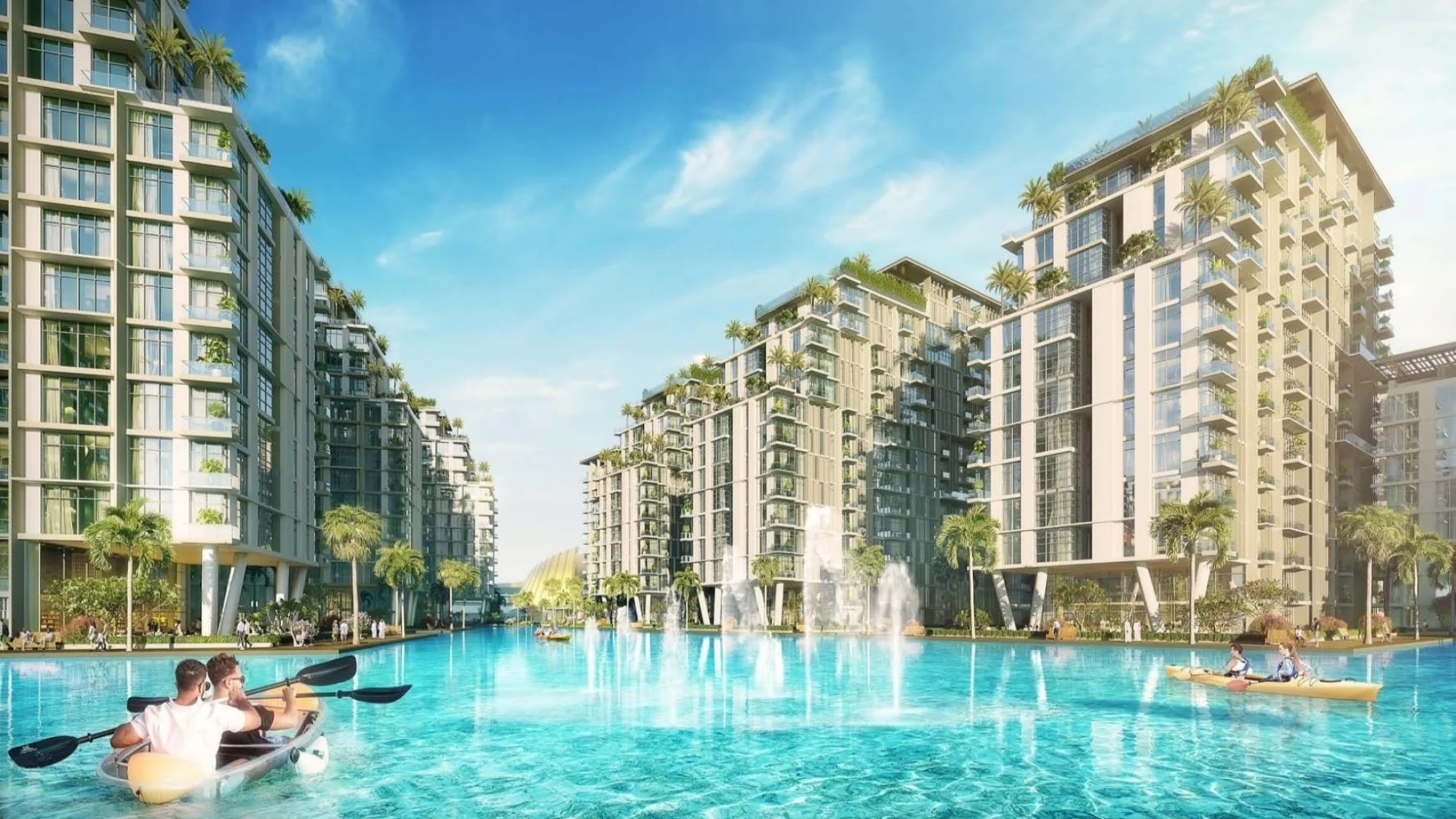
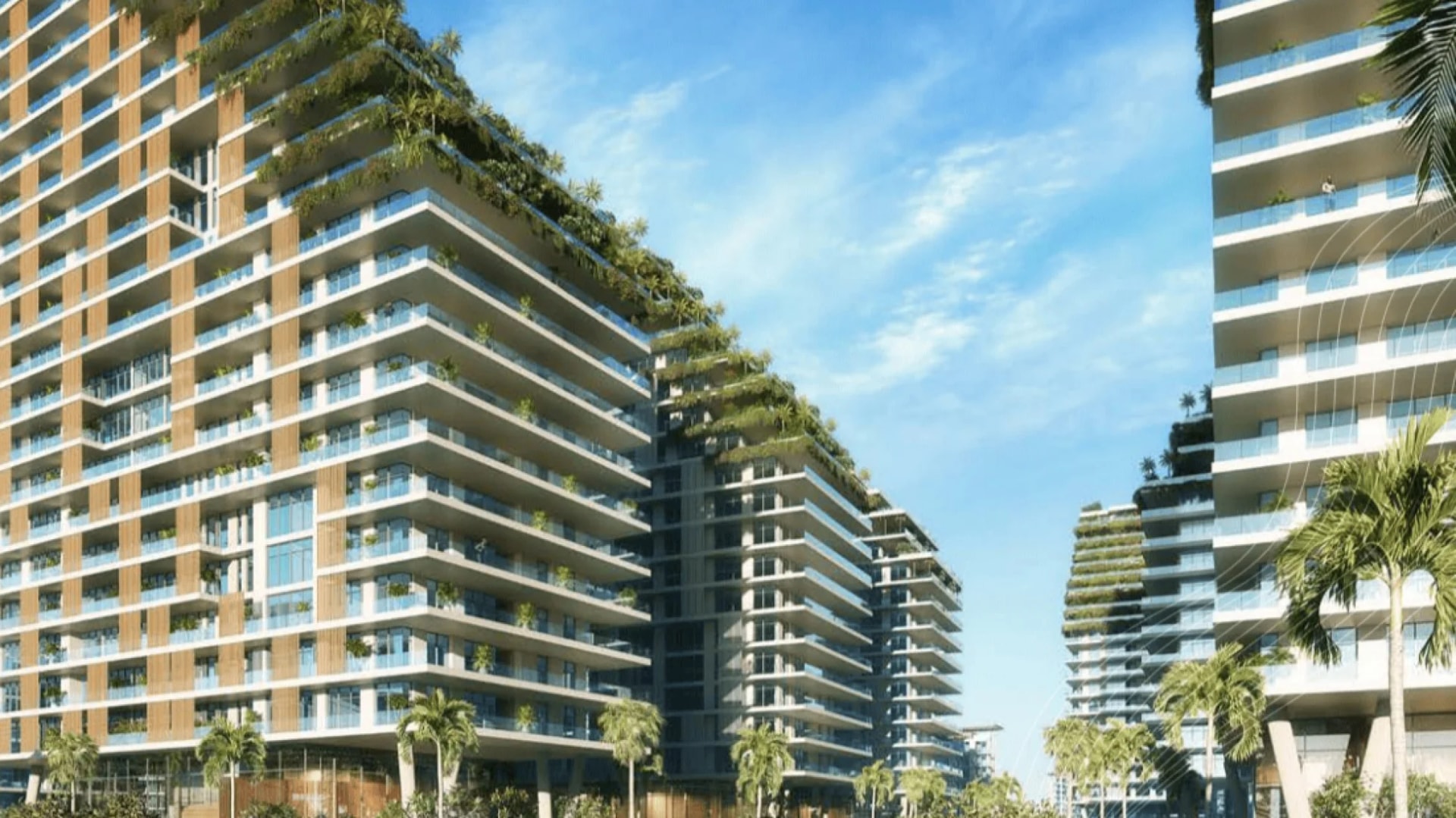
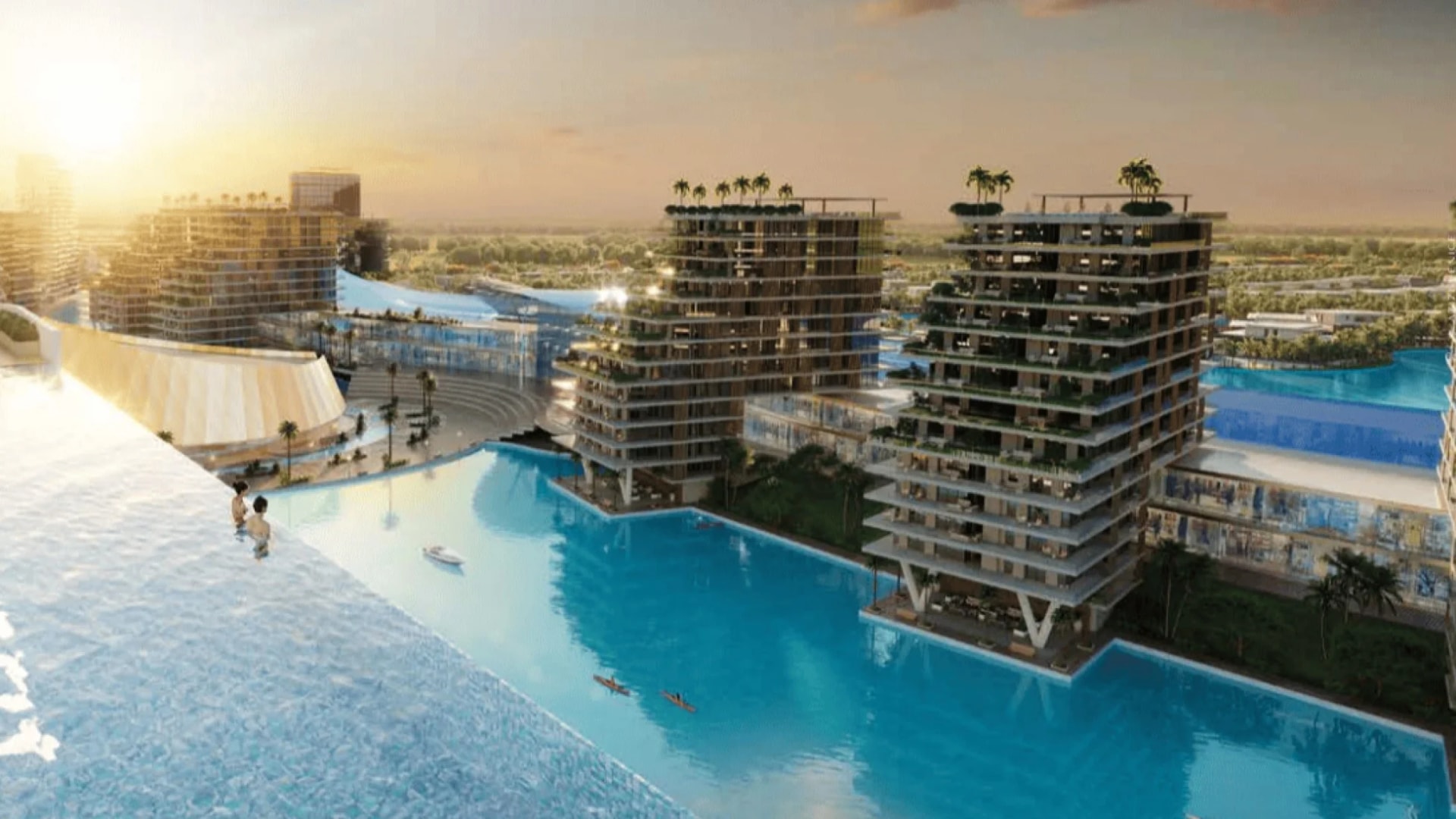
investors face a clear unit-type choice. Apartments dominated by The Pulse, Mag 5 Boulevard, and Saffron deliver headline gross yields of 6.5-9 percent on AED 950-1,600 per square foot pricing. Townhouses and villas dominated by Emaar South Urbana, Pulse Townhouses, and Damac inventory deliver 5.5-7 percent gross on AED 1,000-1,500 per square foot. The yield differential is real, but the total return picture is more nuanced.
This analysis breaks down both unit types across yield, lease stability, capital appreciation, total return, exit liquidity, and tenant base, and gives a clear framework for which one fits which investor inside the Dubai South footprint.
Headline Yield Comparison
| Unit type | Avg ticket (AED) | Avg rent (AED/yr) | Gross yield | Net yield (est.) |
|---|---|---|---|---|
| Studio (Pulse, Mag 5) | 450,000-700,000 | 38,000-60,000 | 7.5-9.0% | 5.5-7.0% |
| 1-bed apartment | 700,000-1,100,000 | 55,000-85,000 | 7.0-8.5% | 5.0-6.5% |
| 2-bed apartment | 1,000,000-1,800,000 | 75,000-130,000 | 6.5-8.0% | 4.5-6.0% |
| 3-bed apartment | 1,500,000-2,500,000 | 105,000-160,000 | 6.0-7.5% | 4.0-5.5% |
| 3-bed townhouse | 1,800,000-2,800,000 | 110,000-160,000 | 5.5-7.0% | 4.0-5.5% |
| 4-bed townhouse | 2,500,000-3,800,000 | 140,000-200,000 | 5.5-6.5% | 4.0-5.0% |
| 4-bed villa | 3,500,000-5,500,000 | 180,000-280,000 | 5.0-6.0% | 3.5-4.5% |
Apartments win on gross yield by 100-250 basis points across most ticket sizes. Studios and one-bedroom apartments deliver the strongest absolute yields because they capture the airport and logistics workforce tenant base, which has limited unit-supply at this price point and steady employer-aligned demand.
Lease Stability and Tenant Retention
Apartment tenancies in Dubai South run on standard one-year cycles with moderate annual renewal rates, typical of the broader Dubai apartment market. Studios and one-bedrooms see higher rotation because the airport workforce moves with employer contracts and family status changes. Two- and three-bedroom apartments retain more steadily, with 60-70 percent annual renewal rates being typical.
Townhouse and villa tenancies retain meaningfully better. Family tenants on employer housing allowance (Emirates Group, corporate housing budgets, government housing) sign two- to three-year leases with annual renewal clauses, and renewal rates of 75-85 percent are typical. Families relocate slowly, school year alignment matters, and exit costs (school transition, fit-out) discourage frequent moves.
On lease stability, townhouses win. The lower headline yield is partly compensated by lower turnover cost, lower vacancy, and lower management overhead per dirham of rent.
Capital Appreciation Trajectory
Dubai South townhouses have outperformed apartments on capital appreciation across 2022-2025, driven by the family migration trend out of older communities into Emaar South and by limited new townhouse supply versus a more aggressive apartment supply pipeline. Townhouses appreciated 30-45 percent across this period in median terms, apartments appreciated 20-35 percent.
Looking forward to 2026-2030, the apartment pipeline remains heavier than the townhouse pipeline, which means apartment supply absorption will compress price growth slightly. Townhouse supply is more constrained, particularly in Emaar South and Pulse Townhouses, and family demand growth from the airport-employee catchment supports continued price appreciation.
On capital appreciation, townhouses have the edge. Apartments deliver more yield, townhouses deliver more appreciation. Total return is closer than the headline yield suggests.
Total Return Modelling
A simple 5-year hold model on AED 2 million capital allocation:
Apartment scenario: AED 2 million ticket, 7.0 percent gross yield, 5.0 percent net yield, 5 percent annual capital appreciation. Cumulative cash yield: AED 500,000 (net). Capital appreciation: AED 2 million * 1.05^5 = AED 2.55 million, gain of AED 552,000. Total 5-year return: AED 1.05 million, 52.5 percent gross.
Townhouse scenario: AED 2 million ticket, 6.0 percent gross yield, 4.5 percent net yield, 7 percent annual capital appreciation. Cumulative cash yield: AED 450,000 (net). Capital appreciation: AED 2 million * 1.07^5 = AED 2.81 million, gain of AED 805,000. Total 5-year return: AED 1.26 million, 62.7 percent gross.
Townhouses win on total return at this assumption set, despite the lower yield. The result is sensitive to the appreciation assumption: if both unit types deliver the same 5 percent appreciation, apartments edge ahead. If townhouses deliver 7 percent or more (the historical 2022-2025 pattern), townhouses win cleanly. Investors should model their own assumptions and not rely on a single yield headline.
Exit Liquidity
Apartment exit in Dubai South is liquid. Studios and one-bedroom apartments under AED 1 million are the most liquid resale ticket in the Dubai market because they target both end-user occupiers and yield investors. Average days-on-market for well-priced Pulse apartments is 30-60 days.
Townhouse exit is slower but solid. Family buyers are pickier on plot, view, and street position, which lengthens days-on-market to 60-120 days for typical townhouses and longer for premium plots. Liquidity is sensitive to school-year cycles: marketing in March-July (pre-September school start) compresses days-on-market significantly.
Villa exit is the slowest segment. Plots over AED 4 million see 90-180 days-on-market and require deeper buyer pre-qualification. Villa investors should plan for longer marketing cycles or accept price flexibility on exit.
On liquidity, apartments win. Investors who may need to exit on short notice should weight apartments more heavily.
Tenant Profile by Unit Type
Apartments draw airport and logistics workforce (studios, one-bedrooms, occasionally two-bedrooms shared), young professional couples (one- and two-bedrooms), and small families on a budget (two- and three-bedrooms). The tenant pool is broad, demand is high, but turnover is also higher.
Townhouses draw families on employer housing allowance, families self-funding the move from central Dubai for space, and Emirates Group employees on housing budgets. The tenant pool is narrower but stickier and higher-quality on credit.
Villas draw senior expat families, corporate executives on premium housing, and high-net-worth investor end-users. The tenant pool is the narrowest but the rents are the highest in absolute terms.
Which Unit Type Suits You
Buy apartments in Dubai South if: you prioritise gross yield, you want lower entry tickets, you value liquidity for potential early exit, your strategy is yield maximisation across multiple positions, or you want exposure to the airport and logistics workforce tenant base.
Buy townhouses in Dubai South if: you prioritise lease stability and tenant retention, you have a 5+ year horizon and accept lower current yield for higher capital appreciation, your tenant target is family employer-housing budgets, or you want exposure to the emerging family migration into Emaar South and Pulse Townhouses.
Buy villas in Dubai South if: you have AED 4 million plus to allocate to a single position, you accept lower yield and slower liquidity for a premium product, or your strategy includes a partial second-home use case alongside the rental investment.
Build a portfolio across both: an AED 4-5 million allocation split into one Pulse apartment and one Emaar South townhouse delivers a balanced yield-and-appreciation profile that is harder to achieve with a single unit type.
Off-Plan Versus Ready Considerations
Both unit types are available in off-plan and secondary form across Dubai South. Off-plan apartments in current Pulse and Mag 5 phases open at AED 850-1,100 per square foot with 50/50 or 60/40 payment plans, roughly 10-15 percent below ready-stock equivalents. Off-plan townhouses in Emaar South Phase 4 and beyond open at AED 950-1,250 per square foot, similar discount versus ready stock.
Off-plan rewards investors who can underwrite delivery risk and time payment outflows against rental income gaps. Ready stock generates yield from day one but at a higher entry price. The gap closes at handover, which is when off-plan investors realise both the discount and the immediate yield.
Townhouse off-plan carries marginally higher delivery risk than apartment off-plan because townhouse delivery cycles are longer (24-36 months versus 18-30 months) and developer construction phasing matters more. Apartment delivery is more standardised. Both carry the standard escrow protections under Dubai Law 8 of 2007. Verify the Trakheesi escrow status before committing on any off-plan unit.
Tenant-Unit Mismatch Risk
A common Dubai South investor mistake is misaligning unit type with target tenant. Studios in Pulse marketed to family tenants underperform on absorption and rent achievement because the size and layout do not fit. Three-bedroom townhouses marketed to young professionals at corporate-housing rents underperform on stability because the tenant base does not need the space and rotates faster.
Get the unit-tenant match right at acquisition. Studios and one-bedroom apartments to airport workforce, logistics employees, and young single professionals. Two-bedroom apartments to couples and small families on standard housing budgets. Three-bedroom apartments to families on moderate housing budgets. Townhouses to families on employer housing allowance. Villas to senior expat families and high-net-worth end-users.
Verifying the tenant base and rent achievement of comparable units in the same project before acquisition is the single highest-use diligence step. Oliva listings include comparable rent achievement data at the project level for this reason.
Service Charge Impact on Net Yield
Service charges are the single largest deduction from gross to net yield for both unit types and merit careful modelling. Apartment service charges in Pulse and Mag 5 run AED 10-16 per square foot. On a 700 sqft one-bedroom apartment, that is AED 7,000-11,200 annually, or roughly 10-15 percent of gross rent at AED 60,000-80,000.
Townhouse community fees in Emaar South run AED 3-6 per square foot. On a 2,000 sqft three-bedroom townhouse, that is AED 6,000-12,000 annually, or roughly 5-10 percent of gross rent at AED 120,000-150,000. Townhouses carry a structural service-charge advantage on a per-rent-dirham basis.
Net yield calculations should also include the 5 percent municipality fee on the rent contract, AED 1,500-3,500 annual property management fees, periodic maintenance reserves of 1-2 percent of rent, and vacancy assumption of 3-5 percent depending on unit type. The full deduction stack typically runs 25-35 percent of gross rent for apartments and 18-28 percent for townhouses.
How Oliva Helps You Decide
Oliva runs each Dubai South listing through a yield calculation that uses live asking-rent comparables, applies realistic service charge and management cost assumptions, and outputs a net yield estimate alongside the gross. You can filter by unit type, ticket size, and yield band, and see Oliva Score breakdowns at the listing level for both apartment and townhouse product.
Read our full Dubai South investor guide for the wider area context, and browse Dubai South properties on Oliva to compare specific apartment and townhouse projects.
Frequently Asked Questions
Do apartments or villas have higher yields in Dubai South?
Apartments have higher gross yields by 100-250 basis points. Studios and one-bedroom apartments at 7.5-9 percent gross are the highest-yielding unit type in Dubai South. Townhouses and villas deliver 5.0-7 percent gross. The yield gap is real, but townhouses tend to outperform on capital appreciation, which closes the total-return gap.
Which has better lease stability?
Townhouses and villas have better lease stability. Family tenants on employer housing allowance sign 2-3 year leases with 75-85 percent renewal rates. Apartment tenants run on standard one-year cycles with 60-70 percent renewal rates. Studios and one-bedrooms see the highest rotation aligned with airport workforce contract cycles.
Which is more liquid for exit?
Apartments. Studios and one-bedrooms under AED 1 million are the most liquid resale ticket in Dubai, with 30-60 day days-on-market typical. Townhouses run 60-120 days, villas 90-180 days. School-year timing materially affects townhouse liquidity, with March-July listings selling faster than autumn or winter listings.
What is the entry ticket for each unit type?
Studios from AED 450,000, one-bedroom apartments from AED 700,000, two-bedroom apartments from AED 1.0 million, three-bedroom townhouses from AED 1.8 million, four-bedroom townhouses from AED 2.5 million, and four-bedroom villas from AED 3.5 million. These are 2026 Dubai South entry tickets, and off-plan releases can open below these levels with payment plans.
Can I build a Dubai South portfolio with both?
Yes, and it is the cleanest approach for investors with AED 4-5 million plus to allocate. A balanced Dubai South portfolio of one Pulse one-bedroom apartment (yield-heavy) and one Emaar South three-bedroom townhouse (appreciation-heavy) delivers the diversified return profile that single unit type allocations cannot. Oliva can model this allocation at the listing level.
Explore further
The project, area, and developer this post covers, with live Dubai Land Department data.
Related articles

Dubai South: Complete Investor Guide 2026

Dubai South vs Damac Hills: Investor Comparison 2026

Expo City Dubai: Investor Guide 2026

Al Maktoum Airport Impact on Dubai South Property 2026
Dubai Land Department: The Complete 2026 Investor Guide

Dubai property + business setup synergy
Related Dubai property analysis from the Oliva editorial team.