
Underwrite before you commit
The figures in this post are checked against Dubai Land Department records and RERA filings. Get an independent underwriting score on any project, or ask Javier on WhatsApp.
The Single Most Important Driver Behind Dubai South
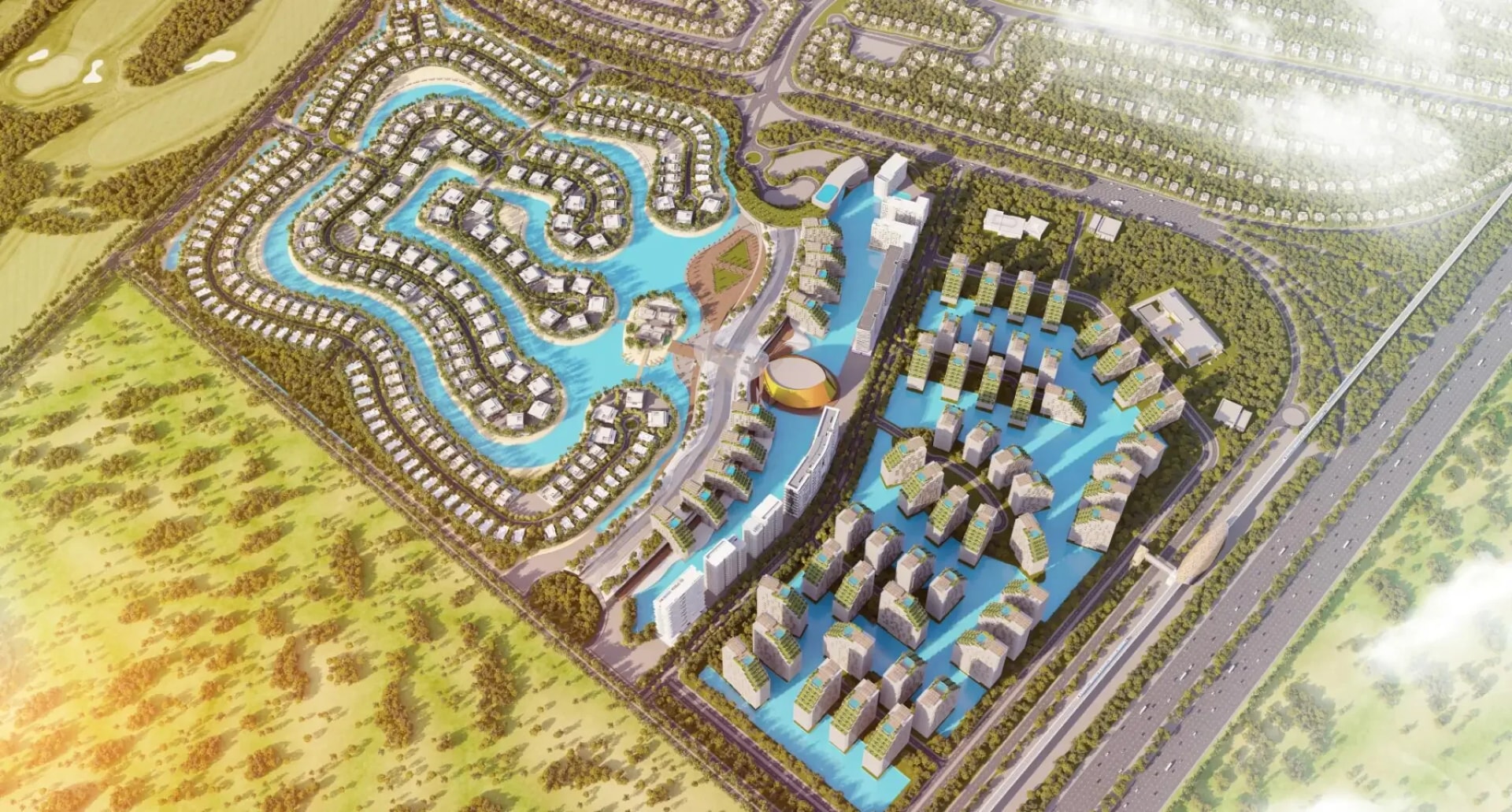
Every Dubai South property investment is, at its core, a position on Al Maktoum International Airport (DWC). The 145 sqkm master community was designed around the airport. The Dubai South Properties brand exists to monetise the airport's catchment. The Aviation, Logistics, and Business Districts feed off the airport's operations. Without the airport, Dubai South is a peripheral suburban community 40 km from Downtown Dubai. With it, Dubai South is the future centre of Dubai's air, cargo, and logistics ecosystem.
This analysis breaks down the airport's USD 35 billion phased expansion programme, the employment and population impact on the surrounding catchment, the implications for residential supply and demand, and how investors should position a Dubai South portfolio for the build-out.
The USD 35 Billion Expansion Programme
Dubai Airports announced the airport expansion programme in 2024 with a confirmed budget of approximately USD 35 billion. The expansion takes Al Maktoum International Airport from current capacity (single-digit million passengers and substantial cargo) to 260 million annual passengers at full build-out, projected for around 2050. At that point, all Dubai International (DXB) passenger operations migrate to DWC and DXB closes for commercial passenger service.
The expansion is phased. Phase 1 delivers a new terminal and runway capacity sufficient to handle approximately 150 million annual passengers in the early to mid 2030s. Subsequent phases scale up to the 260 million target. The construction is funded, contracted to multiple international engineering and construction firms, and underway. Specific phase delivery dates have moved across multiple government announcements and should be treated as indicative.
At full build-out, DWC will be the largest airport in the world by passenger capacity and one of the largest by cargo throughput. The economic and demographic implications for the surrounding catchment are correspondingly large.
Employment and Population Impact
Major airports anchor large employment ecosystems: airline operations, ground handling, retail and F&B, customs and immigration, logistics, aviation maintenance, hotels, and corporate offices. DXB currently supports an estimated 90,000-120,000 direct on-airport jobs and several hundred thousand indirect jobs across the wider Dubai economy. DWC at 260 million passengers will scale comparably or higher.
The migration of DXB operations to DWC over the next 15-25 years drives a corresponding migration of employment from the eastern Dubai catchment (Mirdif, Garhoud, Deira) to the southern catchment (Dubai South, Damac Hills, southern JVC). Employees living within 30 minutes of their workplace is a stable behavioural pattern, and a meaningful share of airport-employed workers will choose Dubai South over an east-of-Downtown commute.
Each major airport phase delivery brings a step-up in this catchment migration. The first phase in the early to mid 2030s likely brings 30,000-50,000 additional employees into the Dubai South catchment, with corresponding family demand for residential units.
Demand and Supply Implications for Residential
On the demand side, each airport phase brings additional rental demand from the airport workforce, additional family-tenant demand for townhouses and villas, additional logistics-employee demand for studios and one-bedroom apartments, and additional corporate housing demand for short-term and serviced product. Demand growth is structural, not cyclical, and aligns with the phased airport delivery.
On the supply side, Dubai South Properties, Emaar South, Damac, Mag, Aldar, and other developers have aggressive off-plan pipelines through 2030. The pipeline is calibrated to absorb the airport-driven demand, but timing mismatches create cyclical opportunities and risks. If supply outpaces a phase of airport delivery, prices stagnate or correct. If supply is constrained as a phase delivers, prices spike.
The structural picture across 2026-2040 is favourable to demand growth. Investors with a long horizon can underwrite this. Tactical investors must time entry against the supply-delivery cycle of specific projects.
Implications for Property Pricing
Historical pattern: airport-anchored property markets globally (Atlanta, Singapore Changi, Hong Kong) have seen price appreciation of 200-400 percent over 15-25 year build-out cycles, materially above broader market appreciation. Dubai South is the GCC equivalent of this pattern, with the additional advantage of being a master-planned community rather than retrofitted around an existing airport.
Conservative scenario for Dubai South residential pricing across 2026-2040: 4-6 percent annual appreciation in line with the Dubai market, plus a 50-100 basis point premium tied to airport-phase deliveries. Cumulative price growth of 70-120 percent over the 15-year horizon.
Aggressive scenario: 6-9 percent annual appreciation as airport phases deliver on or ahead of schedule, with corresponding employment and demographic step-ups. Cumulative price growth of 130-200 percent over the same horizon. Both scenarios outperform mature Dubai areas like Marina or Downtown, which is the central reason long-horizon investors allocate to Dubai South today.
Implications for Rental Yields
Rental yields in airport-driven property cycles typically compress as price rises faster than rent during the appreciation phase. Current Dubai South apartment yields of 6.5-9 percent will likely compress to 5.5-7 percent over the next 5-10 years as the airport thesis prices in. This is the natural pattern of a maturing high-growth area.
Investors locking in current ticket prices at current rents are capturing the higher initial yield band. The same listing bought in 2030 at a likely 30-50 percent higher ticket price will deliver the same or slightly lower rent (rents grow but slower than price) and will yield 5.5-7 percent rather than 6.5-9.
This is the timing argument for Dubai South: yield is higher today than it will be at full price-in, and price is lower today than it will be after airport phases deliver. Both factors favour earlier entry over later entry, within the constraints of an investor's horizon and risk tolerance.
What Could Go Wrong
Airport phase delays. Phase delivery dates have moved across multiple government announcements. Material delays of 3-5 years per phase would stretch the appreciation thesis and reduce annualised returns. The expansion is funded and committed, so total delivery risk is low, but timing risk is real.
Supply overshoot. Aggressive off-plan pipelines from multiple developers could absorb demand faster than expected, creating short-term price stagnation. Selective project picking matters: prioritise projects from established developers with proven delivery records.
Macro shocks. A regional or global recession that compresses Dubai immigration would slow the demand growth from airport-employee migration. The thesis is robust to mild slowdowns but not to major demand shocks.
Single-airport concentration. Dubai South is concentrated on the DWC story. Diversification across Dubai South and another mature area (Marina, Downtown, Damac Hills) reduces single-driver risk for investors holding meaningful absolute exposure.
How to Position a Dubai South Portfolio
Yield-led portfolio: weight studios and one-bedroom apartments in Pulse and Mag 5 to capture the airport-employee tenant base at the highest yield band. Hold for at least 5 years to capture both the steady cash yield and the appreciation step-up from the first major airport phase delivery in the early to mid 2030s.
Appreciation-led portfolio: weight three-bedroom townhouses in Emaar South Urbana and four-bedroom villas in Emaar South Phase 3 to capture the family-migration thesis and the airport-employee family budget tier. Lower yield, higher appreciation, longer hold (8-12 years optimal).
Premium-spec portfolio: weight Expo City Sky Residences and Mangrove Residences to capture the institutional and corporate ESG tenant base at the LEED-certified specification. Lower headline yield than wider Dubai South but premium positioning, Metro access, and more defensive tenant base.
Balanced portfolio: split 40 percent apartments in Pulse and Mag 5, 40 percent townhouses in Emaar South, 20 percent Expo City. Captures the full Dubai South thesis across yield, appreciation, and premium positioning.
Cargo and Logistics: The Underweighted Driver
Passenger capacity gets the headlines, but the cargo and logistics ecosystem at DWC is already operational and growing. Al Maktoum International is positioned as one of the largest cargo airports in the region, with Emirates SkyCargo, dnata cargo operations, and Dubai South Free Zone logistics tenants including DHL, Aramex, FedEx, and UPS already running at significant scale.
Logistics employment has driven the bulk of current Dubai South residential demand. Workforce housing needs in the studio and one-bedroom segment, manager-tier housing in two- and three-bedroom apartments, and corporate accommodation for international logistics rotational staff together generate the steady tenant pull behind current rent levels.
Forward-looking cargo expansion at DWC continues to outpace passenger expansion in the early years of the build-out. Each cargo capacity upgrade brings additional logistics employment into the catchment ahead of the larger passenger phases. Investors should not view the airport thesis as solely a passenger-aviation story; the cargo and logistics layer is a current and continuing demand driver in its own right.
Lessons from Comparable Airport Cities
Singapore Changi Airport's expansion across the 1990s to 2010s drove sustained property appreciation in the East Coast catchment, particularly Tampines, Pasir Ris, and Bedok. Median property values in these districts appreciated 180-280 percent across the airport's major capacity expansion phases, materially above the broader Singapore market.
Hong Kong International Airport's relocation to Chek Lap Kok in 1998 catalysed the Tung Chung new town and the wider Lantau Island catchment. Tung Chung property values rose roughly 150 percent over the 15 years following the airport opening, again outperforming the broader Hong Kong market materially.
Atlanta Hartsfield-Jackson's continued capacity expansion has anchored sustained appreciation in the southern Atlanta catchment around College Park and East Point, with property values tracking airport-employment growth across multiple decades. The pattern is consistent: airport-anchored property markets in growth-trajectory cycles outperform broader market appreciation by 50-150 percent across the build-out period.
Dubai South sits at the equivalent stage to Tung Chung in 2000 or Tampines in 1995: master-planned, anchored by a confirmed expansion programme, priced below mature areas, and positioned for the multi-decade appreciation cycle that comparable airport cities have delivered. Past performance of comparable markets does not guarantee Dubai South outcomes, but the pattern is instructive.
How Oliva Helps Position for the Airport Thesis
Oliva tracks Dubai South listings with airport-thesis context built into the scoring model: distance from key airport access points, proximity to Aviation District employment, and developer delivery quality. Each listing carries a yield estimate against current rents and an Oliva Score reflecting both current fundamentals and the longer-dated airport catalyst.
Read our Dubai South investor guide for the full master-plan context, our villa vs apartment yield analysis for unit-type selection, and browse Dubai South properties on Oliva for active inventory.
Frequently Asked Questions
Will Al Maktoum Airport really replace DXB?
Yes. Dubai Airports has confirmed that all Dubai International (DXB) passenger operations migrate to Al Maktoum International (DWC) once the DWC expansion reaches full build-out, currently targeted for around 2050 at 260 million annual passenger capacity. DXB then closes for commercial passenger service. The expansion is funded, contracted, and under construction. Specific phase delivery dates are indicative.
When is the next major airport phase delivery?
The first major terminal phase, taking capacity to approximately 150 million annual passengers, is targeted for the early to mid 2030s. This is the first major employment and demand step-up for the Dubai South catchment. Subsequent phases scale up to the 260 million target by approximately 2050.
How does the airport build-out affect Dubai South property prices?
Each major airport phase brings additional employment, residential demand, and infrastructure into the catchment. Conservative scenario: 70-120 percent cumulative price growth across 2026-2040. Aggressive scenario: 130-200 percent cumulative growth over the same horizon. Both materially exceed expected appreciation in mature Dubai areas. Past performance does not guarantee future returns.
Will rental yields compress in Dubai South?
Yes, gradually. Current apartment gross yields of 6.5-9 percent will likely compress to 5.5-7 percent over the next 5-10 years as price rises faster than rent during the appreciation phase. This is the natural pattern of maturing growth markets. Investors locking in current entry prices and current rents capture the higher initial yield band.
What is the biggest risk to the Dubai South airport thesis?
Material airport phase delays of 3-5 years per phase. The expansion is funded and committed, so total delivery risk is low, but timing risk is real. Investors should size their hold period to capture at least one major airport phase, which generally means 8 years minimum, and should allow flexibility on hold horizon if phase deliveries slip.
Explore further
The project, area, and developer this post covers, with live Dubai Land Department data.
Related articles

Dubai South: Complete Investor Guide 2026

Dubai South vs Damac Hills: Investor Comparison 2026

Expo City Dubai: Investor Guide 2026

Dubai South Villa vs Apartment Yield Analysis 2026
Dubai Land Department: The Complete 2026 Investor Guide

Dubai property + business setup synergy
Related Dubai property analysis from the Oliva editorial team.