
Underwrite before you commit
The figures in this post are checked against Dubai Land Department records and RERA filings. Get an independent underwriting score on any project, or ask Javier on WhatsApp.
Emerging Dubai Areas That Smart Investors Watch
The best areas to invest in Dubai right now sit outside the established core. Dubai South, Dubai Islands, Expo City, and MBR City all share the same profile: master-planned infrastructure, government-backed development timelines, and entry prices 30-55% below comparable units in mature neighborhoods.
We track these four areas because they follow a pattern we have seen repeat across Dubai. New transport links, anchor tenants, and population targets drive prices upward within 3-5 years of infrastructure completion. DLD transaction data from Q1 2026 shows combined off-plan sales in these four areas rose 42% year-on-year.
This analysis covers each area in depth. We break down price per square foot, expected yields, infrastructure catalysts, developer track records, and projected completion timelines. All figures are sourced from Dubai Land Department records and RERA-registered project data.
Data sourced from Dubai Land Department. Last updated April 2026. RERA BRN 1573501.
Key Takeaways
Dubai South apartments start at AED 550/sqft with projected gross yields of 8-10%. The Al Maktoum International Airport expansion, targeting 260 million passengers annually, is the single largest demand driver in Dubai real estate today.
Dubai Islands off-plan units trade at AED 1,400-2,200/sqft, a 35% discount to Palm Jumeirah. Nakheel and third-party developers have launched over 15,000 units. The first handovers begin in Q4 2026.
Expo City residential launches price between AED 1,200-1,800/sqft. The area already has functioning metro access, a 25,000-capacity events arena, and confirmed headquarters for Siemens and DP World.
MBR City villas and townhouses sell at AED 1,100-2,000/sqft. District One and Sobha Hartland are 70% occupied, proving tenant demand before the full buildout completes.
Why Emerging Areas Outperform Established Neighborhoods
Established communities like Downtown Dubai and Dubai Marina have delivered strong returns over the past decade. But entry prices now sit at AED 2,200-4,500/sqft, compressing gross yields to 4-6%. Capital appreciation in these areas has slowed to 5-8% annually as pricing approaches global luxury benchmarks.
Emerging areas offer a different math. You buy at AED 550-1,800/sqft and ride the infrastructure curve upward. The pattern is consistent across Dubai history.
JVC traded at AED 400-600/sqft in 2018. By Q1 2026, completed units sell at AED 900-1,300/sqft. That is a 120% increase in 8 years, on top of 7-9% annual rental yields along the way. Dubai Hills Estate followed the same trajectory once the mall, metro station, and schools opened.
The four areas we cover below are at similar early stages. Each has confirmed government investment, credible master developers, and measurable demand signals.
Infrastructure Catalysts: Side-by-Side Comparison
| Area | Entry Price (AED/sqft) | Gross Yield | Key Catalyst | Target Population | Developer |
|---|---|---|---|---|---|
| Dubai South | 550-900 | 8-10% | Al Maktoum Airport Expansion | 1,000,000 | Dubai Aviation City Corp |
| Dubai Islands | 1,400-2,200 | 5.5-7% | Beach/Retail Promenade 2027 | 80,000 | Nakheel |
| Expo City | 1,200-1,800 | 5-7% | Metro + Corporate HQs | 65,000 | Expo City Authority |
| MBR City | 1,100-2,000 | 5-7.5% | Meydan Mall + Racecourse | 120,000 | Meydan / Sobha |
Note: Entry prices reflect off-plan and recently completed inventory as of Q1 2026. Yields are projected based on comparable rental rates in adjacent completed communities.
Dubai South: The Airport City Opportunity
Dubai South sits adjacent to the Al Maktoum International Airport, which is undergoing a AED 128 billion expansion. When phase one completes in 2030, it will become the world's largest airport by passenger capacity. That single fact shapes the entire investment case.
The residential district spans 145 square kilometers. Current inventory includes studios, one-beds, and two-beds from developers like Emaar, Damac, and Azizi. Studios start at AED 350,000. Two-bedroom apartments top out around AED 850,000.
We see strong demand from aviation, logistics, and Expo-related employees. The Dubai South Free Zone hosts over 4,500 registered companies. Monthly rents for studios run AED 28,000-35,000 per year, pushing gross yields above 8% on current purchase prices.
Dubai South Price Trajectory
DLD data shows Dubai South apartment prices rose 18% between Q1 2025 and Q1 2026. Transaction volume increased 35% in the same period. Off-plan sales accounted for 72% of all transactions, indicating strong forward demand.
We project prices to reach AED 750-1,100/sqft by 2028 as airport construction reaches visible milestones and the Etihad Rail freight terminal begins operations. The key risk is timeline slippage on the airport expansion, which would delay the population influx that drives rental demand.
Service charges in Dubai South average AED 8-12/sqft annually. Combined with zero property tax and zero income tax on rentals, the net yield profile remains the strongest of the four areas we cover.
Dubai Islands: Nakheel's Next Waterfront Play
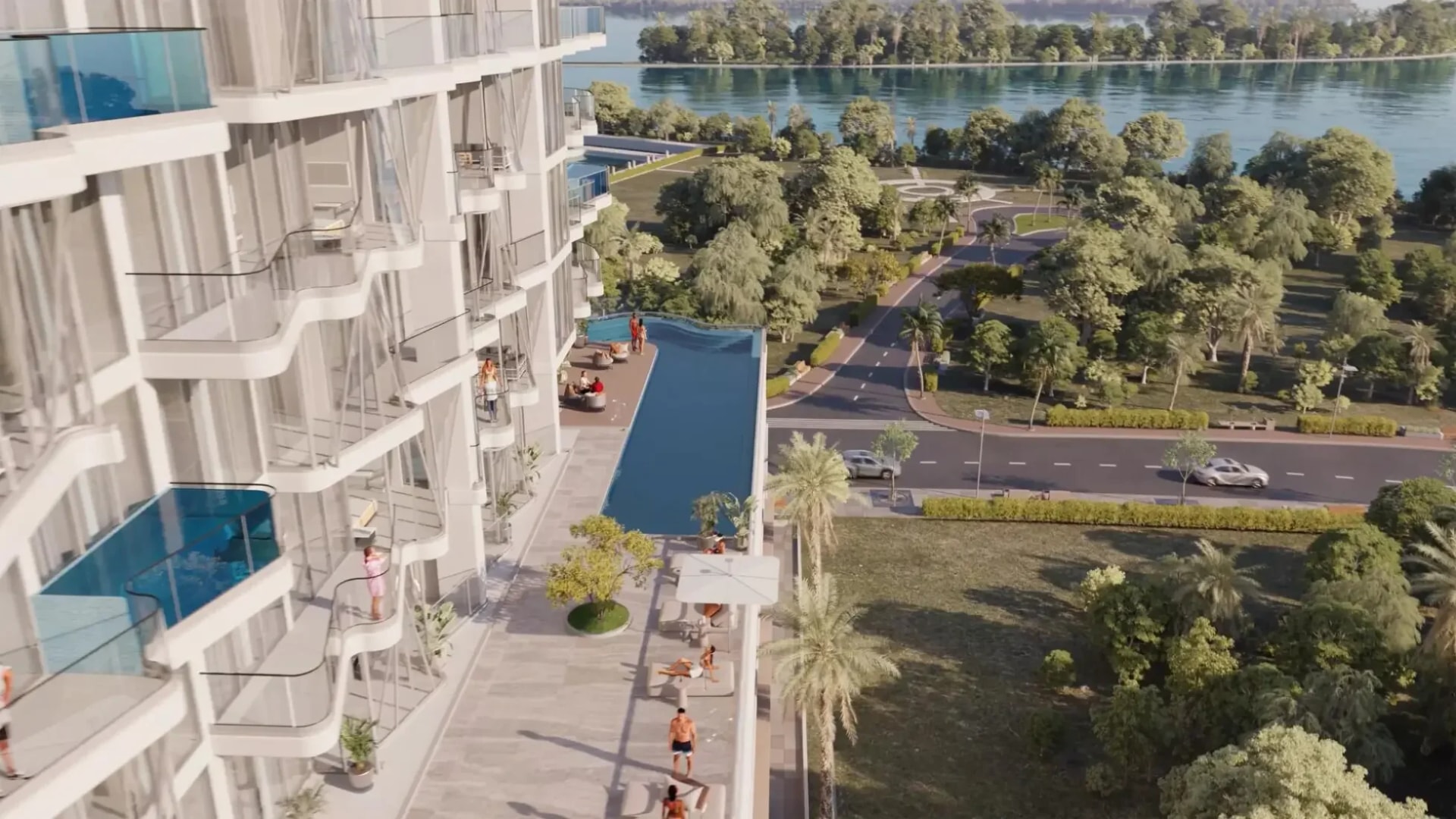
Dubai Islands (formerly Deira Islands) is a five-island archipelago off the Deira coastline. Nakheel is the master developer. The project adds 80 kilometers of new waterfront to Dubai, with a mixed-use plan covering hospitality, retail, and approximately 25,000 residential units at full buildout.
Current off-plan prices range from AED 1,400-2,200/sqft for apartments and AED 1,800-3,000/sqft for townhouses. For context, comparable waterfront units on Palm Jumeirah trade at AED 2,800-5,000/sqft. That 35-55% discount is the core of the investment thesis.
The first phase includes a 10-kilometer beach promenade, two five-star hotels, and a 1.2 million square foot retail destination. Handovers for Phase 1 residential begin in Q4 2026.
Dubai Islands Investment Case
Nakheel's track record matters here. They delivered Palm Jumeirah, which is now the most valuable residential address in Dubai per square foot. They also delivered Dragon Mart, Ibn Battuta Mall, and the Nakheel Mall. Execution risk is lower with this developer than with most.
The demand side is supported by proximity to Deira, Gold Souk, and Dubai Creek. These are high-traffic areas with established commercial ecosystems. You can reach Dubai International Airport in 15 minutes and Downtown Dubai in 20 minutes.
We estimate gross yields of 5.5-7% once units are completed and leased. Capital appreciation of 15-25% between purchase and handover is realistic based on comparable off-plan projects by Nakheel.
The primary risk is oversupply. With 25,000 units planned, absorption rate matters. we recommend you targeting two-bedroom and three-bedroom units, which historically show stronger demand and lower vacancy rates in waterfront communities.
Expo City: From World Fair to Permanent District
Expo City Dubai
occupies the 4.38 square kilometer site of Expo 2020. Unlike previous host cities that struggled with legacy use, Dubai converted the site into a functioning mixed-use district within 18 months of the event closing.
The area already has operational metro access (Route 2020 extension), the Al Wasl Plaza events venue, Terra sustainability pavilion, and confirmed corporate tenants. Siemens Energy moved its global headquarters here. DP World established a major presence. The Ministry of Industry and Advanced Technology operates from the site.
Residential development is now underway. Emaar launched "Expo Valley" with villa plots starting at AED 1,200/sqft. Apartment projects from multiple developers price between AED 1,300-1,800/sqft.
Expo City Yield Analysis
The corporate tenant base gives Expo City a unique advantage. Employees of on-site companies create immediate rental demand for nearby housing. We estimate 12,000-15,000 corporate employees will work at the site by 2028.
Projected gross yields sit at 5-7% based on current launch prices and rental comparables from nearby Dubai South and Dubai Investment Park. Capital appreciation potential is strong because the area transitions from "emerging" to "established" faster than most. The infrastructure already exists.
Service charges are estimated at AED 14-20/sqft annually, in line with mid-range Dubai communities. The master plan includes parks, cycling tracks, schools, and healthcare facilities within the district.
We flag one consideration: Expo City's residential supply is still limited. Most current launches are villas and townhouses above AED 2 million. Apartment inventory for yield-focused investors will expand through 2027.
MBR City: The Mega-District Taking Shape
Mohammed Bin Rashid City (MBR City) is one of the largest master-planned developments in Dubai. It spans an area roughly the size of Downtown Dubai, Business Bay, and DIFC combined. The district sits along the Meydan racecourse and extends south toward Al Khail Road.
Two sub-communities are already mature: District One and Sobha Hartland. District One Crystal Lagoons villas sell at AED 15-35 million. Sobha Hartland apartments range from AED 1.2-2.5 million. Both show occupancy rates above 85%.
The broader MBR City buildout includes Meydan One Mall (planned as one of the world's largest), additional residential districts, and a network of parks and waterways. The Meydan One tower, if completed as planned, would include the world's highest sky restaurant.
MBR City: Villa vs. Apartment Returns
| Property Type | Price Range (AED) | Size (sqft) | Annual Rent (AED) | Gross Yield | Capital Growth (2024-2026) |
|---|---|---|---|---|---|
| Studio Apartment | 650,000-900,000 | 400-550 | 50,000-65,000 | 7-7.5% | 12% |
| 1-Bed Apartment | 1,000,000-1,500,000 | 650-900 | 70,000-95,000 | 6.5-7% | 14% |
| 2-Bed Apartment | 1,500,000-2,500,000 | 1,000-1,400 | 100,000-140,000 | 5.5-6.5% | 15% |
| 3-Bed Townhouse | 2,500,000-4,000,000 | 1,800-2,500 | 150,000-200,000 | 5-5.5% | 18% |
| 4-Bed Villa | 5,000,000-12,000,000 | 4,000-7,000 | 280,000-500,000 | 4.5-5% | 22% |
Apartments in MBR City deliver higher yields. Villas deliver stronger capital appreciation. Your choice depends on whether you need annual cash flow or prefer long-term asset growth.
Sobha Hartland Phase 2 is the most active sub-market right now. Off-plan two-bedroom apartments from Sobha start at AED 1.6 million with a 60/40 payment plan. Handovers for current launches are scheduled for 2027-2028.
How to Evaluate Any Emerging Area in Dubai
We use a five-factor scoring model when assessing emerging areas for buyers. You can apply the same framework to any district we have not covered here.
Factor 1: Government commitment. Look for gazetted master plans, confirmed budget allocations, and visible construction progress. Dubai South scored highest on this factor because the airport expansion has a AED 128 billion committed budget.
Factor 2: Transport connectivity. Metro access adds 10-15% to property values based on DLD data. Road connectivity to SZR or major arterials is the minimum. Factor in planned RTA expansions announced in the Dubai 2040 Urban Master Plan.
Factor 3: Developer credibility. Stick with developers who have delivered previous projects on time. Emaar, Nakheel, Sobha, and Meraas have the strongest track records. RERA's developer grading system provides public ratings.
Factor 4: Anchor tenants or employers. Corporate headquarters, universities, hospitals, and government offices bring guaranteed population. Expo City wins on this factor with confirmed multinational tenants already operating.
Factor 5: Supply-demand balance. Check RERA's quarterly reports for completion pipelines. An area with 10,000 planned units needs a population growth trajectory to absorb them. Compare planned supply against the target population in the master plan.
Timing Your Entry into Emerging Areas
The optimal entry point is after the master plan is confirmed and construction begins, but before anchor infrastructure completes. This is the "early believer" window where prices reflect current conditions rather than future potential.
For Dubai South, we believe this window stays open through 2027. Airport construction milestones will become visible and media coverage will accelerate, pushing prices upward.
For Dubai Islands, the window narrows in Q4 2026 when first handovers occur. Completed units with proven rental income always trade at a premium to off-plan.
For Expo City, the window is narrow already. Limited residential supply and strong corporate demand mean early launches may sell out before the broader market catches on.
For MBR City, the window varies by sub-community. Sobha Hartland Phase 2 and new Meydan launches still offer entry at pre-establishment pricing. District One is already established and priced accordingly.
Acquisition Costs and Process
Total acquisition costs for any of these areas run 7-8% above the purchase price. Here is the breakdown.
DLD registration fee: 4% of purchase price plus AED 580 admin fee. This is non-negotiable and applies to all Dubai property transactions.
Agency commission: Typically 2% plus 5% VAT on the commission. Some developers cover agency fees on primary sales.
Oqood fee (off-plan): AED 5,250 for registering an off-plan contract with DLD. This converts to a title deed at handover.
Service charge deposit: Most developers require one year of service charges upfront at handover. Budget AED 8-20/sqft depending on the community.
For mortgage buyers, add a valuation fee of AED 2,500-3,500 and a mortgage registration fee of 0.25% of the loan amount. Foreign you can access mortgage financing up to 50% LTV for properties above AED 5 million.
All off-plan purchases are protected by RERA escrow regulations. Developer payments go into a DLD-regulated escrow account. Funds release only when independent engineers verify construction milestones. This is a structural protection that applies across all four areas.
Risk Factors to Monitor
Emerging areas carry risks that established neighborhoods do not. we recommend you monitoring these factors quarterly.
Construction delays. Off-plan projects can face 6-18 month delays. RERA requires developers to disclose revised timelines, but your capital is locked during delays. Mitigate by choosing developers with strong completion histories.
Oversupply in specific unit types. Studios and one-beds face the highest oversupply risk because developers favor them for lower price points. Two-beds and three-beds typically have healthier supply-demand ratios.
Infrastructure timeline changes. The Al Maktoum Airport expansion timeline has shifted multiple times. If Phase 1 slips beyond 2030, Dubai South price appreciation will slow.
Currency risk for non-AED investors. The AED is pegged to the USD, so dollar-based investors face no currency risk. EUR, GBP, and INR you should factor in exchange rate movements over their hold period.
What we recommend you at Oliva
We help investors select specific units in these emerging areas based on their budget, target yield, and hold period. Our analysis goes beyond general area recommendations to evaluate individual towers, floors, and payment plans.
For yield-focused investors with budgets under AED 1 million, we point toward Dubai South studios and one-beds. The airport catalyst is real, the timeline is confirmed, and current prices offer the widest margin of safety.
For balanced investors with AED 1-3 million, MBR City apartments and Dubai Islands two-beds provide a mix of yield and appreciation. Both areas have proven demand signals from adjacent completed communities.
For capital growth investors above AED 3 million, Expo City villas and Dubai Islands premium units offer the strongest long-term positioning. These areas will mature into established luxury districts within 5-7 years.
Contact our team for a free portfolio review. We will match your investment profile to specific opportunities across these emerging areas. RERA BRN 1573501.
Related guides: - Escrow Agreement in Dubai: What It Contains - DLD Mortgage Registration Fee: 2026 Rates - Buyers and Sellers: Who Signs Form F
Explore Dubai Areas on Oliva
What You Need to Prepare Before Buying Dubai Property
Before you commit to any property, prepare your documents, confirm your budget, and verify your financing position. Your passport must have at least 6 months of remaining validity from your expected closing date. Your proof of address must be dated within 3 months.
If you plan to use mortgage financing, get your pre-approval letter before you start viewing properties. Your pre-approval letter tells you your maximum loan amount and gives you a clear budget ceiling. You can typically receive pre-approval within 5-7 business days through a UAE bank.
Once you identify a property you want, verify that your agent holds a valid Trakheesi permit before you sign any paperwork. Your 10% deposit is protected under Form F, but only if your agreement is registered through a RERA-licensed broker. Confirm your due diligence list is complete before transfer day. RERA BRN 1573501. Source: Dubai Land Department.
Important Notice
Past performance does not guarantee future returns. Investing in real estate involves risk, including the potential loss of capital. Rental yields, capital appreciation projections, and market statistics cited above are based on historical data and are provided for informational purposes only. Please consult a qualified financial or legal advisor before making any investment decision.
Frequently Asked Questions
Which emerging areas in Dubai offer the best investment potential?
Dubai South (near Al Maktoum Airport, Blue Line metro), MBR City (Meydan district, mixed-use master plan), Expo City (legacy of Expo 2020, government investment hub), and Dubai Islands (rebranded Deira Islands, waterfront living) are the four strongest emerging areas. Each has a confirmed infrastructure catalyst driving future demand.
Why is Dubai South considered a top emerging area?
Dubai South surrounds Al Maktoum International Airport, which is being expanded to become the world's largest airport. The area will also be connected by the Metro Blue Line. Current entry prices of AED 380,000 to 600,000 for one-beds offer gross yields of 7 to 9%, with significant appreciation potential as airport operations scale up.
What are the risks of investing in emerging Dubai areas?
Three main risks: infrastructure delays (metro, roads, amenities may take longer than planned), oversupply if multiple developers launch simultaneously, and lower liquidity compared to established areas. Emerging areas require a 3 to 5 year hold period to realize full returns, which is longer than established neighborhoods.
How do emerging area prices compare to established Dubai neighborhoods?
Emerging areas offer 30 to 50% lower entry prices than established communities. A one-bedroom in Dubai South costs AED 380,000 to 600,000 versus AED 800,000 to 1,200,000 in Business Bay or AED 1,200,000 to 1,800,000 in Dubai Marina. This price gap narrows as infrastructure develops and demand increases.
What budget should I allocate for emerging area investments?
For yield-focused investors, budgets under AED 1 million work well in Dubai South studios and one-beds. For balanced investors with AED 1 to 3 million, MBR City apartments and Dubai Islands two-beds provide yield plus appreciation. Capital growth above AED 3 million is strongest in Expo City villas and Dubai Islands premium units, which offer the best long-term appreciation positioning.
When is the best time to buy in an emerging Dubai area?
The best entry point is after the infrastructure catalyst is confirmed but before construction is visible. For Dubai South, the airport expansion and Blue Line confirmation created this window in 2023-2024. For Dubai Islands, the beach infrastructure completion in 2025 marked the catalyst. Buying after infrastructure is operational means paying the full premium.
Explore further
The project, area, and developer this post covers, with live Dubai Land Department data.
Related articles

Arabian Ranches vs Dubai Hills: Where Investors Actually Make More Money

Dubai Land Department: The Complete 2026 Investor Guide

RERA vs DLD: What's the Difference and Why It Matters to You

Trakheesi Permit System: Why Every Dubai Property Listing Needs One
Best Areas to Invest in Dubai: 2026 Ranked Guide

Escrow Agreement in Dubai: What It Contains
Related Dubai property analysis from the Oliva editorial team.