Underwrite before you commit
The figures in this post are checked against Dubai Land Department records and RERA filings. Get an independent underwriting score on any project, or ask Javier on WhatsApp.
TL;DR: Choose Between Dubai Marina and JBR
Both areas are credible 2026 picks but optimise for different buyers. Dubai Marina suits young professionals who value Marina Walk Promenade and accept service charges are among the highest in dubai (aed 16-24/sqft for older towers). JBR sits directly on the Gulf beachfront and prices 10-15% above Dubai Marina at every comparable unit size; the unit-by-unit numbers are in Dubai Marina vs JBR investor comparison.
On the numbers: Dubai Marina 2026 yields run 4.8-6% net, with service charges of AED 16-24/sqft and entry tickets from AED 1.4M-2.2M for a 1-bedroom. JBR comparable metrics should be cross-checked on the latest DLD area report - bring exact comps before transacting.
Bottom line: yields generally favour the comparable area by roughly 0.2 percentage points; capital growth narrative favours whichever area has the more constrained future supply pipeline. Use the 4-question decision framework lower in this post to land the choice for your specific situation.
Dubai Marina: Key Metrics
| Metric | Dubai Marina |
|---|---|
| Price/sqft (typical 1BR) | AED 1,450-2,600 |
| Gross yield | 6-7.5% |
| Net yield | 4.8-6% |
| Service charge | AED 16-24/sqft |
| Metro | Red Line via DMCC Metro and Sobha Realty Metro |
| Time to DIFC | 20-25 min to DIFC |
| Time to DXB | 30-35 min to DXB |
| Family infrastructure | Moderate |
| Future supply pipeline | Marina expansion is largely complete |
Source: DLD transaction registry Q1 2026 for Dubai Marina; JBR comparable data should be cross-checked on the latest DLD area report.
Price-per-sqft and Total Ticket Comparison
In Dubai Marina, expect AED 1,450-2,600/sqft for typical 2026 launches and resale stock. A typical 1-bedroom of 750 sqft lands at AED 1.4M-2.2M.
Practical implication: at the top of Dubai Marina's range you can typically buy a comparable unit in JBR one tier up in product quality, or vice versa. Run the unit-level comp before assuming the area-level average.
Yield and Service Charge Comparison
Net yield in Dubai Marina runs 4.8-6% in 2026. The net yield gap with JBR is typically 0.5-1.5 percentage points either direction depending on whether the comparison area is cheaper (higher yield) or more expensive (lower yield) per sqft.
Service charge difference matters for the "true" yield comparison: Dubai Marina sits at AED 16-24/sqft. A 0.3% net yield advantage is wiped out by a AED 4/sqft higher service charge on a 800 sqft unit. Always normalise yields net of service charges and management.
On a 30-year DCF, the yield gap matters more than the entry-price gap. If you're cash-flow focused, choose the higher-net-yield area even at a price-/sqft premium.
Lifestyle and Daily Life Comparison
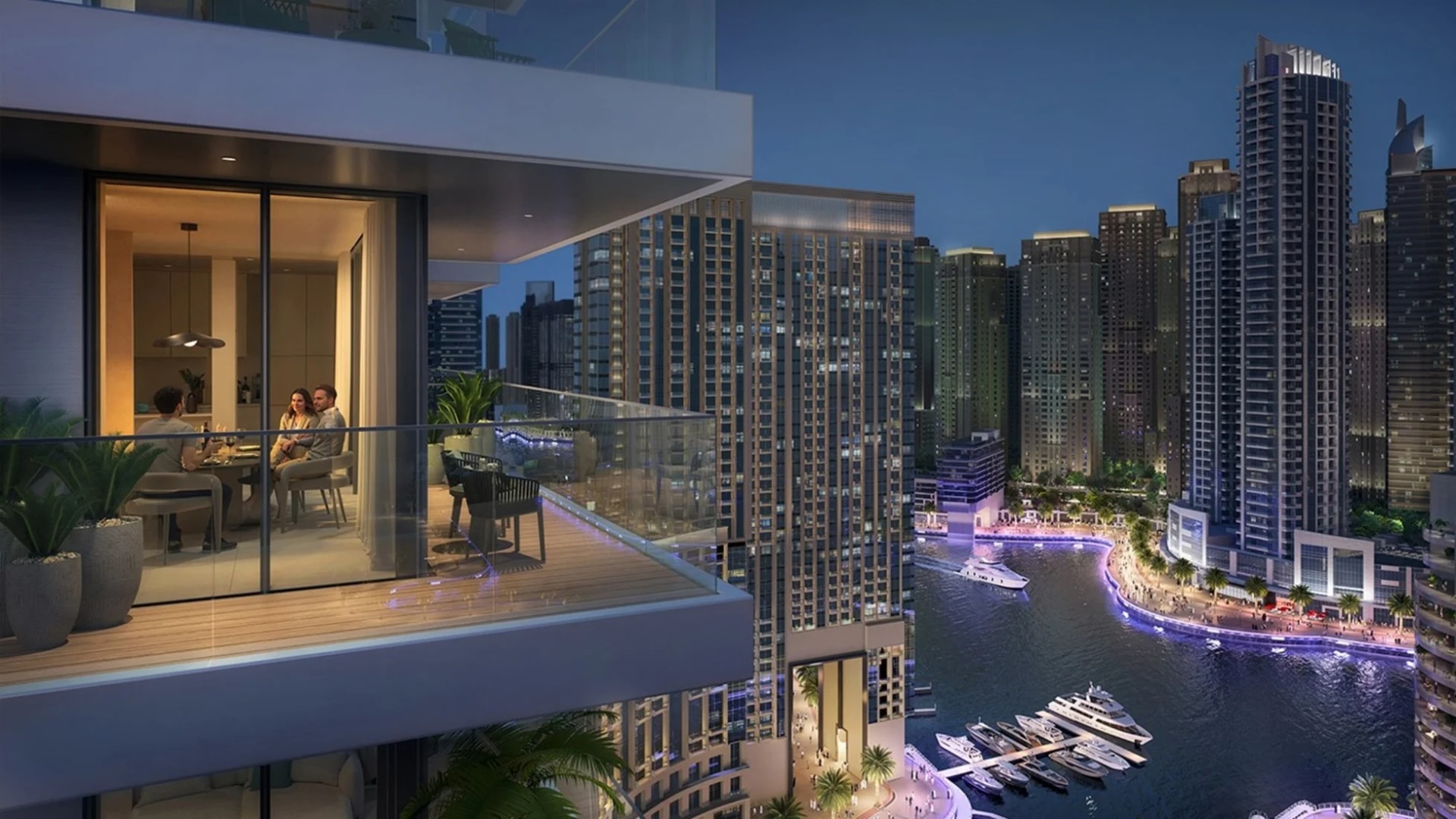
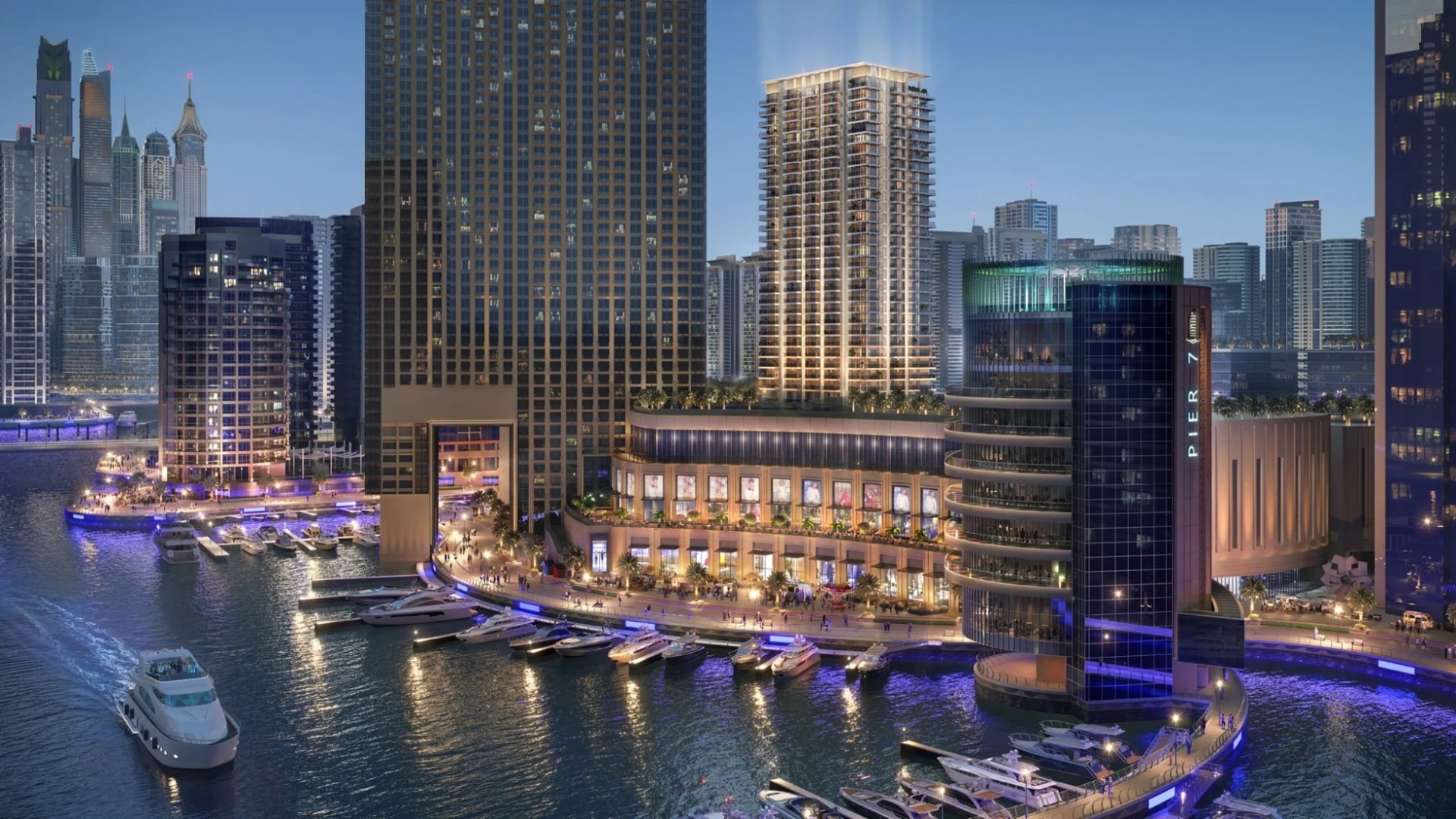
Dubai Marina lifestyle: Morning run on JBR Beach by 6:30am; coffee at Marina Walk; 25-minute cab to DIFC; lunch at Pier 7 mid-week; weekend brunch at Pier 7 or 5-min walk to JBR The Walk.
JBR lifestyle: beachfront living on The Walk, with the open beach, retail and restaurants at street level rather than a canal-side tower setting.
The lifestyle delta usually breaks down to: F&B density, beach/water access, walkability, social fabric (singles vs families), and short-let permissibility. Pick the area whose lifestyle matches your weekend pattern, not the one that "looks better in a brochure."
Infrastructure: Schools, Healthcare, Transit
Dubai Marina family infrastructure: Dubai International Academy Emirates Hills, Emirates International School Meadows, Mediclinic Meadows. Metro: Red Line via DMCC Metro and Sobha Realty Metro; Tram loop along the Marina.
JBR family infrastructure: JBR reaches the Red Line by tram with a transfer rather than a direct metro station, against Marina's direct DMCC station. For the fuller comparison see Dubai Marina vs JBR investor comparison.
Across both areas, KHDA-rated schools are the most common deciding factor for families. Verify ratings on https://www.khda.gov.ae and confirm 2026/27 fees.
Transit and Commute Comparison
From Dubai Marina: 20-25 min to DIFC to DIFC, 30-35 min to DXB to DXB, 12-15 min to Mall of the Emirates to the major mall. Metro: Red Line via DMCC Metro and Sobha Realty Metro.
From JBR: the tram serves JBR with a transfer onto the Red Line, against Dubai Marina's direct DMCC station access.
The commute trade-off compounds - saving 10 minutes each way over a 5-year hold is ~30 working days of your life. Don't underweight it.
Investor Perspective vs End-User Perspective
Investor takeaway
Dubai Marina concedes some yield for premium-segment capital growth. The right pick is a function of your hold-period IRR target, not snapshot yield.
End-user takeaway
optimise for commute, schools (if applicable), and lifestyle fit. Yield differences of 0.5-1.0% net don't outweigh a 30-minute extra commute or the wrong school district.
Hybrid (live-then-rent)
choose the area where you can comfortably live for 2-3 years AND rent profitably afterwards. Both Dubai Marina and JBR can work; the loser is whichever doesn't match your lifestyle.
Long-Term Outlook (2026-2030)
Dubai Marina pipeline
Marina expansion is largely complete; new supply mostly limited to Sobha Seahaven, LIV-led pockets, and Damac Bay; ~5,800 units pipeline through 2028.
JBR pipeline
JBR's stock is the established Rimal, Shams and Murjan beachfront clusters. Check the DLD project registry for any current launches before assuming new supply.
In Dubai, future supply pressure is the single best leading indicator of medium-term price and rent direction. Areas with constrained pipeline (Palm Jumeirah, Downtown Dubai) tend to defend prices through cycles; areas with heavy pipeline (Dubai South, JVC, Business Bay) trade off price defence for absorption velocity.
Verify pipeline numbers on the DLD project registry at https://dubailand.gov.ae before committing.
Rental Demand Depth and Tenant Mix
Dubai Marina rental demand is anchored by young professionals, expat couples, short-let tourists, media city and tecom workers. This shapes both rental ceiling (what tenants will pay) and floor (how quickly units re-let after vacancy). For context, well-priced units across Dubai typically clear in about 14 days.
Practical implication for landlords: the area with the deeper tenant pool typically delivers higher occupancy at the rental ceiling, even if the headline yield looks similar. Dubai Marina's tenant pool is corporate-anchored, supporting steady annual leases - match the building bylaw to the rental strategy you intend to run.
Short-Let / Holiday Home Comparison
Short-let regulation in Dubai is administered by the Department of Economy and Tourism (DET, formerly DTCM). Both Dubai Marina and JBR fall under the same regulatory framework, but building-level permission is the variable that decides whether short-let is actually viable.
Dubai Marina short-let positioning
one of the strongest short-let markets in Dubai. Tourist-anchor location supports high ADRs (AED 600-2,400/night depending on tier). Most buildings permit short-let with OA approval.
JBR short-let positioning typically follows similar tower-level rules - verify each specific building's bylaws before underwriting Airbnb or Holiday Home income.
Decision Framework: How to Choose
Use this 4-question framework:
- Where do you work? Match the area with the shorter commute. Save 30 minutes/day = save 30 working days over 5 years. 2. Cash-flow or capital growth? Net yield favours the higher-yield comparable; capital growth favours the more supply-constrained area. 3. Family or no family? Family-friendly score determines which schools, hospitals, parks matter. Dubai Marina scores moderate on this dimension. 4. Hold period? Sub-3-year holds need higher entry-yield buffer; 5-10 year holds tolerate price-/sqft premium for premium-segment capital growth.
Run the answers through Oliva's project shortlist tool - the 6-dimension scoring weights all four factors.
Common Mistakes Buyers Make in This Comparison
The most common mistakes when buyers compare Dubai Marina and JBR:
Mistake 1: Comparing list prices instead of sold prices. Marketing pages and Bayut listings show list price - DLD records show what actually transacted. The two often diverge by 5-12%. Always verify on the DLD transaction registry before underwriting.
Mistake 2: Ignoring service charge differential. A 0.4% net yield gap looks meaningful until you realise a AED 4/sqft service charge difference on a 900 sqft 1-bedroom is AED 3,600/year - exactly the gap you thought you were earning.
Mistake 3: Optimising for current commute, not future commute. Dubai is building Pink Line, Blue Line, and Etihad Rail through 2030. The area whose transit improves over the hold period gains capital growth even if today's commute is comparable.
Mistake 4: Underweighting building-level variance within an area. Dubai Marina has buildings that range from AED 1,450/sqft to AED 2,600/sqft. The best-priced Dubai Marina unit may be cheaper than the worst-priced JBR unit. Always run unit-level comps, not area-level averages.
Mistake 5: Choosing the area before choosing the developer. Developer track record (handover timing, build quality, post-handover service) is a 5-10% pricing differential over hold. Pick the developer first, then narrow to the area where that developer has stock.
Bottom Line
Dubai Marina and JBR are the two most-compared options for buyers in this Dubai sub-market. Neither is universally better - the right pick is a function of your work commute, family situation, hold period, and whether you weight cash flow or capital growth.
For the deeper view of each: Living in Dubai Marina 2026 and Dubai Marina Property ROI 2026.
Primary sources: DLD https://dubailand.gov.ae, KHDA https://www.khda.gov.ae, RERA Mollak. Methodology: Oliva Methodology.
Quick reference: the investor framework for this topic
Investors searching for guidance on Dubai Marina vs JBR 2026 Comparison typically need three things up front: a quick framework for the decision, a sense of what data points actually matter, and a way to translate the topic into action. This section consolidates those three.
When comparing two options, the practical investor framework is: track record on delivery, transaction depth in the relevant segment, service-charge history, rental absorption pattern, and exit liquidity in the secondary market. Each carries different weight depending on holding period and capital structure.
These framework points are the same ones used inside the Oliva 6-dimension scoring model: Financial Value, Market Dynamics, Location, Developer Trust, Risk, Macro Context, and Liquidity. Investors who internalise this framework typically reach a decision faster and with fewer revisions later in the diligence cycle.
Common questions investors ask on this topic
Investors looking into Dubai Marina vs JBR 2026 Comparison typically surface five recurring questions. We answer each briefly here, with cross-references into the deeper post body and the related guides below.
Which option has lower risk? Risk is multi-dimensional: delivery risk, market-cycle risk, service-charge risk, and exit-liquidity risk. The lower-risk option on one dimension is rarely the lower-risk option on all four, so the right answer depends on the buyer profile and holding period.
How important is the developer brand in this comparison? Developer brand correlates with delivery reliability and resale liquidity, but it does not always correlate with rental yield or service-charge predictability. Buyers chasing yield often find that less premium brands deliver better income, while buyers chasing capital preservation often pay the brand premium for a reason.
What data sources should I trust? Trust DLD transaction data, Ejari rental registrations, and the official regulator portals (RERA, DLD). Be sceptical of unsourced AED figures in marketing material. When in doubt, ask for the transaction reference numbers or developer registration record so you can verify directly.
What is the most common mistake here? The most common mistake investors make is anchoring on the headline AED price or the headline yield without testing the assumption against secondary-market transaction depth. A property at an attractive price is only attractive if a comparable property has actually transacted near that price recently and if the next buyer can be expected to do the same.
Example shapes from Dubai investor practice
These worked examples are framed generically and use the same input fields that appear in the Oliva calculators. Run your own numbers through those calculators for property-specific output. Below are typical decision shapes investors face on this topic.
Example shape A, the yield-led buyer: prioritises gross-to-net yield delta, service-charge predictability, and tenant pool depth. For this profile, the option with a longer rental track record and lower service-charge variance typically wins, even if the headline brand premium is lower.
Example shape B, the capital-growth buyer: prioritises area trajectory, developer balance-sheet strength, and macro tailwinds. For this profile, the option with stronger forward supply discipline and proven price absorption usually wins, even at a higher entry premium.
Example shape C, the diversified portfolio buyer: spreads capital across two or three sub-segments to reduce concentration risk. For this profile, the right answer is usually a basket of mid-priced units across different communities rather than a single premium asset. Oliva is designed to support this comparison across hundreds of Dubai projects in one workflow.
Frequently Asked Questions
Should I buy in Dubai Marina or JBR?
It depends on your priorities. Dubai Marina typically wins on lifestyle fit and capital growth. JBR usually wins on direct beach access and short-let revenue, at a 10-15% price premium and 15-25% higher service charges. Match the area to your work commute, family situation, and hold period - yield differences of <1% rarely outweigh a 20-minute commute swing.
Which is more expensive - Dubai Marina or JBR?
Dubai Marina sits at AED 1,450-2,600/sqft for typical 2026 stock. JBR prices 10-15% above Dubai Marina at every comparable unit size, and its service charges run 15-25% higher.
Which has better schools - Dubai Marina or JBR?
Dubai Marina has Dubai International Academy Emirates Hills, Emirates International School Meadows, and Dubai British School Emirates Hills within 15 minutes. JBR school anchors should be verified separately. KHDA ratings update annually on khda.gov.ae and are the source of truth - neighbourhood marketing rarely reflects the latest scores.
Which has better commute to DIFC?
Dubai Marina is 20-25 min to DIFC off-peak. JBR runs the same corridor but reaches the Red Line by tram with a transfer rather than a direct station. Both areas' commute compresses if you start work outside the 8-9am peak window.
Which has better long-term capital growth potential?
Long-term capital growth in Dubai is most strongly correlated with future supply pressure. Dubai Marina's pipeline is Marina expansion is largely complete. Constrained-supply areas defend prices better through cycles; high-pipeline areas trade off price defence for absorption velocity. Verify pipeline figures on the DLD project registry before committing.
Which is better for short-let / Airbnb?
Dubai Marina is one of the strongest short-let markets in Dubai - tourist-anchor, high ADRs, deep demand year-round. JBR short-let positioning depends on similar tower-level rules.
Explore further
The project, area, and developer this post covers, with live Dubai Land Department data.
Related articles

Living in Dubai Marina 2026: Complete Resident's Guide

Dubai Marina Property ROI 2026: Yields, Capital Growth & Total Returns

Dubai Marina Schools, Healthcare & Family Infrastructure 2026

Best Dubai Marina Off-Plan Projects 2026 (Named Comparison)

Dubai property + business setup synergy

Nuve by Zoya pricing and Wadi Al Safa 5 rental context (2026)
Related Dubai property analysis from the Oliva editorial team.