
Underwrite before you commit
The figures in this post are checked against Dubai Land Department records and RERA filings. Get an independent underwriting score on any project, or ask Javier on WhatsApp.
The Developer Question No Off-Plan Investor Should Skip
Off-plan property
is a developer-risk product. The unit you sign for in 2026 will not exist physically until 2028 or 2029. Between signing and [handover](/learn/glossary/handover), your money sits in [escrow](/learn/glossary/escrow), the developer carries construction risk, and the only protection between you and a stalled project is the developer's balance sheet, the [RERA](/learn/glossary/rera) escrow framework, and the track record of the entity executing the build.
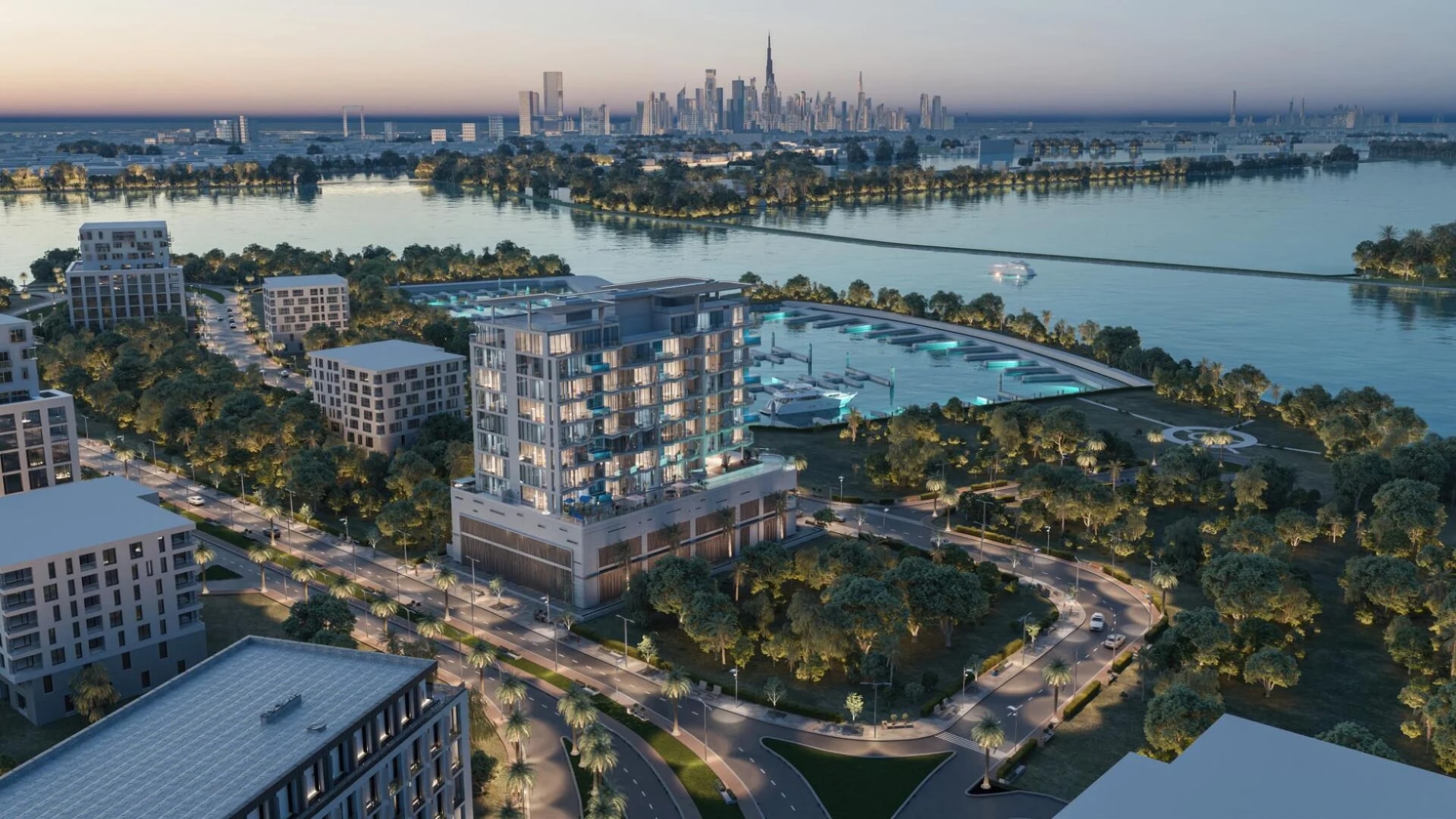
For Dubai Islands, the master developer is Nakheel. That single fact does most of the work in any developer risk assessment. Nakheel is not a new entrant. It has 22 years of operational history, three flagship master communities, and a balance sheet supported by Dubai Holding ownership. But the track record is uneven, and an honest read of the past tells you what to expect on Dubai Islands.
This guide walks through the Nakheel record on the three projects that matter most for Dubai Islands risk modelling: Palm Jumeirah, the World Islands, and Jumeirah Village Circle. Each one is a different lesson. Investors holding Dubai Islands positions should know all three.
Nakheel: The Company in 2026
Nakheel was founded in 2003 as a Dubai government-backed real estate developer with a mandate to deliver large-scale waterfront and master community projects. It operated as part of Dubai World until 2010, was restructured during the 2008 to 2011 Dubai debt crisis, and has since operated under Dubai Holding consolidation alongside Meraas and Dubai Properties. The 2023 reorganisation brought Nakheel and Meydan together under unified Dubai Holding management.
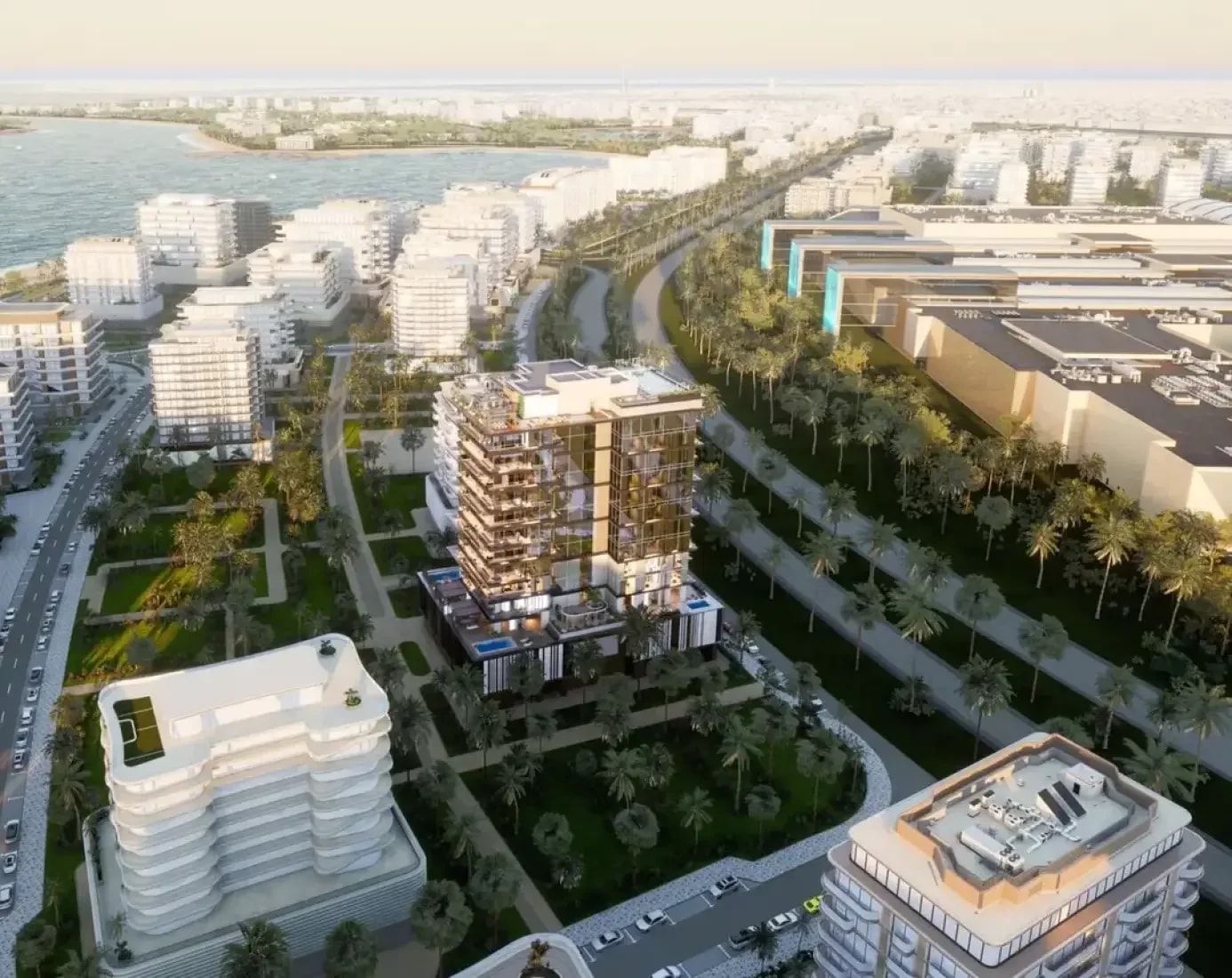
The company operates as both a master developer (selling serviced plots to other developers) and a direct developer (building and selling units itself). On Dubai Islands, Nakheel plays both roles. It owns the underlying land, sells parcels to partner developers, and also delivers Nakheel-branded projects directly.
The Dubai Holding ownership matters for risk because it means the ultimate balance sheet behind Nakheel is the same balance sheet behind Meraas (Bluewaters, La Mer, Port de La Mer) and Dubai Properties (Business Bay anchor projects, Mudon, Serena). For investors this is positive in normal market conditions and was meaningful protection during the 2008 to 2011 stress period when Dubai government support stabilised Nakheel's payment obligations.
Palm Jumeirah: The Success Lesson
Palm Jumeirah is the proof point for Nakheel's ability to execute large-scale reclamation and deliver a community that holds value through cycles. Reclamation began in 2001. The first villas handed over in 2007. The Atlantis hotel opened in 2008. The community's fundamental infrastructure (trunk roads, monorail, residential frond layout) was operational by 2010.
Per DLD, Palm Jumeirah recorded over 7,800 transactions in 2024. Apartment pricing in 2025 to Q1 2026 ranges from AED 3,500 to AED 6,000 per square foot. Branded residences clear above AED 7,000 per square foot. The community supports luxury hotels, beach clubs, branded restaurants, and continuous secondary market liquidity that benchmarks any other Dubai waterfront.
The lesson for Dubai Islands investors: Nakheel can deliver an iconic, high-value reclaimed waterfront. The 6 to 8 year arc from groundbreaking to mature operations on Palm Jumeirah is a reasonable template for the Dubai Islands timeline. Investors with 6 to 10 year hold horizons can use the Palm trajectory as a base case for what Dubai Islands could look like by 2032 to 2034.
The caveat is that Palm Jumeirah was launched into a different macro environment. The 2003 to 2008 boom drove pricing aggressively before the 2008 crash. Dubai Islands launches into a more measured 2024 to 2026 market. The trajectory may flatten the upside curve compared to the early Palm experience.
The World Islands: The Cautionary Lesson
The World Islands is the Nakheel project that did not deliver. Reclamation of approximately 300 small islands shaped as a world map began in 2003 off the Jumeirah coast. The project was paused during the 2008 to 2010 Dubai debt crisis. Most islands remain undeveloped in 2026.
A handful of projects have delivered on individual islands, including the Anantara World Islands Dubai Resort (which the Semrush keyword data shows has 4,400 monthly searches in the UAE, indicating sustained interest in the resort even though the broader masterplan stalled). But the original investor case (private island ownership, branded estate development across the full archipelago) has not materialised at scale. Investors who entered The World pre-2008 have largely not seen liquidity on their plots.
The lesson for Dubai Islands investors: even Nakheel can stall a project when macroeconomic conditions and partner-developer execution misalign. The risk is concentrated in projects that depend on third-party developers buying serviced plots and delivering individual builds. If those buyers do not materialise, the master plan stalls.
Dubai Islands has structural advantages over the World Islands. The five-island geometry is more functional (interconnected, bridged, integrated infrastructure) than 300 individual islands. The Nakheel-direct delivery share is higher. The market environment in 2024 to 2026 is more stable than 2008 to 2010 was. But the lesson remains valid: in any decade-long master plan, some phases over-deliver, some under-deliver, and a small number stall outright.
Jumeirah Village Circle: The Phase-Delay Lesson
Jumeirah Village Circle is the most useful Nakheel comparable for retail apartment investors on Dubai Islands. JVC was launched in 2005 as a master-planned community of 33 sub-communities containing roughly 2,000 buildings at full build-out. Development paused during the 2008 to 2010 Dubai debt crisis. Construction restarted in 2013.
Today JVC is one of Dubai's highest yielding apartment communities. Per Q1 2026 DLD price and rent matching, JVC apartments yield 7.0% to 9.0% gross. The community has delivered the bulk of its planned residential supply, has mature retail (Circle Mall opened in 2021), and trades with deep secondary liquidity.
The JVC lesson for Dubai Islands is the most directly applicable. JVC went through a multi-year delivery pause and still emerged as a functional, high-yielding apartment community. Investors who held JVC positions through the 2008 to 2013 stress period saw positive returns over a 15 to 20 year horizon despite the mid-cycle disruption. The pattern matters because it shows Nakheel can absorb a phase delay and still deliver.
For Dubai Islands investors, this is the most realistic base case. Some of the 68 active projects will deliver on schedule. Some will run 6 to 24 months late. A small number may stall and require partner-developer change or master-plan rephasing. Investors should expect the same uneven delivery pattern that JVC went through, and structure their portfolio to absorb it.
Detailed handover and construction stage tracking by project is in Dubai Islands handover timeline and construction stage 2026.
Three Specific Nakheel Risks On Dubai Islands
Risk 1: Partner-developer execution. Nakheel sells parcels to partner developers across Dubai Islands. Each partner carries its own balance sheet and execution capability. A Nakheel master developer commitment does not guarantee that a specific tower built by a partner developer will deliver on schedule. Investors should verify the partner developer's separate track record on any Dubai Islands project before signing, in addition to the Nakheel master plan context.
Risk 2: Infrastructure phasing misalignment. Dubai Islands' core infrastructure (bridges, mall, promenade, hotels) is delivered on timelines independent of any specific residential project's handover. An investor whose unit hands over in 2026 may receive their unit before the surrounding bridge, mall, or promenade is operational. This compresses initial leasing rent because the lifestyle promise of the master plan is not yet live. Model the gap between unit handover and infrastructure delivery as an explicit risk.
Risk 3: Supply concentration in 2026 to 2028. Most of the 68 active projects target handover between 2026 and 2029. If too many projects deliver inside narrow 12 to 18 month windows, the initial leasing market faces supply concentration risk. Per the Business Bay 2019 to 2020 cycle, supply concentration can compress initial-lease rents 12% to 18% versus pre-handover broker forecasts. Investors should price this into their realised yield modelling.
What to Verify Before Signing
- DLD project status. Every Dubai Islands project must be registered with the Dubai Land Department and listed on the DLD project status portal. Verify the registration number, the registration date, and the current construction status before paying any deposit.
- RERA escrow account. Off-plan payments must flow into a RERA-registered escrow account specific to the project. Verify the escrow account number on the developer's sales paperwork against the RERA registry. Refuse any payment instruction that does not route to a verified escrow account.
- Trakheesi-permitted construction updates. RERA requires developers to publish construction milestone updates through Trakheesi-permitted channels. Verify that the project has current updates and that payment milestones align with reported physical construction progress.
- Partner developer track record. If the project is delivered by a partner developer rather than Nakheel directly, verify the partner's separate delivery history. A small or new partner with thin track record carries materially higher execution risk than Nakheel directly or a major established developer like Emaar or Damac.
- Master community service charge filings. Once a Dubai Islands building reaches first handover, the service charge structure must file with RERA Sahel. For pre-handover units, request the developer's projected service charge and cross-check against comparable Nakheel master community filings.
The Verdict on Nakheel as Developer
Nakheel is one of three or four Dubai developers with sufficient scale, track record, and balance sheet support to deliver a master plan as ambitious as Dubai Islands. The Palm Jumeirah delivery is the proof point. The Jumeirah Village Circle phase-delay-and-recovery is the realistic base case. The World Islands stall is the tail risk that investors should not pretend does not exist.
On a pure developer-risk basis, Nakheel is investable. Dubai Islands as a master plan is investable. Individual projects on Dubai Islands carry partner-developer-specific risk that should be evaluated separately for every signing decision. The Nakheel brand is necessary but not sufficient for project-level due diligence.
Investors who want the Nakheel master plan exposure with project-level verification can browse Dubai Islands inventory with developer track record context on Oliva.
Frequently Asked Questions
Is Nakheel a reliable developer?
Nakheel has a 22 year track record with successful delivery on Palm Jumeirah and Jumeirah Village Circle, a stalled project on the World Islands, and several other communities at varying delivery stages. It is owned by Dubai Holding and was supported by Dubai government during the 2008 to 2011 stress period. On a balance, Nakheel is one of the more reliable developers for large-scale Dubai master plans, but individual project execution still requires partner-developer due diligence.
What happened to the World Islands?
The World Islands began reclamation in 2003 and paused during the 2008 to 2010 Dubai debt crisis. Most of the approximately 300 individual islands remain undeveloped in 2026. A small number of resorts have delivered, including the Anantara World Islands Dubai Resort. The project illustrates that even Nakheel can stall a master plan when macro conditions and partner-developer execution misalign. Dubai Islands has structural advantages (interconnected geometry, higher Nakheel-direct delivery share, more stable launch environment) that reduce but do not eliminate this tail risk.
How does JVC compare as a Nakheel reference for Dubai Islands?
Jumeirah Village Circle is the most directly applicable Nakheel comparable for retail apartment investors on Dubai Islands. JVC paused during the 2008 to 2010 crisis, restarted in 2013, and is now one of Dubai's highest-yielding apartment communities at 7.0% to 9.0% gross yields per Q1 2026 DLD. The pattern shows Nakheel can absorb a phase delay and still deliver a functional community. Dubai Islands investors should expect a similar uneven delivery pattern and structure their portfolio accordingly.
Are partner developers on Dubai Islands as reliable as Nakheel?
Partner developers vary widely. Major established developers (Emaar, Damac, Sobha, Meraas) on Nakheel land typically deliver to comparable standards. Smaller or newer partner developers carry materially higher execution risk. Investors should verify the specific partner developer's delivery history independent of the Nakheel master plan context for every Dubai Islands signing decision.
What protections do I have if a Dubai Islands project stalls?
RERA escrow rules require off-plan payments to flow into project-specific escrow accounts that can only be drawn against verified construction milestones. If a project stalls, escrowed funds are protected and can be returned to investors through RERA's resolution framework. Beyond escrow, investors have legal recourse through Dubai courts and the Real Estate Regulatory Agency complaint process. The protections are real but resolution timelines can run 12 to 36 months. Practical risk mitigation is project-level due diligence before signing, not reliance on post-stall remedies.
Should I avoid Dubai Islands because of developer risk?
No. Developer risk on Dubai Islands is comparable to or better than most large Dubai master plan launches. Nakheel has the scale, track record, and Dubai Holding balance sheet support to deliver. The risk is project-level execution variance across the 68 active projects, not master-plan failure. Investors should select projects with strong partner developer track records, verify RERA escrow status, and avoid the smallest and newest partner developers in favour of Nakheel-direct or major-developer projects.
Explore further
The project, area, and developer this post covers, with live Dubai Land Department data.
Related articles

Dubai Islands: The 2026 Investor Guide

Dubai Islands vs Palm Jumeirah: 2026 Investor Comparison

Dubai Islands Apartment Prices and Yields: 2026 Data

Dubai Islands Handover Timeline and Construction Stage 2026

Wadi Al Safa 5 investor area guide: around Nuve by Zoya (2026)
Dubai Residence Complex for investors: the area around Celesto 2 (2026)
Related Dubai property analysis from the Oliva editorial team.