Underwrite before you commit
The figures in this post are checked against Dubai Land Department records and RERA filings. Get an independent underwriting score on any project, or ask Javier on WhatsApp.
Jumeirah Golf Estates: Complete Investment Guide
Jumeirah Golf Estates consistently delivers what Western property investors struggle to find at home: genuine rental yields between 4-6% combined with steady capital appreciation, all within a transparent legal framework. For investors holding portfolios in London, Paris, or New York where net yields barely reach 2%, JGE represents a measurable arbitrage opportunity rather than speculative emerging market exposure.
This guide examines the investment fundamentals that matter: rental economics by property type, total cost of ownership including often-overlooked service charges, infrastructure that drives tenant retention, and the practical realities of capital repatriation. We'll look at what £500,000 to £5 million actually buys you here, who your tenants will be, and whether JGE's mature, golf-centred community aligns with your portfolio objectives for passive income and long-term growth.
Key Takeaways on Investing in Jumeirah Golf Estates
Rental Returns and Market Resilience: Expect rental yields between 4-6%, supported by long-term tenancies from senior executives. The community has shown strong occupancy rates, even during market downturns, with premium views adding 10-15% to property values.
Capital Appreciation Strategy: The area offers steady, reliable capital growth rather than volatile, short-term gains. This is supported by a constrained supply of premium villas and consistent demand from Dubai's professional population, making it ideal for a long-term hold.
Strategic Location and Connectivity: Situated 20-30 minutes from major business hubs and airports, its connectivity is a key advantage. The proximity to the expanding Al Maktoum International Airport is a significant factor for future value appreciation.
Property Type Economics: Your investment choice dictates your return profile. Apartments in Al Andalus offer the highest yields (up to 7%), villas focus on long-term capital appreciation, and townhouses provide a balance between the two.
Community Infrastructure as a Value Driver: Top-tier amenities, including two championship golf courses, schools, and retail outlets, attract and retain high-quality tenants. This robust infrastructure directly supports lower vacancy rates and stable rental income.
Understanding Total Ownership Costs: Be prepared for upfront costs like DLD fees (4%) and ongoing service charges that are higher than the Dubai average. These fees fund high maintenance standards that protect your asset's value over time.
Developer Quality and Legal Security: High construction standards minimise future maintenance issues. Dubai's transparent and secure title deed system offers legal protection comparable to Western property markets.
Portfolio Fit and Exit Strategy: This community is ideal for stable, long-term returns. A clear exit plan is crucial, considering market cycles, property condition, and the straightforward, low-cost process for selling and repatriating your capital.
Market Overview: Jumeirah Golf Estates Investment Returns
Jumeirah Golf Estates consistently delivers what Western property investors struggle to find at home: genuine rental yields between 4-6% combined with steady capital appreciation, all within a transparent legal framework. For investors holding portfolios in London, Paris, or New York where net yields barely reach 2%, JGE represents a measurable arbitrage opportunity rather than speculative emerging market exposure.
This guide examines the investment fundamentals that matter: rental economics by property type, total cost of ownership including often-overlooked service charges, infrastructure that drives tenant retention, and the practical realities of capital repatriation. We'll look at what £500,000 to £5 million actually buys you here, who your tenants will be, and whether JGE's mature, golf-centred community aligns with your portfolio objectives for passive income and long-term growth.
Key Takeaways on Investing in Jumeirah Golf Estates
Rental Returns and Market Resilience: Expect rental yields between 4-6%, supported by long-term tenancies from senior executives. The community has shown strong occupancy rates, even during market downturns, with premium views adding 10-15% to property values.
Capital Appreciation Strategy: The area offers steady, reliable capital growth rather than volatile, short-term gains. This is supported by a constrained supply of premium villas and consistent demand from Dubai's professional population, making it ideal for a long-term hold.
Strategic Location and Connectivity: Situated 20-30 minutes from major business hubs and airports, its connectivity is a key advantage. The proximity to the expanding Al Maktoum International Airport is a significant factor for future value appreciation.
Property Type Economics: Your investment choice dictates your return profile. Apartments in Al Andalus offer the highest yields (up to 7%), villas focus on long-term capital appreciation, and townhouses provide a balance between the two.
Community Infrastructure as a Value Driver: Top-tier amenities, including two championship golf courses, schools, and retail outlets, attract and retain high-quality tenants. This robust infrastructure directly supports lower vacancy rates and stable rental income.
Understanding Total Ownership Costs: Be prepared for upfront costs like DLD fees (4%) and ongoing service charges that are higher than the Dubai average. These fees fund high maintenance standards that protect your asset's value over time.
Developer Quality and Legal Security: High construction standards minimise future maintenance issues. Dubai's transparent and secure title deed system offers legal protection comparable to Western property markets.
Portfolio Fit and Exit Strategy: This community is ideal for stable, long-term returns. A clear exit plan is crucial, considering market cycles, property condition, and the straightforward, low-cost process for selling and repatriating your capital.
Jumeirah Golf Estates Property Prices: Capital Appreciation Focus
JGE has appreciated steadily over the past decade, though we'd be the first to say it hasn't been spectacular. It's been reliable, which in some ways is better. Spectacular often means volatile, and volatility cuts both ways.
What supports the capital growth here? Supply is constrained in the premium villa segment. There's only so much land, and most of it has already been developed. Meanwhile, Dubai keeps attracting well-paid professionals who need somewhere to live. As long as those fundamentals hold, prices should continue climbing at a reasonable pace.
Here's what recent sales data shows:
Approximate Value (AED)
Sales Volume
Seasonal fluctuation
Sales Value
Significant
Generally upward
Average Price/sqft
Steady growth
Compare this to markets where your yield barely covers the mortgage and appreciation depends entirely on central banks keeping rates at zero. JGE gives you actual income today whilst your capital should grow over time. It's a combination that's become surprisingly rare in property markets globally.
Worth noting: this isn't a market for quick flips. If you're looking to double your money in 18 months, you're in the wrong place. But if you want an asset that generates decent cash flow whilst appreciating at 5-7% annually over a ten-year hold, JGE starts to look quite interesting.
Proximity to Dubai Marina, Business Bay, and Al Maktoum Airport
Location always matters, but it matters differently depending on what you're after. JGE sits about 25 minutes from Dubai's main business districts. That's far enough to feel like you've escaped the city, but close enough that your tenants won't spend their lives in traffic.
Here's what journey times actually look like:
Dubai Marina: 20-25 minutes by car during normal traffic conditions
Business Bay: 20-25 minutes via Sheikh Mohammed Bin Zayed Road
Al Maktoum International Airport: 15-20 minutes, ideal for frequent business travellers
Downtown Dubai: 25-30 minutes to Burj Khalifa and Dubai Mall area
Dubai International Airport: 30-35 minutes to DXB for international connections
The Al Maktoum Airport proximity is more significant than it might appear at first glance. DWC is expanding massively over the next decade, with plans to handle over 200 million passengers annually. We've seen this pattern before. Properties near Heathrow's expansion benefited enormously. The same happened around Hong Kong's airport development. Transport infrastructure creates value, though it takes years to fully materialize.
Road Access via Hessa Street and Sheikh Mohammed Bin Zayed Road
JGE connects directly to the E311, which is Dubai's main north-south route. This matters because properties that require complicated journeys to work see higher tenant turnover. Nobody wants to spend 90 minutes commuting when they could spend 25.
Hessa Street gives you an alternative route during peak hours. Most residents here drive, which you need to factor into your tenant profile assumptions. Public transport exists but it's not really designed for JGE yet. That might change, though infrastructure development in Dubai tends to follow demand rather than lead it.
The practical implication: JGE works best for the car-owning professional demographic. They're the ones paying premium rents and staying long-term. That's actually who you want as tenants anyway.
Villas in Jumeirah Golf Estates: Expatriate Executive Demand
Villas here target senior executives, typically people with housing allowances above AED 300,000 annually (roughly £60,000). These aren't middle managers. They're regional directors, C-suite executives, and senior partners at professional services firms. Their companies pay their housing costs, which creates stable demand even during economic wobbles.
The economics look like this:
Area (Sq.ft)
Avg. Sales Price (AED)
Standalone Villas
8,000 - 8,700
AED 4.8M - 31.4M+
4,700 - 4,800
For reference: AED 4.8M is roughly £1M or $1.3M, though exchange rates fluctuate.
The larger villas with direct golf course views command top prices. Yields compress at this level because of the capital requirement, but you're playing a different game here. It's about long-term appreciation and accessing the absolute premium segment. A £5 million villa generating 3.5% still produces £175,000 annually. Compare that to what the same capital generates in Kensington or the Upper East Side after you've paid service charges and property taxes.
Townhouses and Apartments: Yield vs. Capital Growth Trade-offs
Townhouses and apartments appeal to a broader range of tenants. You're looking at mid-level professionals, couples, and smaller families here. The tenant pool is larger, which generally means faster letting times when you have vacancies.
Townhouses split the difference between space and affordability. They're not cheap, but they're accessible to more buyers than standalone villas. For investors wanting balance between income and growth, townhouses often make the most sense.
Apartments in the Al Andalus sub-community deliver the best yields relative to purchase price:
Avg. Sales Price (AED)
AED 1.36M (≈£270K)
AED 2.27M (≈£450K)
AED 3.24M (≈£645K)
The pattern is clear: apartments optimise for immediate yield, villas for long-term appreciation, townhouses somewhere in between. Your choice depends on what you're trying to achieve. Need cash flow to replace employment income? Apartments make sense. Building generational wealth with a longer time horizon? Villas warrant serious consideration. Most sophisticated investors hold both, balancing immediate income against future growth.
A 1-bedroom apartment here generating 6% looks materially different from a comparable investment in Paris delivering 2% or San Francisco at 1.5%. The arbitrage is obvious once you run the numbers.
Golf Courses, International Schools, and Lifestyle Facilities
Two championship courses anchor the community: the Earth Course and the Fire Course, both designed by Greg Norman. The Earth Course hosts the DP World Tour Championship each year, which keeps JGE visible internationally and attracts high-net-worth residents from around the world.
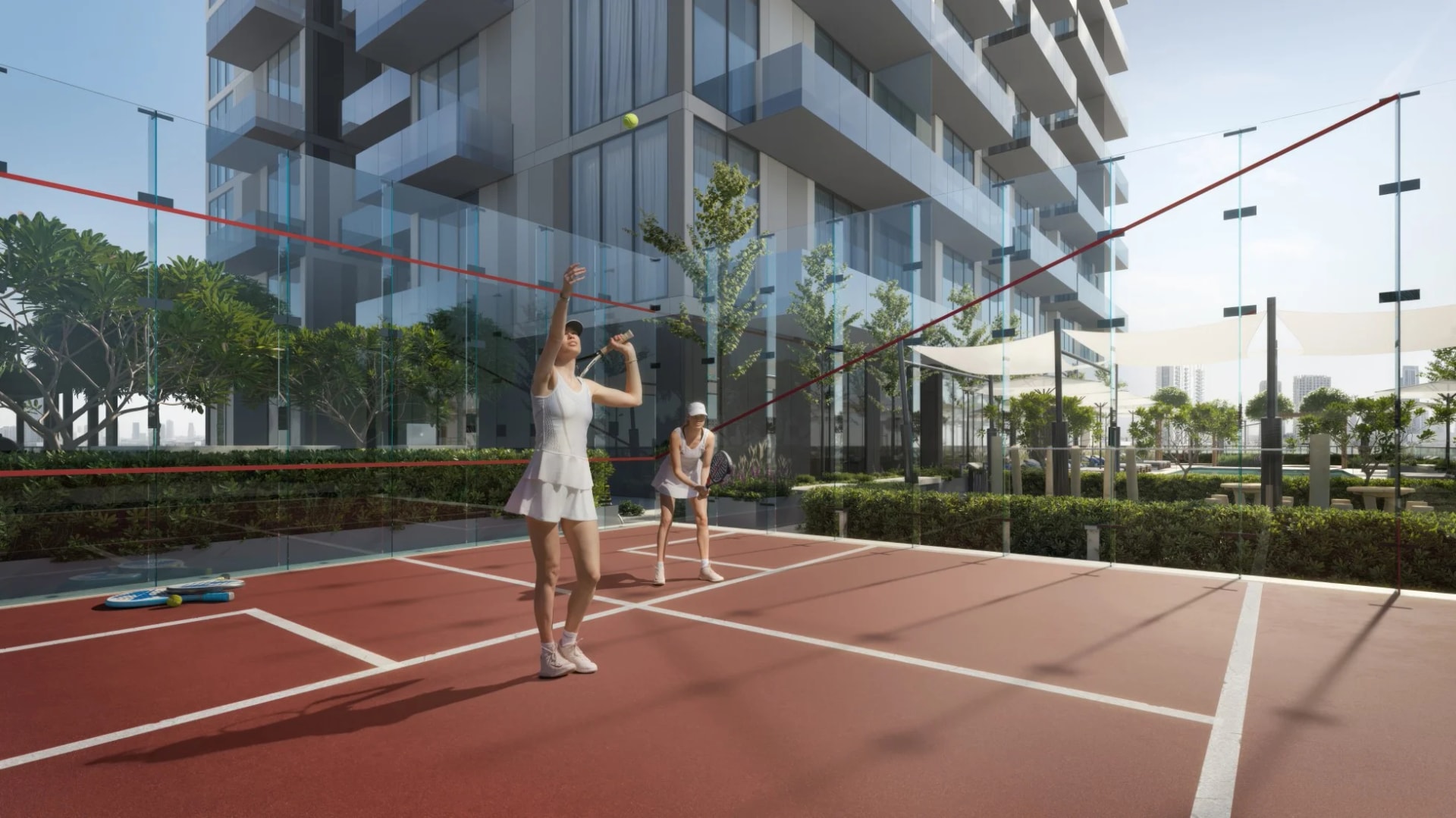
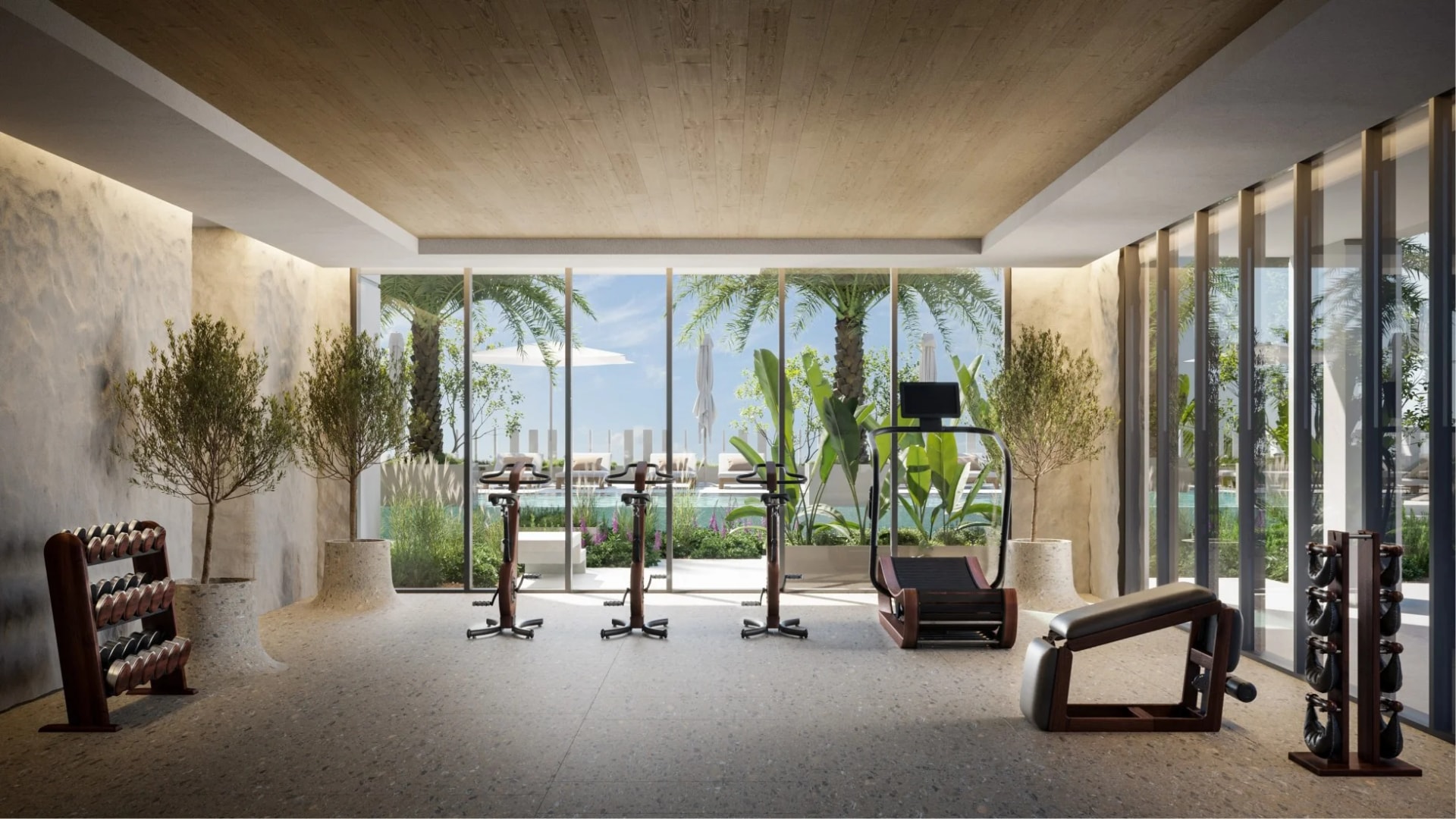
But here's what actually matters for your investment: the infrastructure that keeps tenants happy and willing to renew leases. JGE has comprehensive facilities including parks, playgrounds, fitness centres, tennis and padel courts. The Norman Clubhouse serves as the social centre, with dining options ranging from proper sit-down meals to casual drinks at the sports bar.
Key amenities that drive tenant retention:
Championship golf courses: Two Greg Norman-designed courses including the DP World Tour Championship host venue
Educational access: International schools within 10-15 minutes in neighbouring Dubai Sports City
Fitness and recreation: Multiple parks, playgrounds, gym facilities, tennis courts, and padel courts throughout the community
Dining and social facilities: The Norman Clubhouse with fine dining, casual restaurants, and sports bar options
Retail convenience: On-site Spinneys and Fairway supermarkets plus City Centre Me'aisem 10 minutes away
International schools sit just outside the immediate area, typically 10-15 minutes away in places like Dubai Sports City. Families with children make up a significant portion of long-term tenants. They're also the demographic that maintains properties well and pays rent consistently.
Daily shopping is covered by on-site supermarkets like Spinneys and Fairway the Marketplace. For bigger shopping trips, City Centre Me'aisem is about 10 minutes away. The community is developing additional retail and dining, aiming for even more self-sufficiency.
Why does this infrastructure catalogue matter? Because quality amenities attract quality tenants. Communities with comprehensive facilities see lower turnover and higher rental rates. That combination protects both your income stream and your capital value. It's not about lifestyle marketing. It's about understanding what drives tenant behaviour and therefore your returns.
Exit Planning and Capital Repatriation
Exit strategy should inform your entry decisions from day one, not be something you figure out later when you need liquidity.
Critical factors for your eventual exit:
Timing the market: Dubai property moves in cycles driven by oil prices, regional economic conditions, and government policy. Selling during demand peaks can materially improve your returns. Sometimes these peaks are triggered by external factors, like the UK's recent changes to non-dom rules or proposed exit taxes that push high-net-worth individuals to relocate. Track these macro indicators to spot optimal exit windows.
Property condition matters: Well-maintained properties with periodic updates sell faster and command premiums. Budget for ongoing improvements throughout your ownership, not just reactive maintenance. Strategic investments in fixtures, finishes, or landscaping often deliver outsized returns when you sell. Think of it as compounding your exit value.
Rental track record sells: Properties with consistent occupancy and reliable income attract investor buyers. Keep detailed records of rental performance, tenant quality, and improvements you've made. This documentation justifies your asking price during negotiations. Buyers pay premiums for proven performance.
How the sale process actually works:
The Dubai property transfer typically involves three steps: agreement on terms and Form B approval through the Land Department; security deposit and Memorandum of Understanding processing; and final transfer at the trustee office where the title deed changes hands and the buyer pays the balance. The whole process usually completes within 2-4 weeks once you've found a buyer, which is straightforward compared to many jurisdictions.
Getting your capital home: The UAE imposes no restrictions on repatriating capital. Funds transfer freely. The AED-USD peg eliminates currency risk during the transfer itself. If you're converting back to pounds or euros, you'll deal with whatever the exchange rate is at that moment, but there are no hidden restrictions or surprise costs.
Exit costs to factor in: Agent commissions in Dubai typically run about 2%, which is materially lower than the 5-6% you'd pay in many US markets. You may also face capital gains tax in your home jurisdiction and will need to settle any outstanding service charges. Total exit costs usually represent 3-4% of your sale price. Build this into your net return calculations from the beginning.
For investors building diversified portfolios across multiple emerging markets, timing exits becomes more complex. Unlike selling shares, property transactions take time. If you're managing cross-border tax obligations or need sale proceeds to fund other opportunities, build this reality into your planning. Properties can take 2-6 months to sell depending on market conditions and pricing. Plan accordingly.
Wrapping Up Our Jumeirah Golf Estates Investment Guide
Jumeirah Golf Estates offers Western investors what's become increasingly difficult to find at home: institutional-quality property assets that generate meaningful cash flow whilst appreciating over time. For investors frustrated with 2-3% yields in legacy markets, JGE's 4-6% returns combined with capital appreciation potential and zero local taxation create a genuine arbitrage opportunity.
The community provides established infrastructure, transparent legal frameworks, and rental fundamentals driven by a stable demographic of well-paid expatriate executives. This isn't speculative. It's accessing a regulated market where the mathematics actually work in investors' favour.
That said, JGE requires substantial capital, particularly for villa segments. Make sure your portfolio strategy, liquidity requirements, and return expectations align with what JGE actually delivers rather than what any marketing brochure promises. This is about yield arbitrage through regulated emerging market exposure, not speculative property punts or get-rich-quick schemes.
If you're building passive income streams that generate meaningful cash flow rather than barely covering financing costs, JGE warrants serious consideration as a core holding within your Dubai allocation.
The question isn't whether JGE represents a good investment in absolute terms. It's whether the returns, risk profile, and structural advantages align with your specific objectives for portfolio diversification and income generation. That's worth exploring through detailed property analysis and financial modelling based on your individual circumstances rather than generic assumptions.
Explore Dubai Areas on Oliva
Frequently Asked Questions
What kind of rental yields can I expect in Jumeirah Golf Estates?
You can typically expect gross rental yields between 4% and 6%. One-bedroom apartments in the Al Andalus community can sometimes reach up to 7%, offering the highest yields, while larger villas tend to be at the lower end of the range but offer greater potential for capital appreciation.
Is Jumeirah Golf Estates a good place for a quick property flip?
No, it is not considered an ideal market for quick flips. The community is better suited for long-term investors seeking steady capital appreciation of around 5-7% annually and reliable rental income, rather than rapid, speculative gains.
What are the main ongoing costs of owning a property there?
Beyond the initial purchase price, you need to account for annual service charges, which cover the maintenance of common areas and amenities. These are higher than the Dubai average but reflect the premium quality of the community. You will also have standard utility costs and, for villas, private maintenance for gardens and pools.
How does the location benefit my investment?
Its strategic location, approximately 25 minutes from Dubai Marina and Business Bay, makes it convenient for professional tenants. Crucially, its proximity to the expanding Al Maktoum International Airport provides a strong foundation for long-term value growth as the airport develops into a global hub.
Are there any taxes on rental income or property sales in Dubai?
Dubai does not impose any income tax, capital gains tax, or inheritance tax on property. This means your returns are not reduced by local taxation. However, you will likely still be liable for taxes in your home country on any income or gains you make.
Explore further
The project, area, and developer this post covers, with live Dubai Land Department data.
Related articles

Dubai Land Department: The Complete 2026 Investor Guide

Escrow Agreement in Dubai: What It Contains

DLD Mortgage Registration Fee: 2026 Rates
Meraas: Complete Developer Profile & Investment Guide

Business Bay Dubai: Complete Investment Guide