Underwrite before you commit
The figures in this post are checked against Dubai Land Department records and RERA filings. Get an independent underwriting score on any project, or ask Javier on WhatsApp.
Key Takeaways on Investing in Dubai Sports City
High Rental Yields: You can expect gross rental yields of 7-9% in Dubai Sports City, significantly higher than typical returns in Western property markets. This makes it an attractive option for capital allocation.
Diverse Property Options: Studios and one-bedroom apartments offer 8-9% yields, appealing to young professionals, while two and three-bedroom units provide 7-8% yields with longer leases, attracting families. Villas also offer competitive returns.
Key Yield Drivers: Factors like property condition, proximity to international schools, desirable views, quality furniture, and responsive landlord management directly influence your rental income and tenant retention.
Competitive Pricing: Property prices in Dubai Sports City are generally more accessible than in Jumeirah Village Circle (JVC), offering a lower cost per square foot, especially for larger units, which allows for higher initial yields or portfolio diversification.
Strategic Location: The community provides excellent road connectivity to major business districts, typically within 20-30 minutes, though tenants will need cars due to underdeveloped public transport.
Transparent Ownership Costs: Acquisition costs, including DLD fees (4%) and agency fees (2%), are clear. Annual service charges range from AED 10-20 per square foot, impacting your net yields.
Due Diligence is Essential: Given multiple developers, you must conduct specific due diligence on each property, verifying the developer's track record, service charge history, and ensuring clear title deeds.
Manageable Risks: While political and economic factors require monitoring, Dubai offers a stable regulatory framework, transparent title registration, and an active secondary market for exit liquidity, typically within 3-6 months.
Favourable Exit Conditions: There are no capital gains, wealth, or inheritance taxes on property sales in Dubai, and fund repatriation is unrestricted, making your exit strategy straightforward.
Market Overview: Dubai Sports City Investment Returns
London property yielding 2-3%? Paris apartments barely scraping 1.9%? Dubai Sports City's 7-9% annual returns aren't just better numbers on a spreadsheet. They represent a genuine recalibration of where smart capital should sit.
The issue with legacy Western markets isn't complexity. It's simple. Returns have compressed to the point where the opportunity cost of keeping capital locked in London or Paris becomes impossible to ignore. You're not chasing exotic markets here. You're responding to a structural shift in global property economics.
Dubai Sports City occupies the mid-market segment, which matters if you're working with £250K-£5M in deployable capital and building rental income streams that actually move the needle. The area pulls in young professionals and established families, drawn by genuine infrastructure (sports facilities, international schools, transparent rental frameworks) rather than marketing gloss. Occupancy rates are measurable. Rental comparables exist. Transaction data is published. This is a planned community operating within a regulatory structure, not a speculative punt dressed up as investment opportunity.
Rental Yields in Dubai Sports City: 7-9% Analysis
Unit size drives yield variation, and this detail matters when you're moving capital out of Western markets where 2-4% has become disturbingly normal. Studios and one-bedroom apartments typically hit 8-9% gross yields. The tenant pool skews young: singles and couples who've relocated for work, many from Europe or North America, wanting community facilities without paying Marina or Downtown premiums.
Western investors worry about tenant quality and payment reliability. Fair concern. Dubai's regulatory framework actually addresses this through structural protections rather than promises. RERA (Real Estate Regulatory Agency) registers rental contracts. Security deposits sit in escrow. Eviction processes, whilst not instant, follow transparent rules that get enforced. Vacancy periods for well-priced studios and one-beds run short, usually 2-4 weeks between tenancies if you're not being greedy on rent.
Two and three-bedroom units settle closer to 7-8%. Lower yield percentage, different tenant profile. Families seeking international schools, sports academies, and community parks sign longer leases. Two years rather than one is common. This translates to fewer turnovers, lower void costs, more predictable cashflow. Managing properties from London, Toronto, or Frankfurt becomes less operationally intensive when you're not constantly cycling tenants.
Villas operate in a similar range, though location within the community and proximity to amenities drives significant performance variation. The broader point: yields across all property types remain competitive within Dubai's landscape whilst delivering roughly triple what most Western European capitals offer.
Key Factors Affecting Dubai Sports City Rental Yields:
Property condition and presentation: Well-maintained units with modern finishes command premium rents and shorter vacancy periods
Proximity to international schools: Properties within walking distance of GEMS or Regent schools attract family tenants willing to pay higher rents
View and location within community: Units overlooking sporting venues or parks typically achieve 5-10% rental premiums over internal-facing properties
Furniture package quality: Fully furnished properties with quality furniture and appliances reduce vacancy periods by 30-40% compared to unfurnished units
Landlord responsiveness: Fast response to maintenance issues directly correlates with tenant retention and lease renewals
Dubai Sports City Property Prices vs. Motor City and JVC
First-time Gulf investor or expanding an existing allocation? Either way, understanding how Dubai Sports City property prices compare to neighbouring communities saves you from overpaying. The area sits somewhere between Motor City and Jumeirah Village Circle in terms of entry cost. JVC has seen substantial price appreciation recently, driven by central location and extensive retail. Motor City shares Dubai Sports City's family focus, with pricing that often runs parallel.
Dubai Sports City usually offers lower cost per square foot than JVC, particularly for larger units or properties overlooking sporting venues. If you're deploying £250K-£500K per unit, this pricing differential means either higher initial yields or the ability to spread capital across multiple properties. Both strategies have merit depending on your risk appetite.
The real question isn't which area wins some abstract competition. It's which aligns with how you're building your portfolio. JVC pulls tenants who prioritise convenience and retail access, often young professionals working in business districts. Motor City and Dubai Sports City both attract families, but the latter's sports and wellness infrastructure is more pronounced. Building a diversified Dubai portfolio with strong family tenant demand and competitive entry economics? Dubai Sports City often delivers the most sensible risk-adjusted positioning.
Dubai Sports City Location and Connectivity
Managing properties from Europe or North America means Dubai Sports City location matters less for your convenience and more for whether tenants can actually get to work without hating their lives. The community sits along Sheikh Mohammed Bin Zayed Road, providing direct access to Sheikh Zayed Road and Al Khail Road.
Travel time to Dubai Marina runs roughly 20-25 minutes by car. Business Bay sits at a similar distance. Tenants working in DIFC or JLT face about 25-30 minutes off-peak. The trade-off is explicit: Dubai Sports City exchanges proximity to business districts for larger unit sizes, lower entry prices, and proper community amenities.
Public transport remains underdeveloped. Tenants need cars or use ride-hailing services. Dubai's car ownership rates run high, and most professionals relocating here expect to drive. Al Maktoum International Airport (DWC) sits about 20-25 minutes away. Dubai International Airport (DXB) requires roughly 30 minutes.
Estimated Travel Times:
Dubai Marina: 20-25 minutes
Business Bay: 20-25 minutes
DIFC: 25-30 minutes
JLT: 20-25 minutes
Al Maktoum International Airport: 20-25 minutes
Dubai International Airport: 30 minutes
Studio and One-Bedroom Units: High-Yield Profile
Studios and one-bedroom apartments in Dubai Sports City typically deliver 8-9% gross yields, roughly triple comparable London or Paris properties. For investors deploying £200K-£350K per unit, the mathematics are straightforward: capital generating £4,000-£6,000 annual net income in London can deliver £12,000-£18,000 here.
These units attract young professionals, many Western expatriates or professionals from South Asia and the Middle East. Tenant turnover runs more frequently at 12-18 month cycles. Vacancy periods remain short if you price competitively and maintain properly.
Lower entry prices mean you can acquire multiple units within a £500K-£1M allocation, spreading tenant risk across several properties.
Typical Rental Yields: 8-9%
Tenant Profile: Young professionals, singles, couples, expatriate workers
Investment Focus: Cash yield, capital efficiency, portfolio diversification
Optimising Studio and One-Bed Performance:
Competitive pricing strategy: Research comparable listings weekly and price 3-5% below market average for faster tenant placement
Turnkey furniture packages: Include kitchen essentials, quality bedding, and basic electronics to attract relocating professionals
Fast internet connectivity: Pre-install high-speed internet packages as standard amenity for remote workers and digital professionals
Flexible lease terms: Offer both 12-month and 18-month options to capture tenants with different contract lengths
Professional photography: Invest in quality listing photos showing natural light and space optimisation to reduce days-on-market
Two and Three-Bedroom Apartments: Family Tenant Demand
Two and three-bedroom apartments shift the thesis from maximum yield percentage to stability. Gross yields settle around 7-8%. Families relocating to Dubai on multi-year employment contracts hunt for international schools, sports academies, and family amenities. Two-year lease agreements are common, sometimes three years.
The operational benefits of stable family tenants often outweigh the 1-2% yield differential. Family tenants maintain properties more carefully and stay put once children settle into schools. A well-positioned three-bedroom unit might generate £18,000-£25,000 annual net income versus £6,000-£10,000 from a London equivalent.
Tenant Profile: Expatriate families, couples requiring additional space, multi-generational households
Rental Stability: Longer lease terms (typically 24-36 months), lower turnover, reduced management burden
Market Appeal: Strong demand from families seeking international schooling and community amenities
Sports Facilities, International Schools, and Retail Options
Evaluating Dubai Sports City from London, Toronto, or Munich? Understanding what drives tenant demand matters more than listing amenities. The community was purpose-built around sport with genuine infrastructure.
The Dubai International Cricket Stadium holds 25,000 spectators and hosts international tournaments. The Els Club provides an 18-hole championship course. The ICC Academy operates as a globally recognised cricket training centre. Active academies exist for football, rugby, and tennis. These are operational facilities creating value for families with children in structured sports training.
International schools within or adjacent to the community significantly impact family tenant retention. Proximity to British, American, or IB curriculum schools directly drives rental demand. Families rarely move once children settle into school, translating to longer leases and stable cashflow.
Retail and dining infrastructure covers daily needs. Supermarkets, cafes, restaurants operate within the community. This positions Dubai Sports City as a residential community rather than a mixed-use entertainment district.
Dubai Sports City Amenities That Drive Rental Demand:
International school access: GEMS International School and Regent International School within 5-10 minutes provide British and IB curriculum education
Healthcare facilities: On-site medical centres and clinics reduce need for tenants to travel for routine healthcare
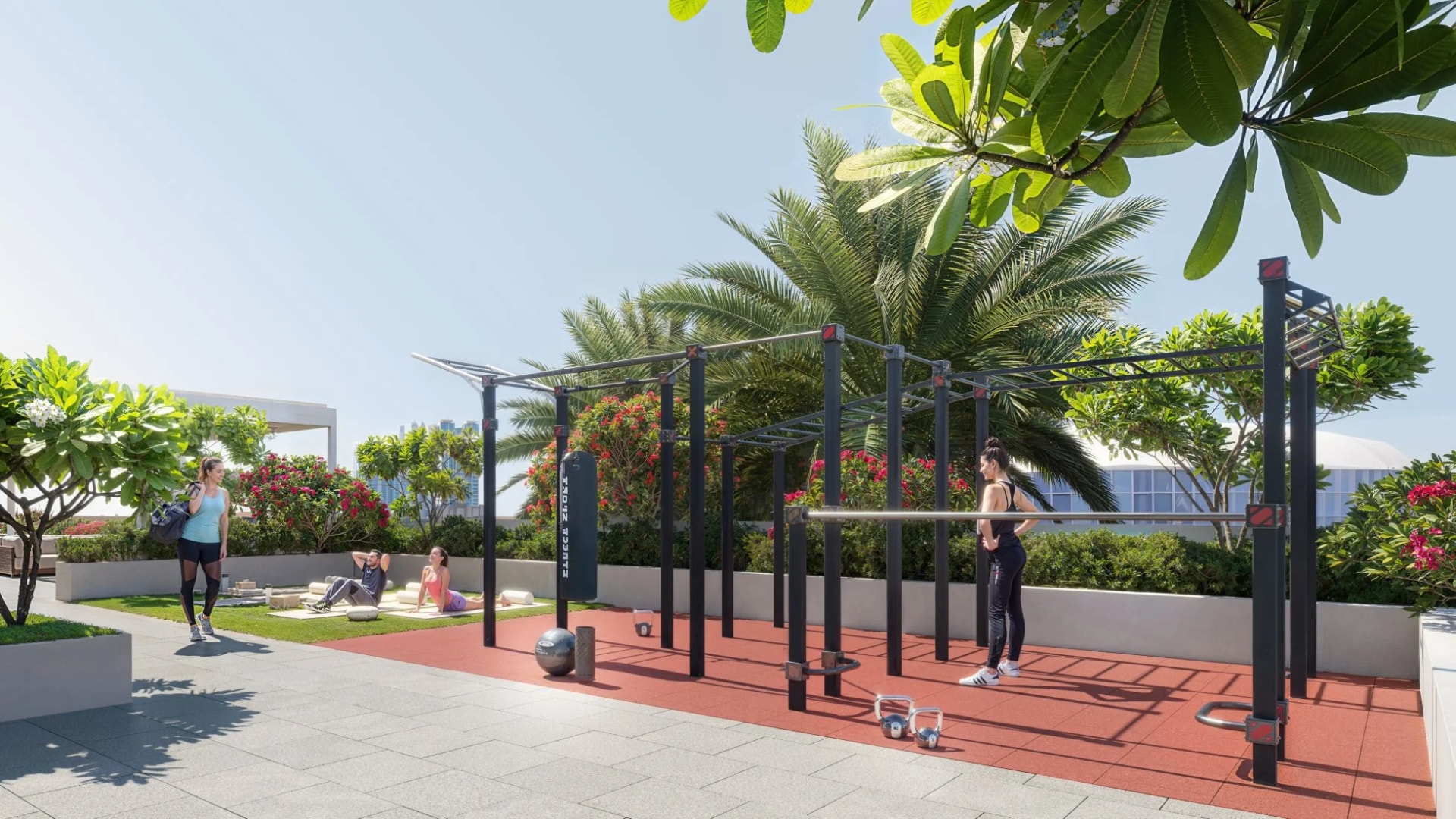
Fitness and wellness facilities: Multiple gyms, swimming pools, and sports courts across different developments cater to health-conscious tenants
Community retail centres: Victory Heights Commercial Centre and Sports City Retail provide grocery, pharmacy, and dining options within walking distance
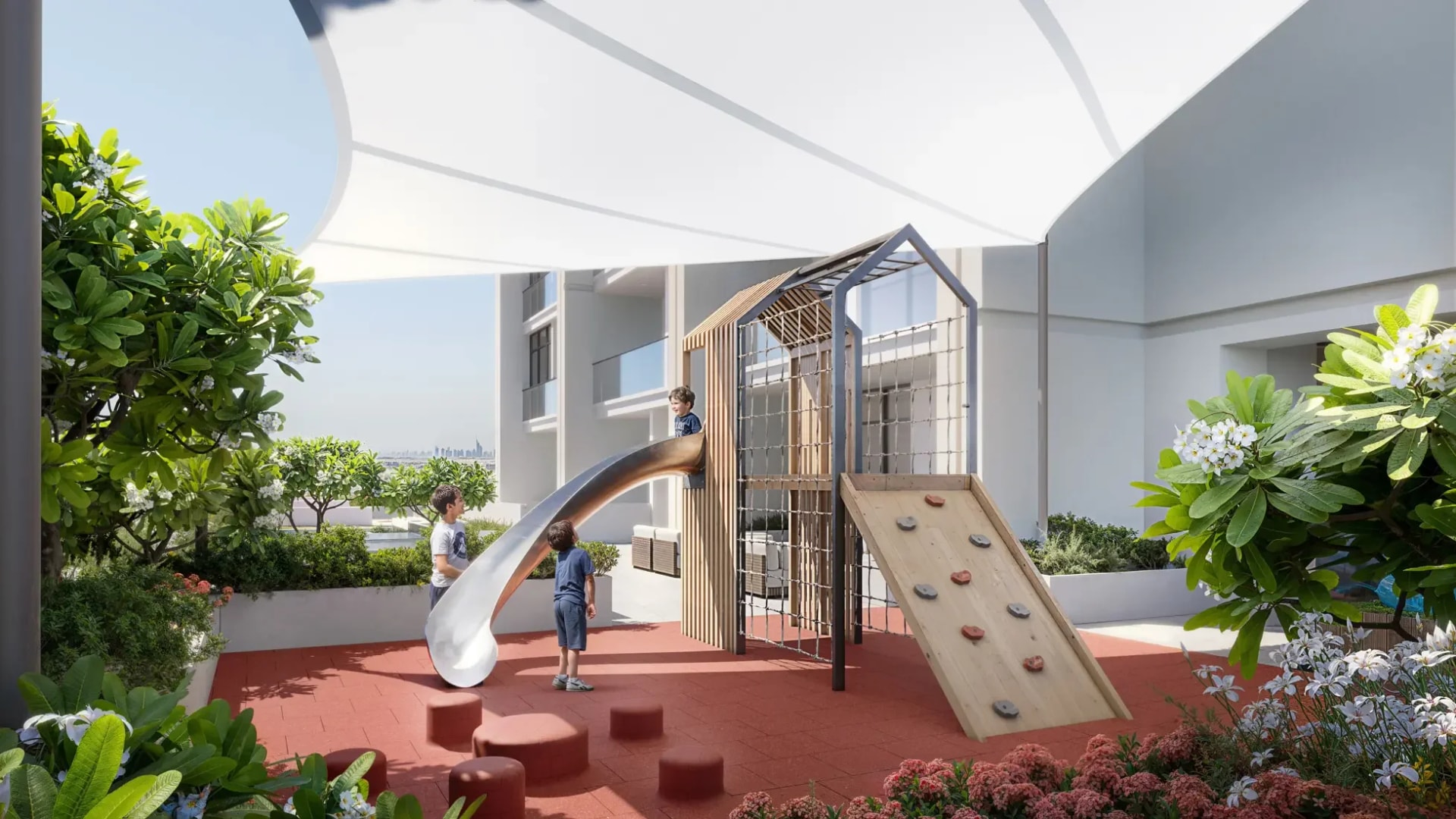
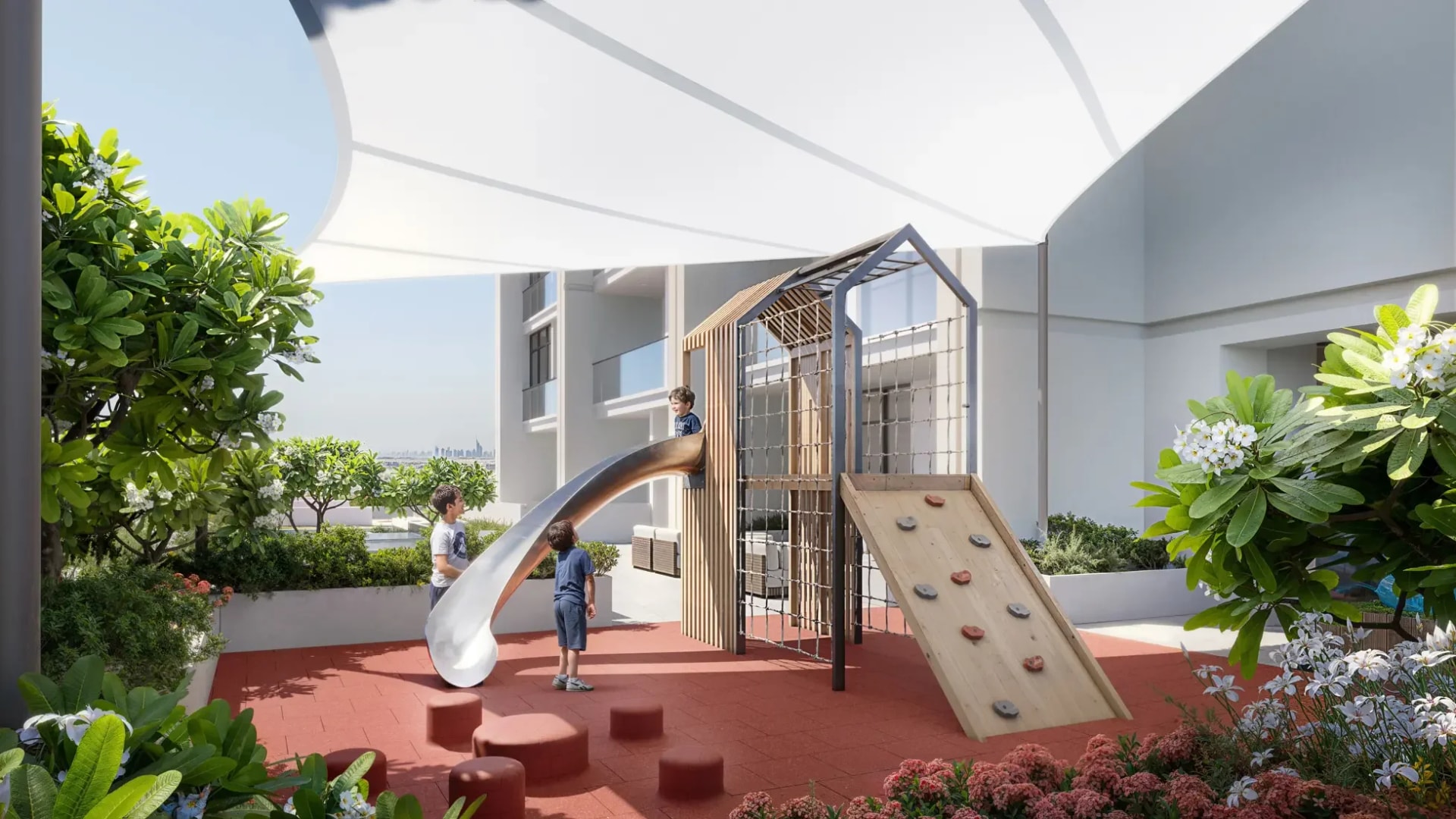
Children's play areas: Landscaped parks and dedicated children's play zones throughout the community appeal to families with young children
Acquisition Costs and Service Charge Considerations
Western investors entering emerging markets cite tax uncertainty and hidden costs as a major barrier. Dubai's fee structure is transparent but differs from London, Paris, or New York. Understanding total cost of ownership before deploying capital isn't optional.
Dubai Land Department (DLD) fees run at 4% of property value, typically split between buyer and seller. Agency fees add roughly 2%. Financing? Mortgage registration fees hit 0.25% of the loan amount. No stamp duty, no notary fees, no property transfer tax beyond the DLD fee.
Annual service charges vary by development but expect AED 10-20 per square foot for apartments. These charges cover maintenance of common areas, facilities, landscaping, and upkeep. More transparent than UK service charges, generally lower than central London leasehold management.
Service charges directly impact net yields. A property generating 8% gross yield with AED 15 per square foot service charges might deliver 6.5% net yield. Still double or triple comparable London property, but the calculation matters. Request recent statements, verify what's covered, check sinking fund provisions.
Typical Acquisition Costs:
DLD Fees: 4% of property value
Agency Fees: 2% of property value
Mortgage Registration Fees: 0.25% of loan amount plus administrative charges
Annual Service Charges: AED 10-20 per square foot (apartments), varies for villas
Dubai Properties Master Plan and Multiple Developers
Property rights and title security rank amongst top concerns for Western investors entering emerging markets. Dubai Sports City wasn't developed by a single entity, creating both opportunity and due diligence requirements.
Multiple developers delivered different sections over time. Abdul Rahim Al Zarooni's group played a significant early role. This multi-developer approach means you cannot rely on a single reputation. Each building requires specific due diligence on who built it, their financial stability, track record, and management approach.
Dubai's title deed system is straightforward but different from Western structures. Properties register with Dubai Land Department. Title deeds issue electronically. Ownership sits in an official government registry. Foreign investors can hold freehold titles in designated areas with identical rights to UAE nationals.
Due diligence is property-specific. Verify the developer's track record, review building management, confirm service charge history, ensure clear title deeds. Some developments maintain high standards with strong rental demand. Others less so. That variability means property-level due diligence cannot be skipped.
Essential Due Diligence Checklist for Dubai Sports City Properties:
Developer track record verification: Research the specific developer's completion history, financial stability, and reputation through Dubai Land Department records
Service charge review: Request three years of service charge statements to identify trends in cost increases and management efficiency
Owners' association activity: Verify whether an active owners' association exists and review meeting minutes for ongoing disputes or major repairs
Building completion certificate: Confirm the building has received final completion certificate from Dubai Municipality and all snagging issues are resolved
Title deed verification: Ensure title deed is clear of encumbrances, mortgages are properly discharged, and no disputes exist with developer or previous owners
Portfolio Fit and Risk Factors
Dubai Sports City delivers 7-9% gross yields, roughly triple comparable London or European property. For Western investors with £250K-£5M portfolios frustrated by legacy market performance, this represents measurable yield arbitrage backed by genuine tenant demand, sports infrastructure, international schools, and transparent rental regulation.
The question isn't whether returns exist. It's how this fits within a broader portfolio strategy and what risks require monitoring. Dubai Sports City represents a mid-market option with verifiable fundamentals and manageable entry prices for diversified Gulf allocations.
Political and regulatory stability concerns are legitimate when entering emerging markets. Dubai operates under established legal frameworks with published regulations, foreign ownership rights in freehold areas, and transparent title deed registration. The emirate has spent two decades building investor-friendly infrastructure. Regulatory frameworks evolve though; recent changes to visa schemes, mortgage criteria, and service charges generally favoured investors. Gulf markets operate with different regulatory rhythms than London or Frankfurt. Staying informed is part of active portfolio management.
Supply dynamics require monitoring. Dubai Sports City continues seeing new developments. Oversupply pressures rents and extends vacancy periods. Current dynamics appear balanced but shift with new launches or employment market changes.
Economic sensitivity affects all markets. Dubai's economy has diversified beyond oil with strong exposure to trade, tourism, financial services, and logistics. This provides some resilience but doesn't insulate from global cycles, regional employment trends, or geopolitical developments. For Western investors, this represents both currency and economic diversification away from Western markets whilst introducing Middle Eastern exposure.
Exit liquidity consistently ranks amongst top barriers for emerging market investors. Dubai's secondary market is active and transparent. DLD publishes transaction data. Multiple listing platforms operate. Properties in well-maintained developments typically sell within 3-6 months at market prices, which is comparable to secondary UK cities, slower than prime central London.
Infrastructure development creates short-term disruption but typically drives long-term value. Competition from Motor City and JVC means pricing and positioning matter. Dubai Sports City's differentiation rests on sports infrastructure. Understanding which tenant profiles find this attractive helps set realistic expectations.
Diversified approaches typically deliver better risk-adjusted returns than concentration. Dubai Sports City can form part of that strategy for stable family tenants and mid-market yields. Combining properties across Dubai submarkets or balancing Gulf allocations against Western holdings spreads risk.
Key Risk Considerations:
Political and regulatory frameworks in the UAE are stable but different from Western markets
Monitor supply and absorption rates through publicly available DLD transaction data
Economic cycles impact demand, though Dubai's diversification provides some resilience
Exit liquidity exists but requires 3-6 months for typical transactions
Infrastructure development creates short-term friction but usually drives long-term value
Competition from similar communities requires competitive pricing and property maintenance
Exit Planning and Capital Repatriation
Exit liquidity and fund repatriation rank amongst top concerns for Western investors entering emerging markets. The question isn't just whether you can sell but whether you can move capital back to London, Toronto, or Munich without restrictions or unexpected costs.
Properties in Dubai sell on the open market without restriction. No capital controls prevent fund repatriation. No requirement to reinvest locally. No government approval needed for international transfers. The AED's peg to the USD at 3.67 provides currency stability.
The secondary market for Dubai property is active and transparent. DLD publishes transaction data. Multiple platforms operate. Properties in well-maintained developments typically sell within 3-6 months at market prices.
Property condition and maintenance history matter significantly. Well-maintained units with documented service records and clear title deeds attract more interest. Market timing affects both price and speed, which is selling during high demand periods (October to March) typically yields better outcomes.
Capital gains tax doesn't exist on Dubai property sales. No wealth taxes. No inheritance taxes. The DLD fee on sale is 2% of transaction value plus typical 2% broker commission. Compare that to UK capital gains tax at 18-28% on residential property.
International fund transfers complete within 2-5 business days through normal banking channels. Consult tax advisers in your home jurisdiction about reporting requirements.
Exit Strategy Essentials:
No capital controls restrict fund repatriation from the UAE
AED-USD peg provides currency stability (though GBP/EUR investors face normal FX exposure)
Secondary market typically requires 3-6 months for transactions at market prices
Property condition and documentation completeness significantly impact sale speed
No capital gains tax, wealth tax, or inheritance tax in Dubai
DLD fee on sale is 2% plus typical broker commission of 2%
International fund transfers complete within 2-5 business days through normal banking channels
Final Thoughts on Investing in Dubai Sports City
London property yielding 2-3%? Paris apartments at 1.9%? Dubai Sports City's 7-9% returns represent a fundamental shift in portfolio allocation strategy. Legacy Western property markets no longer deliver returns that justify the capital tied up in them.
Dubai Sports City offers measurable yield arbitrage, roughly triple the gross returns on comparable London or European property. Backed by transparent rental regulation, verifiable transaction data, and straightforward title deed registration. The community attracts genuine tenant demand from expatriate families and young professionals. Not speculative. Occupancy data exists. Rental comparables are published.
For Western investors building portfolios focused on passive income, Dubai Sports City serves a specific purpose in the mid-market with transparent fundamentals and manageable entry prices. The risks require active monitoring: supply dynamics, economic cycles, regulatory evolution, and competition. Exit liquidity exists but requires 3-6 months for transactions.
The mathematics: £500K deployed in Dubai Sports City generating 7% net yield delivers £35,000 annual income. The same capital in London generating 2% net yield delivers £10,000. That £25,000 annual differential compounds over time, funding children's education, building generational wealth, or accelerating financial independence.
For investors who understand these dynamics and can execute proper due diligence, Dubai Sports City represents a viable component of broader Gulf real estate allocation. Not speculation. Capital allocation based on transparent fundamentals and measurable returns.
Explore Dubai Areas on Oliva
Frequently Asked Questions
What kind of rental yields can you expect in Dubai Sports City?
You can typically expect gross rental yields between 7-9% in Dubai Sports City. Studios and one-bedroom apartments often achieve 8-9%, while larger two and three-bedroom units usually settle around 7-8%.
How does Dubai Sports City compare to neighbouring communities like JVC for property prices?
Dubai Sports City generally offers a lower cost per square foot compared to Jumeirah Village Circle (JVC), especially for larger properties. This can mean higher initial yields or the ability to invest in multiple units within your budget.
What are the main factors that influence rental yields in Dubai Sports City?
Several factors affect your rental yields, including the property's condition and presentation, its proximity to international schools, the view and location within the community, the quality of furniture packages, and your responsiveness as a landlord.
Is it easy to manage properties in Dubai Sports City if you live abroad?
Yes, Dubai's regulatory framework, including RERA registered contracts and escrow for security deposits, provides structural protections. Longer lease terms for family units also reduce tenant turnover, making property management less intensive for overseas owners.
Are there any taxes on property sales or capital gains in Dubai?
No, Dubai does not have capital gains tax, wealth tax, or inheritance tax on property sales. You will pay a DLD fee of 2% of the transaction value and a typical 2% broker commission upon sale.
What types of tenants does Dubai Sports City attract and how long do they typically stay?
The community attracts two main groups: young professionals who sign 12-18 month leases for studios and one-beds, and expatriate families who commit to 24-36 month leases for larger units near international schools. Family tenants rarely move once children are enrolled, providing stable long-term rental income.
Explore further
The project, area, and developer this post covers, with live Dubai Land Department data.
Related articles

Dubai Land Department: The Complete 2026 Investor Guide

RERA vs DLD: What's the Difference and Why It Matters to You

Escrow Agreement in Dubai: What It Contains

Best Snagging Companies in Dubai: Comparison

Al Yelayiss: Complete Investment Guide