
Underwrite before you commit
The figures in this post are checked against Dubai Land Department records and RERA filings. Get an independent underwriting score on any project, or ask Javier on WhatsApp.
Motor City Dubai Investment Returns: Market Overview
Western investors have a problem. Legacy markets don't deliver meaningful yields anymore. London sits at 2-3%. New York's below 2%. Most European capitals offer similarly compressed returns. Meanwhile, if you're unwilling to accept the uncertainty that typically comes with emerging market real estate, your capital allocation options remain fairly constrained.
Motor City
represents something specific here. Yields between 7% and 9%, backed by Dubai's regulatory infrastructure (escrow protections, registered title deeds, transparent repatriation frameworks). The real question becomes whether that yield differential justifies taking on geographic diversification risk.
Motor City Rental Yields: 7-9% Analysis
Motor City generates gross rental yields between 7% and 9% for well-maintained properties. Let me put that in context. Deploy $500,000 into a London property delivering 2.5% gross yield, and you're looking at $12,500 annually before costs. Same capital in a Motor City property at 8% yield? $40,000 gross annual income. That's a $27,500 difference in absolute cash flow.
Key Motor City rental yield factors:
Gross yields range 7-9%: Well-maintained apartments consistently deliver returns at this level based on current market transactions
London comparison advantage: Motor City yields exceed London (2-3%) by 4-6 percentage points in absolute terms
One-bedroom example: $204,000 purchase price generates $16,300 annual rent for 8% gross yield before service charges
Demand stability: Established infrastructure (schools, retail, transport) creates consistent tenant demand rather than speculative volatility
The data here reflects actual market transactions. A one-bedroom apartment purchased for $204,000 currently commands around $16,300 in annual rent, producing an 8% gross yield before service charges. These aren't pro forma projections from developers trying to move inventory. They're observable market rents for comparable units right now.
The stability comes from two things: Dubai's population growth and Motor City's established infrastructure. Unlike communities still under construction, Motor City has functioning schools (GEMS Metropole operates within the community), retail centres, and proper transport connectivity. Expatriate families value those fundamentals, which translates into consistent tenant demand rather than the kind of speculative volatility you see in newer areas.
Service charges reduce net yield materially, and we'll get into detailed breakdowns in the cost section. But even accounting for those recurring expenses, Motor City delivers cash flow that Western markets simply can't match without taking on significantly higher use or risk concentration. If you're building passive income streams or diversifying beyond saturated UK and European markets, this yield differential is essentially the core investment thesis.
Motor City Property Prices vs Dubai Sports City and JVC
Portfolio construction requires understanding relative value across comparable markets. Here's how Motor City's pricing positions itself between lower-cost emerging communities and the more premium established areas.
Motor City price per square foot: $231-$299, depending on building age, location within the community, finishing quality.
Dubai Sports City price per square foot: $204-$272. Lower entry point, though that reflects an earlier stage of community maturity with fewer established amenities.
Jumeirah Village Circle (JVC) price per square foot: $258-$340. Premium pricing driven by more central location and newer developments.
If you're prioritising cash flow over pure capital appreciation speculation, Motor City offers quite a strategic position. You're acquiring rental-generating assets at lower per-square-foot costs than JVC whilst typically achieving comparable (sometimes superior) yields. Against Dubai Sports City, you're paying a modest premium but receiving a more mature community with established tenant retention drivers.
This pricing dynamic matters for portfolio strategy. Deploying $250,000 to $2 million into Dubai real estate as part of geographic diversification? Motor City lets you capture strong yields without overextending on acquisition costs or accepting the infrastructure gaps you'll find in newer, cheaper communities. Your capital buys proven income-generating assets rather than speculative growth plays.
Motor City Location and Connectivity: Transport Links
A property's location determines both its rental demand and resale liquidity. Pretty straightforward. Motor City's positioning within Dubai's road network gives it some specific advantages worth understanding.
Proximity to Sheikh Mohammed Bin Zayed Road and Hessa Street
Motor City sits directly adjacent to two major arterial roads: Sheikh Mohammed Bin Zayed Road (E311) and Hessa Street (D61). This proximity isn't just about convenience; it's a material driver of tenant demand.
Sheikh Mohammed Bin Zayed Road (E311) connects Motor City directly to Business Bay, Downtown Dubai, and Dubai International Airport. It's also the main route to Abu Dhabi, which matters for that subset of tenants working in the capital whilst preferring Dubai's lifestyle and school options.
Hessa Street (D61) runs east to west, linking Motor City to Al Barsha, Jumeirah, and Dubai's coastal areas. Tenants get access to beaches, major shopping destinations, additional employment centres, all without requiring multiple road changes.
Shorter commute times translate directly into higher tenant retention. It's really that simple. Families stay longer when school runs are manageable. Professionals renew leases when their work commute doesn't consume an hour each way. For your investment, this infrastructure advantage means lower vacancy risk and reduced turnover costs.
Distance to Dubai Marina, Business Bay, and Al Maktoum Airport
Motor City's distance to major employment and lifestyle hubs determines its tenant profile and rental demand.
Motor City travel times to key Dubai locations:
Dubai Marina: 15-20 minutes via Sheikh Mohammed Bin Zayed Road offering access to premium coastal lifestyle and dining
Business Bay and Downtown Dubai: 20-25 minutes connecting to major employment centres and corporate offices
Al Maktoum International Airport (DWC): 25-30 minutes providing convenient access for frequent business travellers
Dubai International Airport (DXB): 30-35 minutes linking to the emirate's main international aviation hub
These moderate travel times position Motor City as an accessible alternative to living directly in Dubai's premium districts. You're essentially targeting tenants who want proximity to employment centres and lifestyle amenities but don't want to pay Marina or Downtown rental premiums.
Families particularly value this positioning. They get quality schools, green spaces, community infrastructure in Motor City whilst remaining within reasonable commuting distance to both Dubai and Abu Dhabi employment centres. That dual accessibility expands your potential tenant pool beyond single-emirate commuters, which is worth factoring into demand projections.
Motor City Unit Economics by Property Type
Asset allocation within Motor City requires understanding how different unit types perform across yield, tenant stability, and turnover characteristics. If you're building a portfolio of 3-25 units or evaluating your first Dubai acquisition, these economics will determine which property types actually align with your return objectives.
Studio and One-Bedroom Apartments: Young Professional Demand
Studios and one-bedroom units in Motor City target Dubai's young professional demographic. Single expatriates, early-career workers, couples without children. This segment prioritises affordability and proximity to work over living space.
Typical purchase price: Studios: $122,000-$163,000 One-bedroom: $177,000-$231,000
Annual rental income: Studios: $9,500-$13,600 One-bedroom: $15,000-$20,400
Gross rental yield: These smaller units typically deliver yields at the upper end of the 8-9% range. Lower acquisition costs relative to rental income is the driver here.
The tenant pool renews constantly as Dubai attracts new professional talent. Turnover is higher than family units (professionals change jobs, get promoted, eventually upgrade to larger spaces), but demand remains strong enough that vacancy periods are typically short if the property is priced competitively and managed professionally.
For portfolio builders prioritising maximum cash flow and willing to accept slightly higher management overhead from tenant turnover, these unit types offer the strongest yield metrics in Motor City. If you're deploying $500,000 across multiple units rather than concentrating capital in a single larger property, studios and one-beds let you diversify tenant risk whilst capturing superior yields.
Two and Three-Bedroom Units: Family Tenant Profile
Larger apartments in Motor City serve families and professionals requiring more living space. This demographic seeks longer-term stability, particularly when children are enrolled in local schools.
Typical purchase price: Two-bedroom: $258,000-$354,000 Three-bedroom: $381,000-$490,000
Annual rental income: Two-bedroom: $21,800-$29,900 Three-bedroom: $32,700-$40,800
Gross rental yield: Generally 7-8%, slightly lower than smaller units due to higher purchase prices, but with the trade-off of longer average tenancy periods.
Families tend to stay put once they're settled. Relocating children mid-school year is disruptive, so parents prefer to renew leases rather than move. This reduces your portfolio management overhead through fewer void periods, less frequent refurbishment between tenants, lower re-marketing costs.
For investors building portfolios where stable, predictable income matters more than maximising percentage yield, these unit types offer better tenant retention at the cost of slightly lower gross returns. If you're targeting passive income to fund specific goals (university education for children, supplementing retirement income, building long-term wealth), the stability of family tenants can easily be worth the yield differential versus smaller units.
Motor City Villas and Townhouses: Yield vs Service Charges
Villas and townhouses in Motor City represent a materially different investment profile. They appeal to affluent families seeking private outdoor space and typically command higher absolute rents. But the yield calculations here require careful attention to service charges that can significantly reduce net returns.
Typical purchase price: $680,000-$1,360,000+ depending on plot size and location within Motor City
Annual rental income: $49,000-$81,600+
Gross rental yield: Generally 5-7%, noticeably lower than apartments due to significantly higher purchase prices and, critically, much higher service charges.
Service charge impact is really the key consideration here. Whilst an apartment might incur $12-18 per square foot annually, villas face similar (or higher) per-square-foot rates applied across much larger areas. A 3,000 square foot villa at $12 per square foot means $36,000 in annual service charges. That dramatically reduces net yield compared to gross figures.
For sophisticated investors, the calculation becomes whether potential capital appreciation in a rising market justifies the lower immediate cash flow. If you're building a portfolio specifically targeting passive income to replace employment earnings or fund specific financial goals, the numbers typically work better in the apartment segment. Calculate net yield (rental income minus all operating costs including service charges) rather than relying on gross yield figures before committing capital to this asset class.
Motor City Community Infrastructure and Amenities
Infrastructure quality directly affects tenant demand and retention. Motor City's amenities distinguish it from less mature Dubai communities and support consistent rental income, which is what actually matters for your returns.
Dubai Autodrome and Motorsport Facilities
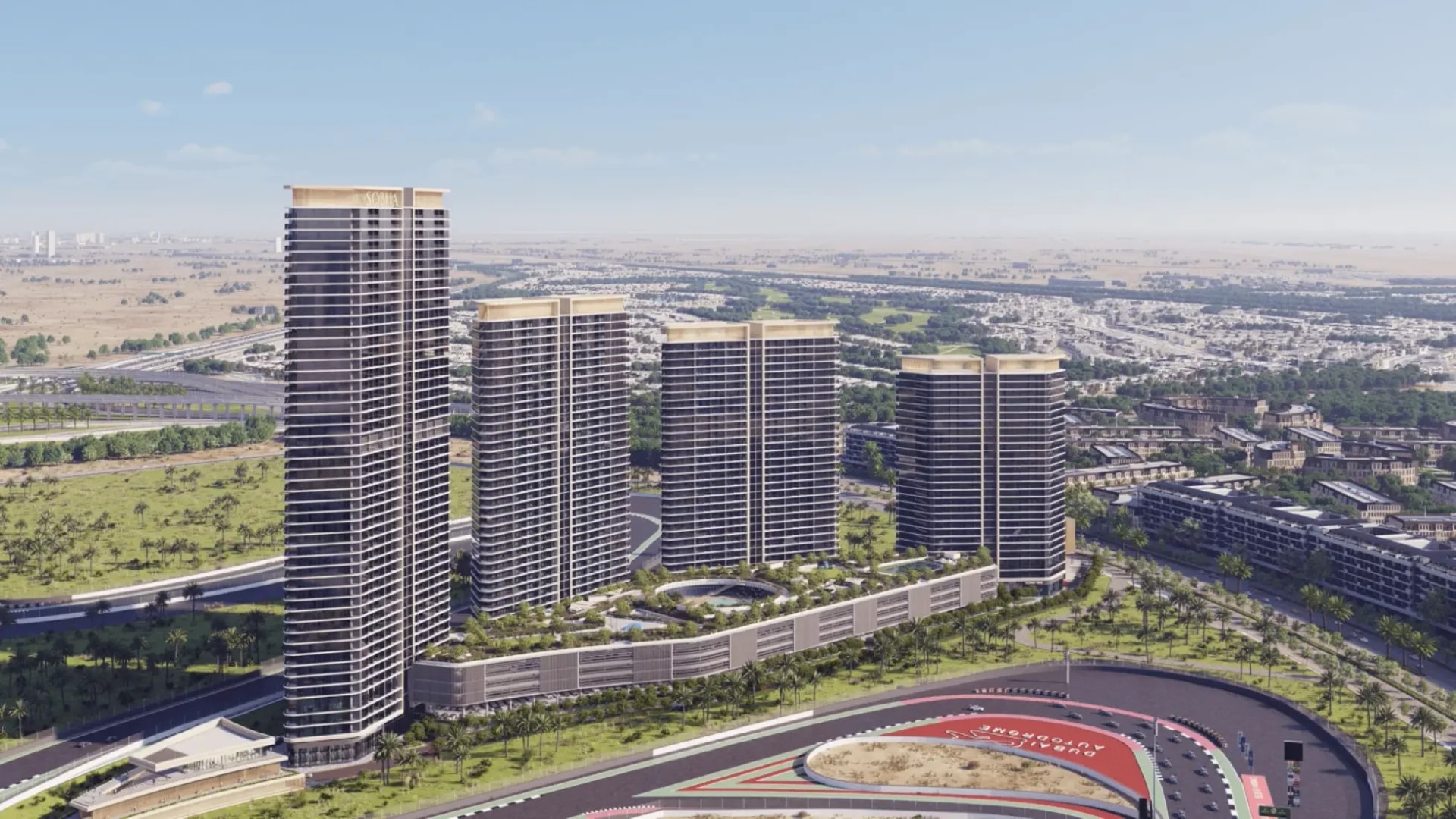
The Dubai Autodrome is Motor City's most distinctive feature. It's a permanent racetrack hosting professional motorsport events, track days, corporate functions, and driving experiences throughout the year.
From an investment perspective, the Autodrome serves several functions. It generates consistent foot traffic and economic activity, supporting local food, beverage, and retail businesses. It attracts motorsport enthusiasts and professionals who specifically seek housing in the area, creating niche demand. And it gives Motor City a recognisable identity that differentiates it from generic residential communities.
Not every tenant cares about motorsport, obviously. But the facility's presence ensures Motor City maintains visibility and character. That matters for long-term community stability and property values.
Motor City Schools, Retail, and Green Spaces
Beyond its motorsport identity, Motor City excels in providing comprehensive amenities essential for family living. These elements are critical for attracting and retaining long-term tenants, which directly impacts your investment's stability and consistent rental income.
Motor City community amenities for families:
GEMS Metropole School: British curriculum education within the community reduces tenant turnover and increases demand for family-sized units
Motor City Retail Strip and First Avenue Mall: Supermarkets, pharmacies, clinics, salons, and diverse dining options provide self-sufficient living
Green spaces and walking tracks: Well-maintained parks and recreation areas enhance quality of life and tenant satisfaction
Sports and fitness facilities: Community pools, gyms, and sports courts support active lifestyles and family recreation
Schools in Motor City: GEMS Metropole School operates within the community, offering British curriculum education. This is a primary draw for expatriate families who prioritise quality education within close proximity to their homes. Access to good schools significantly reduces tenant turnover and increases demand for family-sized units. Properties within walking distance of the school command rental premiums and experience faster tenant placement.
Retail and dining facilities: The community boasts several retail centres, including the popular Motor City Retail Strip and First Avenue Mall. These provide supermarkets, pharmacies, clinics, salons, and a diverse range of dining options. Residents have access to daily necessities and leisure activities without needing to leave the community. This self-sufficiency is a strong selling point for prospective tenants, particularly families with young children.
Green spaces and recreation areas: Despite its urban setting, Motor City incorporates numerous well-maintained green spaces, parks, and walking tracks throughout. These areas provide residents with opportunities for recreation, exercise, and social interaction, enhancing the overall quality of life. The emphasis on green infrastructure contributes to a healthier, more appealing living environment.
The integrated nature of Motor City's amenities ensures a high standard of living for residents. For your investment, this translates into a resilient tenant market, reduced vacancy periods, and a community that consistently attracts a stable demographic. You're investing in a location where quality of life directly supports property value and rental demand.
Total Cost of Ownership: Motor City Property Investment
Western investors evaluating emerging market real estate often encounter unexpected costs that materially reduce projected returns. This section provides complete transparency on both acquisition and recurring expenses. If you're comparing Motor City against London, Paris, or New York investments, you need all-in cost clarity, not the selective disclosure designed to make deals appear more attractive than they actually are.
Motor City Acquisition Costs and Service Charges
When you purchase a property in Motor City, expect these standard transaction costs:
Motor City property purchase costs breakdown:
Dubai Land Department (DLD) fee: 4% of purchase price paid at transfer ($10,880 on a $272,000 property)
Registration trustee fee: Approximately $1,090 plus 5% VAT covering title transfer administration
Agency commission: Standard 2% plus 5% VAT totalling $5,712 on a $272,000 property
No Objection Certificate (NOC): Developer fee ranging $136-$1,360 depending on property and policies
Mortgage registration fee: 0.25% of loan amount plus $79 administrative fees if financing the purchase
Dubai Land Department (DLD) fee: 4% of purchase price. On a $272,000 property, that's $10,880.
Registration trustee fee: Approximately $1,090 plus 5% VAT ($57). This covers title transfer administration.
Agency commission: Standard market rate is 2% plus 5% VAT. On a $272,000 property, that's $5,712. Understanding these standard costs helps you evaluate any advisory relationship properly.
No Objection Certificate (NOC): Paid to the developer, typically $136-$1,360 depending on the specific property and developer policies.
Mortgage registration fee (if financing): 0.25% of loan amount plus $79 in administrative fees.
These upfront costs add approximately 6-7% to your effective purchase price. Factor them into your acquisition budget from the start, not as an afterthought once you've already committed capital.
Service charges represent your most significant recurring operational cost. In Motor City, these typically range from $12-18 per square foot annually, depending on building and developer.
For a 750 square foot one-bedroom apartment, annual service charges could run $9,000-$13,500. That expense comes directly out of your gross rental income before you arrive at net operating income.
Calculate your returns using net yield (rental income minus service charges and any other operating costs) rather than gross yield. Gross yield figures look attractive, sure, but they're not what you actually receive as cash flow. Service charges, maintenance reserves, potential void periods... All of these reduce your effective return.
Motor City Developer: Union Properties Quality
The developer behind a community affects build quality, ongoing management standards, and long-term property values. Understanding who built Motor City helps you assess the investment's foundational quality and risk profile.
Union Properties Master Development and Build Quality
Union Properties
serves as Motor City's master developer. They've controlled the community's planning and infrastructure since inception, which provides consistency you often won't find in communities with fragmented developer involvement.
Master development oversight: Union Properties established Motor City's overall layout, infrastructure, and amenity provision. This unified vision means roads, utilities, and community facilities follow coherent planning rather than ad hoc development that happens when multiple developers are involved.
Build quality standards: Properties developed directly by Union Properties (including Uptown Motor City and Green Community Motor City) generally exhibit solid construction standards. Finishes are reasonable, mechanical and electrical systems function reliably, and structural integrity meets Dubai Municipality standards.
Ongoing community management: Union Properties maintains active involvement in community management through its subsidiaries. This typically results in better common area maintenance, more efficient service charge collection, and responsive handling of community issues compared to communities where management responsibility gets fragmented across multiple parties.
From a risk mitigation perspective, buying into a community with a single, established master developer reduces your exposure to inconsistent build quality and poor ongoing management. Union Properties has a vested interest in Motor City's long-term success, which aligns rather well with your interest as a property investor.
Motor City Portfolio Fit and Investment Risk Factors
Every investment carries risk. Dubai real estate, despite strong regulatory frameworks and transparent processes, is no exception. Understanding specific risk factors in Motor City allows you to make informed portfolio allocation decisions and implement appropriate mitigation strategies.
Oversupply Dynamics and Tenant Turnover Analysis
Dubai's property market experiences periodic oversupply as new developments complete. This is a legitimate concern for Western investors accustomed to more stable supply dynamics in London, Paris, or New York. Understanding Motor City's specific position within Dubai's broader market helps you assess this risk realistically.
Current market context: Whilst Dubai has seen significant new inventory in recent years, Motor City's development has been more measured compared to some emerging areas. The established infrastructure (functioning schools, retail, transport links) helps absorb new units more effectively than communities still building out basic amenities.
Tenant demand profile: Motor City primarily attracts families and mid-career professionals seeking community-focused living with reasonable proximity to employment centres. This demographic makes housing decisions based on schools, commute times, established infrastructure rather than speculative market trends. They're less susceptible to rapid demand fluctuations than investor-driven segments.
Turnover considerations: Smaller units (studios, one-bedrooms) experience higher turnover as young professionals are inherently mobile. They change jobs, get transferred, eventually upgrade to larger spaces. Larger family units see lower turnover because relocating children mid-school year is disruptive, which parents avoid when possible.
Risk mitigation for portfolio investors:
Competitive pricing based on current market comparables is essential. Overpricing because "that's what I need to make my numbers work" simply extends vacancy periods and reduces actual returns. Not a winning strategy.
Professional property management significantly reduces vacancy risk. Quality managers maintain tenant relationships, handle maintenance promptly, and have established marketing channels for rapid re-letting. Empty periods hurt cash flow more than management fees ever will.
Property conditions matter enormously. Well-maintained units with modern finishes let faster and command better rents even in competitive markets. Deferred maintenance becomes expensive when vacancy forces urgent refurbishment.
Oversupply is a macro risk in Dubai's property market, but Motor City's specific characteristics (established community, family orientation, mature infrastructure) provide some insulation compared to speculative emerging areas. If you're building a portfolio targeting $500,000 to $5 million in passive income generation, approach Motor City with realistic expectations: strong yields relative to Western markets, yes, but not immune to broader Dubai supply dynamics.
Motor City Exit Planning and Capital Repatriation
Capital repatriation ranks among the top concerns for Western investors evaluating emerging market real estate. You need clarity on both the resale process and how you'll move capital back to London, Paris, New York, or wherever your primary banking relationships exist. Dubai's regulatory framework addresses these concerns directly.
Selling your Motor City property:
Market liquidity for Motor City apartments is generally good, particularly for well-maintained units priced competitively. The established community status and ongoing tenant demand ensure a viable resale market.
The sales process follows Dubai Land Department regulations with clear legal protections. You appoint a licensed adviser, obtain a No Objection Certificate from the developer, sign a Memorandum of Understanding with the buyer (legally binding document protecting both parties), and then complete title transfer at the DLD or a registered trustee office. The process is structured, regulated, and legally protected, similar to property transactions you'd encounter in Western markets.
Selling costs include agency commission (typically 2% plus VAT) and administrative fees. The buyer pays the 4% DLD transfer fee, though this often becomes a negotiation point in practice.
Capital repatriation framework:
Dubai maintains a liberal foreign exchange policy with zero restrictions on capital repatriation. This is a material advantage over many emerging markets where moving money out can be complicated, delayed, or subject to government approval. In Dubai, your capital moves freely.
Funds from property sales transfer directly to your designated bank account, whether that's HSBC in London, Credit Suisse in Zurich, or Bank of America in New York. Transactions occur in AED, but you convert and repatriate in your preferred currency. The AED is pegged to USD at 3.67, which eliminates currency risk for American investors and provides stability for others.
The UAE's financial system operates under Central Bank regulation with international anti-money laundering standards matching Western requirements. This regulatory framework supports secure fund transfers and provides confidence in transaction integrity. Dubai's banking system integrates smoothly with international correspondent banking networks.
Why this matters for portfolio strategy:
If you're deploying $250,000 to $5 million into Dubai real estate as part of geographic diversification, knowing you can realise gains and repatriate capital when needed is absolutely fundamental. Motor City, within Dubai's regulatory framework, provides institutional-grade protections comparable to developed markets whilst delivering emerging market yields.
Whether you're funding a child's university education, building long-term wealth, or creating passive income streams to supplement retirement, the ability to exit positions and access capital addresses one of the ten key barriers Western investors typically face in emerging markets. Dubai's infrastructure provides that assurance.
Explore Dubai Areas on Oliva
Frequently Asked Questions
What kind of rental yields can you expect in Motor City?
You can typically expect gross rental yields between 7% and 9% for well-maintained properties in Motor City. This is considerably higher than what you might find in many Western property markets.
How do Motor City property prices compare to nearby communities?
Motor City generally positions itself between lower-cost emerging communities like Dubai Sports City and more premium areas such as Jumeirah Village Circle (JVC). You often find a good balance of value and established amenities here.
What are the main recurring costs for a property in Motor City?
Your most significant recurring cost will be service charges, which usually range from $12 to $18 per square foot annually. It is important to factor these into your net yield calculations.
Is it easy to sell a property and repatriate capital from Dubai?
Yes, Dubai has a well-regulated sales process and a liberal foreign exchange policy with no restrictions on capital repatriation. This means you can sell your property and move your funds back to your home country without difficulty.
What makes Motor City attractive for families?
Motor City is very appealing to families due to its established infrastructure, including GEMS Metropole School, various retail options, and numerous green spaces and recreational facilities. These amenities contribute to stable tenant demand.
How does the Dubai Autodrome affect Motor City property values?
The Dubai Autodrome provides Motor City with a distinctive identity that sets it apart from generic residential communities. It generates consistent foot traffic supporting local retail and dining businesses, and attracts motorsport professionals who specifically seek nearby housing. This ongoing economic activity helps maintain community vibrancy and supports long-term property values.
Explore further
The project, area, and developer this post covers, with live Dubai Land Department data.
Related articles

Dubai Land Department: The Complete 2026 Investor Guide
Property Scoring in Dubai: How to Evaluate Deals

Al Yelayiss: Complete Investment Guide

Benefits of Buying Off-Plan in Dubai

H&H Development: Complete Developer Profile & Investment Guide

Wadi Al Safa 5 investor area guide: around Nuve by Zoya (2026)
Related Dubai property analysis from the Oliva editorial team.