Underwrite before you commit
The figures in this post are checked against Dubai Land Department records and RERA filings. Get an independent underwriting score on any project, or ask Javier on WhatsApp.
Jumeirah Garden City: The Active Freehold Pocket Inside Al Satwa
Jumeirah Garden City
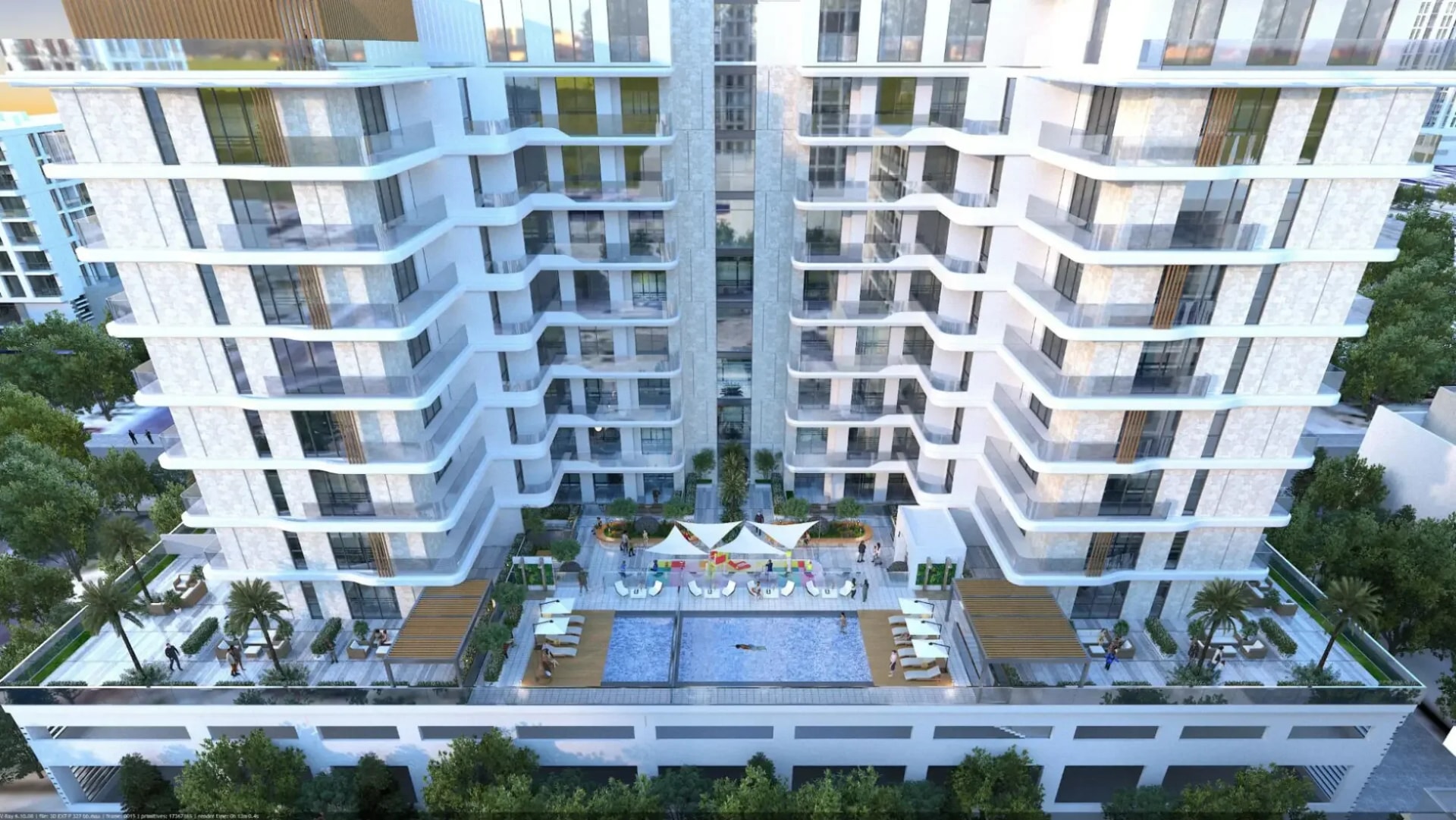
is the freehold sub-zone within Al Satwa, covering approximately 22 active mid-rise apartment buildings and approximately 3,200 freehold residential units. The pocket is the active freehold investor inventory in the wider Al Satwa zone, with the historic Al Satwa core remaining largely leasehold and Emirati-owned.
Per Dubai Land Department registry, Jumeirah Garden City recorded 380 transactions in 2025 at a median AED 2,180 per square foot. The pocket has emerged as one of central Dubai's most yield-competitive freehold apartment districts, supported by Metro proximity, walkable district public realm, and consistent DIFC and Downtown commuter demand.
This guide breaks down Jumeirah Garden City at the building-and-developer level, with pricing, yields, service charge data, and tenant profile by sub-cluster. The objective is a practical investor reference for the small but distinct freehold inventory available in the pocket.
The Jumeirah Garden City Geography
Jumeirah Garden City sits in the south-eastern section of Al Satwa, bounded approximately by 2nd December Street to the east, Al Hudaiba Road to the south, the historic Al Satwa low-rise residential zone to the west, and the Al Satwa Bus Station and Trade Centre area to the north.
The pocket is geographically defined and listed on the DLD freehold zone register. All buildings inside the pocket carry freehold designation, distinguishing them from the adjacent historic Al Satwa core, which is largely leasehold and not open to non-GCC national purchase.
Walking distances from typical Jumeirah Garden City addresses: 8 to 14 minutes to Al Jafiliya Metro on the Red Line, 12 to 18 minutes to World Trade Centre Metro on the Red Line, 16 to 22 minutes to Burjuman Metro (interchange Red and Green Lines). Direct walking access to the Trade Centre 1 area, the Al Wasl Road retail strip, and Jumeirah 1 beach (16 to 24 minutes walking).
The internal street layout supports walkable district functionality, with mixed-use ground-floor retail across most buildings hosting small F&B, banking, and service-sector tenants. The walkability premium is a meaningful contributor to the rental absorption strength.
Developer Mix Across the 22 Active Buildings
Damac has developed approximately 4 buildings inside Jumeirah Garden City. Track record on completed product runs broadly within UAE norms with 4 to 9 month delivery delays against original schedules. Build quality is mid-to-upper tier with consistent specifications across the Damac portfolio. Pricing tends to sit at AED 2,400 to AED 3,200 per square foot at the upper end of the pocket band.
Reportage
Properties has developed approximately 3 buildings. Track record runs in line with Damac on delivery and build quality. Pricing similar to Damac.
ABK Real Estate has developed approximately 3 buildings. Mid-tier specifications, generally good post-handover service charge management. Pricing tends to sit at AED 1,950 to AED 2,400 per square foot.
Selected mid-tier and family developers (Aqaar, Tabarak Investment, smaller local developers) have developed the remaining 12 buildings. Quality varies materially across this developer pool. Specific project due diligence is essential. Pricing tends to sit at AED 1,800 to AED 2,200 per square foot.
The developer mix is broadly mid-to-upper tier with no premium ultra-prime branded residence stock. The product positioning is mid-rise apartment for DIFC, Downtown, and Trade Centre commuters rather than trophy or branded asset positioning.
Pricing by Building Tier
Tier-one buildings in Jumeirah Garden City (Damac, Reportage, selected newer 2020 to 2024 handovers) trade at AED 2,400 to AED 3,200 per square foot. These buildings carry the strongest specifications, the deepest Sheikh Zayed Road frontage, and the most consistent service charge management.
Tier-two buildings (ABK Real Estate, selected 2017 to 2020 handovers, broadly comparable mid-tier developer product) trade at AED 1,950 to AED 2,400 per square foot. These buildings offer mid-tier specifications and consistent rental absorption.
Tier-three buildings (selected mid-tier and family developer product, older 2014 to 2017 handovers) trade at AED 1,800 to AED 2,000 per square foot. Specifications and post-handover service charge management vary across this tier; specific project due diligence is essential.
On a price-per-square-foot basis, the tier differential within Jumeirah Garden City spans approximately 1,400 AED. On a 1,200 square foot two-bed, the price gap between tier one and tier three runs approximately AED 1.7 million. Investors should clarify the tier of any specific building before signing.
Yields by Building Tier
Tier-three lower-priced buildings carry the highest gross yields in Jumeirah Garden City. Studios at AED 720,000 entry yield 8.0% to 8.4% gross. One-beds at AED 1.5 million entry yield 7.0% to 7.4% gross.
Tier-two mid-priced buildings yield 7.0% gross on studios and 6.4% to 6.8% gross on one-beds. The yield band sits in the middle of the wider Jumeirah Garden City range.
Tier-one premium buildings yield 6.4% to 6.8% gross on studios and 5.8% to 6.2% gross on one-beds. The lower gross yields reflect higher entry pricing rather than rental shortfall. Tier-one buildings command higher absolute rents (AED 145,000 to AED 165,000 on one-beds versus AED 110,000 to AED 130,000 on tier-three equivalents) but the price premium is larger than the rent premium.
Net yield after service charges and management runs 1.2 to 1.8 percentage points below gross. Tier-three buildings deliver the highest net yields in the pocket. Tier-one buildings deliver the strongest absolute capital appreciation track record and the smallest tenant rotation. Investor selection between tiers depends on yield-versus-appreciation priority.
Service Charges Across Buildings
Service charges across Jumeirah Garden City buildings vary widely. Tier-one Damac and Reportage buildings run AED 26 to AED 32 per square foot annually. Tier-two ABK and mid-tier buildings run AED 22 to AED 26 per square foot. Tier-three smaller-developer buildings run AED 18 to AED 22 per square foot.
On a 850 square foot one-bed: tier-one annual service charge runs AED 22,100 to AED 27,200; tier-two runs AED 18,700 to AED 22,100; tier-three runs AED 15,300 to AED 18,700. The annual service charge differential between tier-one and tier-three runs approximately AED 7,000 to AED 8,000 on a typical one-bed.
Service charge stability matters more than absolute level. Investors should request the previous 3 years' service charge history before purchase. Buildings with volatile service charges or repeated special assessments signal management quality issues that affect long-term net yield reliability.
Tier-one buildings tend to have the most stable service charge history. Tier-three buildings carry the most service charge volatility. The service charge stability differential is a material factor in long-term hold returns.
Tenant Absorption and Rotation
Median listing-to-let time across Jumeirah Garden City runs 28 days on furnished one-beds and 42 days on unfurnished two-beds. The strong absorption reflects multi-mode access (Metro, three highway access points, walking-grade public realm) and consistent demand from adjacent employer clusters.
Tier-one buildings achieve the fastest absorption (median 22 days on furnished one-beds) reflecting premium specification and consistent tenant interest. Tier-three buildings absorb in approximately 35 days on furnished one-beds. The absorption differential is meaningful for investors who value short void periods.
Tenant rotation runs a median 18 months across the wider pocket. Tier-one buildings retain tenants slightly longer (median 22 months) reflecting higher rental investment and less price sensitivity to rent increases. Tier-three buildings rotate slightly faster (median 16 months).
Furnished short-term lease activity is concentrated in selected serviced apartment and DTCM-licensed buildings. Furnished short-let rates achieve a 22 to 35% premium over annual unfurnished equivalents, with occupancy running 75% to 86% annual average.
Decision Framework Within Jumeirah Garden City
- Want highest gross yield, lowest entry price? Tier-three smaller-developer buildings.
- Want best capital appreciation track record, most stable service charges? Tier-one Damac or Reportage product.
- Want middle-ground spec and yield? Tier-two ABK or mid-tier product.
- Operating short-let with DTCM licence? Selected branded operator buildings.
- First Dubai investment in central freehold pocket? Tier-two or tier-three.
- Long 7+ year hold, prioritise stability? Tier-one.
- Want fresh handover with modern spec? Newer tier-one buildings completed 2022 to 2024.
- Refurbishment or upgrade play? Selected older tier-two or tier-three buildings.
How Oliva Helps
Oliva tracks every active Jumeirah Garden City building with developer track record, building tier classification, current asking prices, comparable transaction evidence, service charge history, and yield estimates by unit type. Building-by-building comparison on consistent metrics with DLD title verification and freehold designation confirmation on every listing.
Browse Jumeirah Garden City projects on Oliva
Frequently Asked Questions
What is Jumeirah Garden City?
Jumeirah Garden City is the freehold sub-zone within Al Satwa, covering approximately 22 active mid-rise apartment buildings and approximately 3,200 freehold residential units. The pocket is the active freehold investor inventory in the wider Al Satwa zone, with the historic Al Satwa core remaining largely leasehold and Emirati-owned.
Is Jumeirah Garden City freehold?
Yes. Jumeirah Garden City is a designated freehold zone open to all nationalities. The pocket is geographically defined and listed on the DLD freehold zone register. All buildings inside the pocket carry freehold designation. Confirm the DLD-registered designation before purchase, particularly when buying near the boundary with the historic Al Satwa core.
Which Jumeirah Garden City building is best for investors?
It depends on objective. For highest gross yield and lowest entry, tier-three smaller-developer buildings yield 7.0% to 8.4%. For most stable capital appreciation and lowest service charge volatility, tier-one Damac or Reportage product. For middle-ground spec and yield, tier-two ABK or mid-tier product. Building tier is more important than absolute community within the pocket.
Are the service charges high in Jumeirah Garden City?
Service charges run AED 18 to AED 32 per sqft annually depending on building tier. Tier-one runs AED 26 to AED 32. Tier-two runs AED 22 to AED 26. Tier-three runs AED 18 to AED 22. The range is broadly in line with Business Bay and Al Wasl mid-rise apartment averages and below Downtown Dubai branded residences. Always verify the previous 3 years' history.
Can I get a mortgage in Jumeirah Garden City?
Yes. All Jumeirah Garden City freehold buildings are recognised by UAE mortgage providers. Loan-to-value caps follow the Central Bank framework: 80% for Emiratis, 75% for non-resident expats under AED 5 million. Bank valuations are tight on smaller per-building comparable depth, particularly on tier-three smaller-developer product. Premium tier-one buildings have stronger valuation depth.
Explore further
The project, area, and developer this post covers, with live Dubai Land Department data.
Related articles

Al Satwa Dubai: The 2026 Investor Guide

Al Satwa vs Al Wasl: An Investor Comparison for 2026

Al Satwa Redevelopment and Future Pipeline 2026

Al Satwa Rental Yields and Tenant Profile 2026

Nad Al Sheba Dubai: The 2026 Investor Guide