Underwrite before you commit
The figures in this post are checked against Dubai Land Department records and RERA filings. Get an independent underwriting score on any project, or ask Javier on WhatsApp.
Downtown Dubai: Complete Investor Guide 2026
Downtown Dubai
delivered an average gross yield of 5.5-7.0% in 2025, according to Property Monitor data, making it one of the few global city-centre submarkets where tourist-driven short-term rental demand and professional long-term rental demand reinforce each other. More than 17 million people visited Burj Khalifa and Dubai Mall in 2025, and a significant share of that footfall directly sustains the short-term accommodation market in surrounding residential towers.
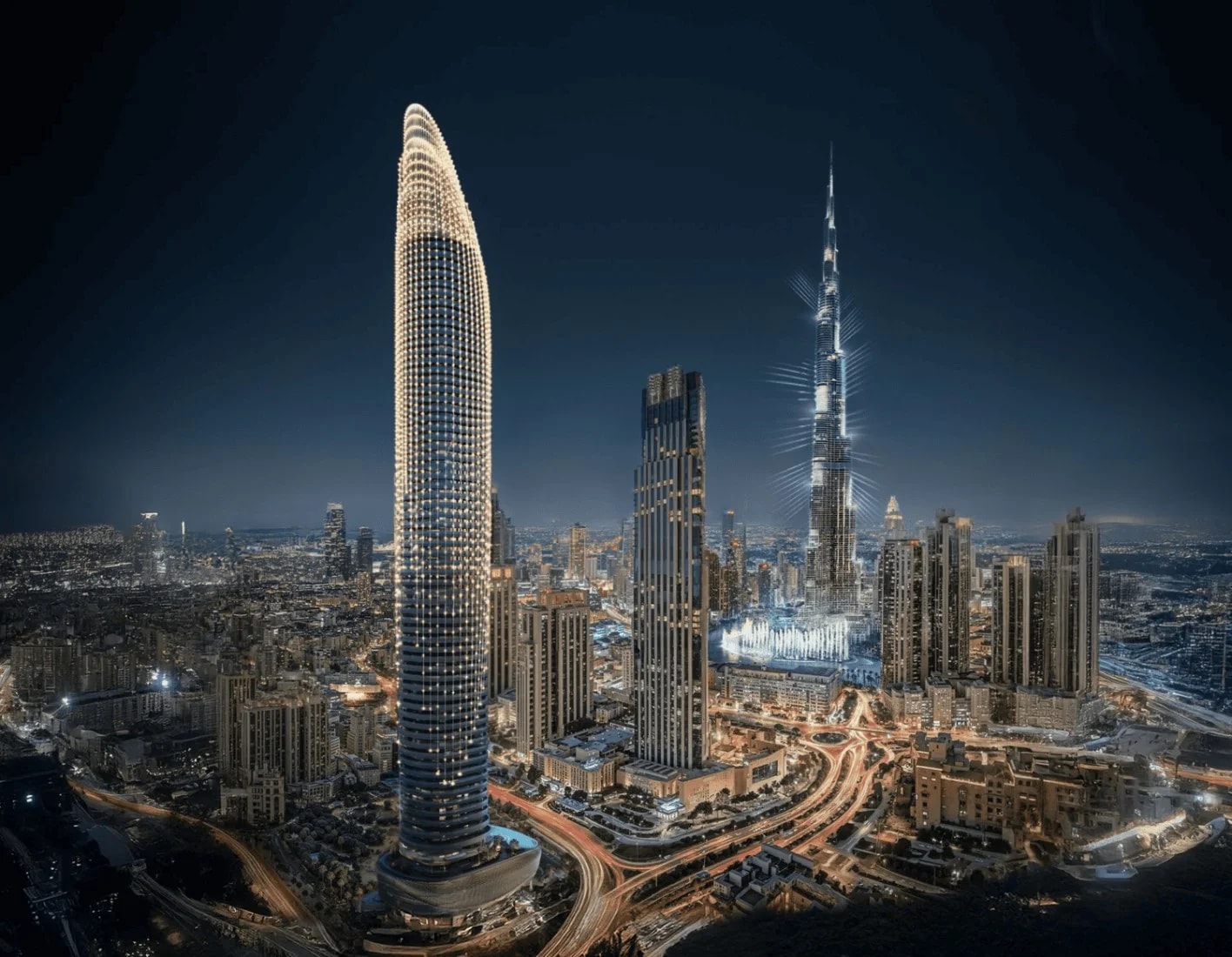
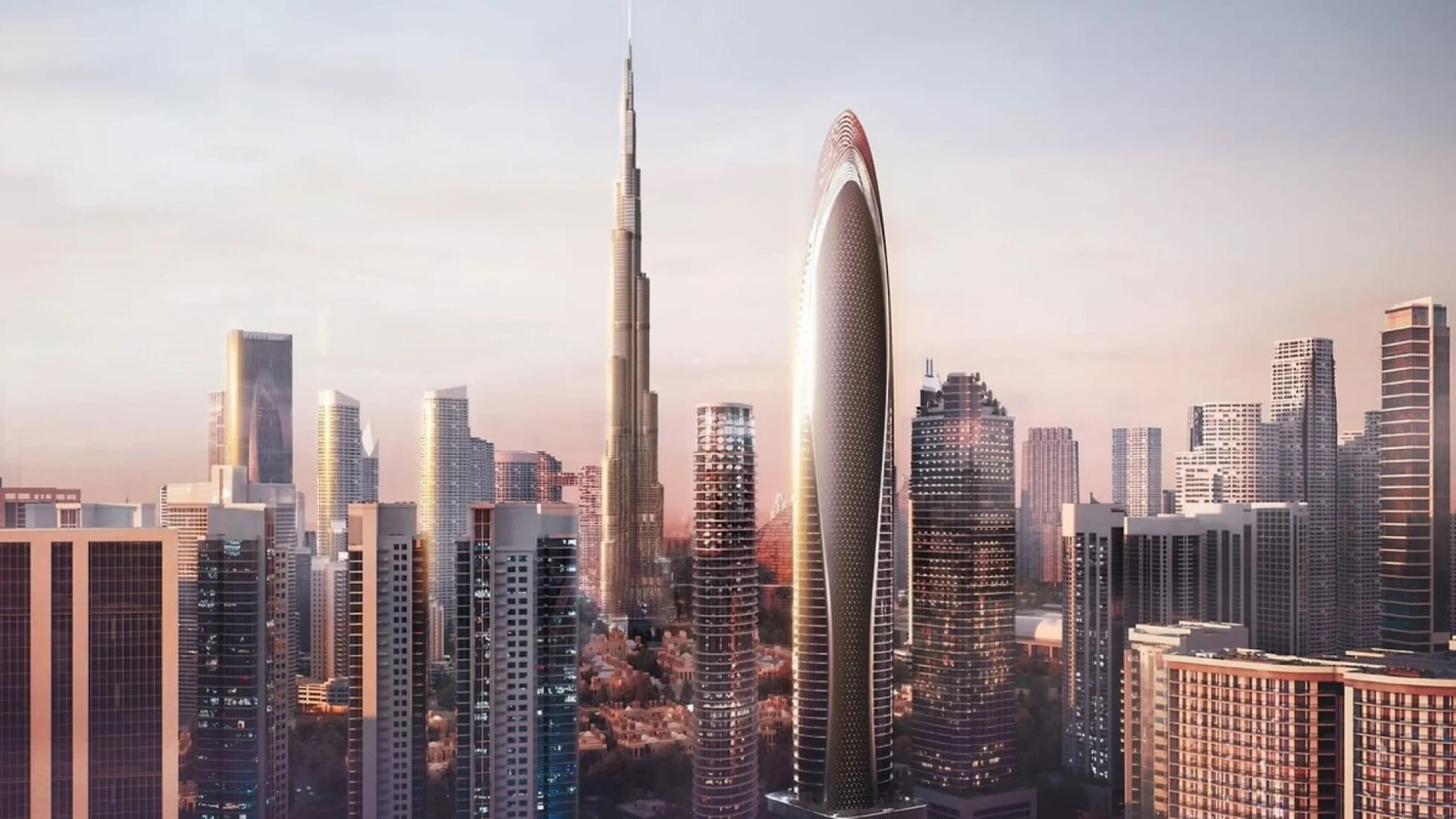
Downtown Dubai is a freehold (full ownership with no time limit, available to all nationalities in designated DLD zones) master-planned community developed primarily by Emaar Properties. The district covers approximately 2 square kilometres and contains some of the most photographed architecture in the world: Burj Khalifa, The Dubai Fountain, and The Dubai Mall. Approximately 30,000 residential units are spread across towers ranging from The Address Boulevard to The Residences to newer Emaar branded products launched since 2020.
Why Investors Choose Downtown Dubai
Global address recognition drives international buyer demand. Downtown Dubai is one of the first residential addresses a buyer outside the UAE asks about, which broadens the resale pool and contributes to price resilience during market corrections. DLD (Dubai Land Department, the authority that registers all property transactions in Dubai) data shows that Downtown Dubai consistently ranks in the top three Dubai submarkets by transaction value, even when not in the top three by transaction volume.
Gross yield (annual rent divided by purchase price, expressed as a percentage) averages 5.5-7.0% (Property Monitor, 2026), with studios and one-bedrooms at the higher end, driven by consistent short-term rental demand. The Dubai Mall proximity and Fountain view premium mean that even units without a direct Burj Khalifa view command above-average rents within the broader Downtown precinct.
Emaar's pipeline continues to add new branded product within the district: City Walk, The Opera District, and newer Address-branded residences offer investors access to off-plan (property purchased before or during construction, typically with a staged payment plan) units with Emaar's payment plan flexibility while maintaining a Downtown Dubai address. Approximately 50% of recent transactions within the district have been off-plan (DLD data, 2025).
Properties in Downtown Dubai virtually always exceed both the AED 2,000,000 threshold for the 10-year UAE Golden Visa and the AED 2,000,000 threshold for the 10-year Premium Investor Visa. Verify current eligibility criteria with GDRFA or your legal advisor.
Downtown Dubai at a Glance
| Metric | Data |
|---|---|
| Average price per sqm | AED 21,500-37,700 (DLD data, Q1 2026) |
| Average price per sqft | AED 2,000-3,500 |
| Median sale price | AED 2.8M (1BR benchmark, DLD Q1 2026) |
| Average gross yield | 5.5-7.0% (Property Monitor, 2026) |
| Average net yield | 3.8-5.2% (estimated after service charge and DLD fee amortisation) |
| Average service charge | AED 20-35/sqft/year |
| YoY price change | +10-18% (DLD data, 2024-2025) |
| DLD transactions (last 12m) | 3,000+ |
| Off-plan share | Approximately 50% |
| Ownership type | Freehold |
| Area type | Mixed-Use |
| Lifestyle profile | Luxury and Professional |
| Nearest metro | Burj Khalifa/Dubai Mall station, Red Line (0.3km) |
| Nearest mall | Dubai Mall (0.3km) |
| Golden Visa eligible | Yes |
| Key developers | Emaar (dominant), DAMAC, W Residences |
The 50% off-plan transaction share reflects Emaar's active new launch pipeline within Downtown Dubai, which continues to introduce new price points and payment plan options. The 10-18% YoY price appreciation places Downtown above the Dubai average of 8-12% (DLD data, 2024-2025), driven by limited land availability within the district boundary.
Property Types and Price Ranges in Downtown Dubai
| Property Type | Price Range (AED) | Price/sqft (AED) | Avg Gross Yield |
|---|---|---|---|
| Studio | 1,200,000-2,200,000 | 2,000-3,200 | 6.0-7.0% |
| 1-Bedroom | 1,800,000-4,500,000 | 2,000-3,500 | 5.5-6.5% |
| 2-Bedroom | 3,500,000-9,000,000 | 2,200-3,800 | 5.0-6.0% |
| 3-Bedroom | 7,000,000-20,000,000 | 2,500-4,500 | 4.5-5.5% |
| Penthouse | 15,000,000-80,000,000+ | 4,000-10,000+ | 3.0-4.5% |
| Data sourced from DLD and Property Monitor, Q1 2026. |
Studios and one-bedroom units represent the strongest yield play within Downtown Dubai. Units in Emaar's older buildings such as The Residences and Boulevard Central trade at AED 2,000-2,500/sqft, offering entry points below the district average and above-average yields because rents have risen faster than resale prices in those buildings over the past three years.
The Burj Khalifa view premium is quantifiable: units with a direct Burj Khalifa or Fountain view command a 20-35% premium above equivalent units in the same building without those views (DLD comparable analysis, Q1 2026). Investors should decide whether the premium is justified by stronger rental demand or whether the non-view equivalent offers better yield.
Emaar branded residences (Address, Vida, The Act) carry a 15-25% premium above non-branded Emaar buildings and 30-50% above third-party developer buildings in Downtown. The branded premium reflects a combination of hotel-grade services and Emaar's resale liquidity guarantee in the secondary market.
Rental Yields and Investment Potential
Downtown Dubai's gross yield of 5.5-7.0% is supported by two distinct rental income streams: long-term professional tenants paying AED 80,000-250,000 per year for one to two-bedroom apartments and DTCM-licensed short-term rentals generating premium nightly rates during peak season (October to April). To calculate net yield (gross yield minus service charge, DLD fees, and management costs) in Downtown Dubai: subtract the average service charge (annual maintenance fee paid by all owners) of AED 20-35 per sqft per year and the DLD transfer fee (4% amortised over a 5-year hold) from gross rental income, then divide by purchase price. On a AED 2.5M one-bedroom with AED 150,000 annual rent, service charges of AED 22,000 on 900 sqft, management fees of AED 12,000, and amortised DLD of AED 20,000 per year produce a net yield of approximately 3.8-4.2%.
| Unit Type | Avg Annual Rent (AED) | Gross Yield |
|---|---|---|
| Studio (650 sqft) | 85,000-120,000 | 6.0-7.0% |
| 1-Bedroom (900 sqft) | 120,000-200,000 | 5.5-6.5% |
| 2-Bedroom (1,400 sqft) | 200,000-340,000 | 5.0-6.0% |
| 3-Bedroom (2,200 sqft) | 300,000-600,000 | 4.5-5.5% |
| Rental data sourced from Bayut market report, 2026. |
Short-term rental performance in Downtown Dubai is among the strongest in the city. A furnished one-bedroom with a Fountain or Burj Khalifa view commands AED 700-1,500 per night during peak season, with 75-85% annual occupancy for well-managed units. Annual gross income from short-term rentals on such a unit typically runs AED 180,000-280,000, versus AED 130,000-180,000 on a long-term lease. The difference is material but requires professional management at 18-22% of revenue.
Dubai's overall average gross yield stands at approximately 5.5-6.5% (Property Monitor, 2026). Downtown Dubai's 5.5-7.0% range places it in line with or slightly above the citywide average, with the short-term rental premium distinguishing it from other luxury submarkets.
Past performance does not guarantee future returns. Real estate investment involves risk. Consult a qualified financial or legal advisor before making any investment decision.
Schools Near Downtown Dubai
| School | Curriculum | KHDA Rating | Distance | Annual Fees (AED) |
|---|---|---|---|---|
| GEMS Wellington Academy (Al Khail) | British | Outstanding | 6km / 12 min drive | 55,000-85,000 |
| Safa School | British | Outstanding | 8km / 15 min drive | 55,000-80,000 |
| King's School Dubai | British | Outstanding | 10km / 18 min drive | 60,000-90,000 |
| Horizon English School | British | Good | 5km / 10 min drive | 35,000-55,000 |
| Dubai International Academy | IB | Outstanding | 12km / 20 min drive | 60,000-95,000 |
| School ratings sourced from KHDA inspection reports. Fees are indicative annual ranges. Verify current ratings at khda.ae before making a relocation decision. |
Downtown Dubai itself contains no schools within the residential boundary. The nearest quality schools are a 10-20 minute drive in normal traffic. For families with school-age children, the commute from Downtown to schools in Al Barsha, Jumeirah, or Nad Al Sheba can be challenging during peak morning hours. This is one reason Downtown Dubai attracts a higher proportion of professional singles and couples rather than families with multiple children. School fees and ratings are updated annually by KHDA.
Infrastructure and Connectivity
Burj Khalifa/Dubai Mall station on the Red Line Metro is the principal transit hub, located approximately 300 metres from the Dubai Mall entrance. This provides direct connections to Dubai International Airport in 25 minutes, Dubai Marina in 20 minutes, and Deira in 30 minutes. The station is one of the busiest on the Metro network, reflecting Downtown's role as both a residential and tourism destination.
Financial Centre Road connects Downtown Dubai to DIFC and Business Bay in 5-10 minutes by car. Sheikh Zayed Road (E11) is accessible via two junctions on the district's western boundary. Palm Jumeirah is 20-25 minutes west; Dubai International Airport is 25-30 minutes east.
Dubai International Airport (DXB) is approximately 25 kilometres from Downtown Dubai, a 25-30 minute drive in normal traffic. The Metro connection makes DXB accessible in approximately 25 minutes without a car, which is a practical advantage for frequent travellers and short-term rental guests.
Dubai Mall, with over 1,200 retail units and 200+ dining outlets, is 300 metres from most Downtown residential buildings. City Walk and the Design District are 10-15 minutes by car.
Mediclinic City Hospital, part of the Mohammed Bin Rashid Al Maktoum City complex, is approximately 5 kilometres from Downtown Dubai, a 10 minute drive. Emirates Hospital and Al Zahra Hospital are within 15-20 minutes.
Key Developers and Active Projects in Downtown Dubai
Emaar Properties is overwhelmingly the dominant developer in Downtown Dubai, having master-planned and delivered the majority of the district. Emaar's current active pipeline includes Address Residences Dubai Opera Phase 2, The St. Regis Residences, and multiple towers within the Opera District precinct. Emaar launched over 2,000 off-plan units within Downtown's immediate boundary in 2025 (DLD data), with prices ranging from AED 2,200/sqft for standard residential to AED 5,000+/sqft for branded hotel residences.
DAMAC Properties has a smaller presence, primarily through DAMAC Maison and DAMAC Paramount towers in the district, which offer furnished serviced apartment inventory aimed at the short-term rental market.
W Residences Downtown, developed in partnership with Marriott International, represents the ultra-luxury branded residences segment within Downtown, with units priced from AED 7M upwards.
The total project count in Downtown Dubai is concentrated in a relatively small area. New launches within the district sell quickly given Emaar's established buyer base and the address premium. For any off-plan commitment, verify RERA (Real Estate Regulatory Authority, which governs developers and brokers in Dubai) escrow (trust account where off-plan payments are held until construction milestones are verified by RERA) registration at dubailand.gov.ae before committing any payment. Emaar's track record of on-time or near-on-time delivery is among the strongest of any Dubai developer.
Browse all Downtown Dubai projects on Oliva
How Downtown Dubai Compares to Similar Areas
| Area | Avg Price/sqft (AED) | Avg Gross Yield | Annual Transactions | Freehold |
|---|---|---|---|---|
| Downtown Dubai | 2,000-3,500 | 5.5-7.0% | 3,000+ | Yes |
| Business Bay | 1,400-2,000 | 6.0-8.0% | 5,000+ | Yes |
| DIFC | 2,500-5,000 | 4.5-6.0% | 400-600 | Yes |
| Dubai Creek Harbour | 1,800-2,800 | 5.0-6.5% | 2,500+ | Yes |
| Palm Jumeirah | 2,000-4,500 | 4.5-6.5% | 2,000+ | Yes |
| Data sourced from DLD and Property Monitor, Q1 2026. |
Choose Downtown Dubai over Business Bay if the global address recognition, Burj Khalifa proximity premium, and short-term rental income potential justify the higher price per sqft. Business Bay offers stronger average yields on a like-for-like unit size at a lower entry price.
Choose DIFC over Downtown Dubai if you want to target the financial services professional tenant base at a premium price point. DIFC has lower transaction volume and higher per-unit prices, but the tenant quality and rental predictability are among the strongest in Dubai.
Choose Dubai Creek Harbour over Downtown if you want a newer Emaar master-planned community at 30-40% lower price per sqft with similar developer quality. Creek Harbour is still building out, so the capital appreciation upside may be higher but the lifestyle amenity base is not yet fully mature.
Who Should Invest in Downtown Dubai?
Short-term rental investors targeting the tourism and events market. Downtown Dubai's proximity to Dubai Mall, Burj Khalifa, and the Dubai Opera creates one of the city's strongest foundations for DTCM-licensed holiday home income. Investors who can operate furnished units at 75-85% annual occupancy can push effective gross yields to 7-10%, a meaningful premium over long-term lease equivalents. This requires either self-management capability or a professional operator.
Long-term capital appreciation buyers who want a globally recognised address in their portfolio. Downtown Dubai's 10-18% YoY price growth in 2025 (DLD data), combined with structural supply constraints in a small geographic boundary, positions it as one of Dubai's most resilient appreciation markets. Emaar's continued investment in the district's public realm and branded hotel-adjacent residences protects the premium positioning.
Investors seeking the AED 2M threshold for the 10-year UAE Premium Investor Visa with a liquid, recognisable asset. Most one-bedroom and above units in Downtown Dubai exceed AED 2M, and the address's international recognition provides confidence that the asset can be liquidated if the investor's circumstances change.
What to Watch Out For
Emaar concentration risk within a single developer ecosystem. Approximately 70-80% of Downtown Dubai's residential inventory is Emaar-delivered. While Emaar's quality and track record are well established, this concentration means that any change in Emaar's pricing strategy, new launch volumes, or product positioning has an outsized effect on the secondary market. When Emaar launches at lower prices than secondary market comps, resale values in older buildings face pressure.
High service charges reducing net yield meaningfully. Service charges in Downtown Dubai average AED 20-35 per sqft per year. For a 900 sqft one-bedroom purchased at AED 2.5M with AED 150,000 gross annual rent, service charges of AED 25,000 and management costs reduce the gross 6.0% yield to approximately 4.0-4.5% net. Investors targeting this community purely for yield will find the net return modest relative to the capital deployed.
Traffic and parking congestion around Dubai Mall and Fountain Walk. The 80+ million annual visitors to Dubai Mall create peak-hour congestion that can add 20-30 minutes to exit times from the district during weekends and event evenings. Residents who depend on private vehicles for daily commuting to areas such as JLT, TECOM, or Media City should factor in realistic travel times rather than off-peak estimates.
How to Invest in Downtown Dubai Through Oliva
- Browse verified Downtown Dubai listings on Oliva filtered by building, yield, view (Burj Khalifa vs. city vs. canal), and unit size. Live DLD transaction data lets you see what comparable units actually sold for in the past 12 months.
- Use Oliva's yield calculator to model gross and net returns using Downtown Dubai DLD data. Specifically test the short-term rental scenario versus long-term lease to determine which strategy fits your management capacity.
- Request a data pack for your shortlisted project, including DLD transaction history, three years of service charge statements, and any Emaar community management notices or planned infrastructure changes.
- Connect with an Oliva advisor for a no-commission consultation on Downtown Dubai investment strategy. We will assess the Burj Khalifa view premium, building age, Emaar branded vs. non-branded positioning, and short-term vs. long-term rental optimisation for your specific allocation.
- Complete your purchase through Oliva's end-to-end transaction support, including DLD registration, NOC (No Objection Certificate, required from the developer to transfer property ownership at DLD) coordination with Emaar, and Ejari or DTCM licence setup depending on your rental strategy.
Browse Downtown Dubai properties on Oliva
Past performance does not guarantee future returns. Real estate investment involves risk. Consult a qualified financial or legal advisor before making any investment decision.
Quick reference: the investor framework for this topic
Investors searching for guidance on Downtown Dubai typically need three things up front: a quick framework for the decision, a sense of what data points actually matter, and a way to translate the topic into action. This section consolidates those three.
When evaluating an area, the practical investor framework is: transaction depth across recent quarters, rental absorption and Ejari registration patterns, planned and delivered supply pipeline, infrastructure connectivity, and the share of secondary versus off-plan activity. Each of these is verifiable through DLD public data.
These framework points are the same ones used inside the Oliva 6-dimension scoring model: Financial Value, Market Dynamics, Location, Developer Trust, Risk, Macro Context, and Liquidity. Investors who internalise this framework typically reach a decision faster and with fewer revisions later in the diligence cycle.
Common questions investors ask on this topic
Investors looking into Downtown Dubai typically surface five recurring questions. We answer each briefly here, with cross-references into the deeper post body and the related guides below.
Is this area still a good entry today? Whether an area is a good entry depends on the segment (studio, one-bed, family villa), the holding period, and the buyer goal (yield, capital growth, end-use, visa). The area data does not change that answer on its own; the combination of area, segment, and buyer goal does.
How does Oliva approach this topic? Oliva scores each project on the 6-dimension framework using DLD-sourced inputs. The scoring does not predict the future, it standardises the comparison across hundreds of Dubai projects so investors can shortlist on like-for-like data rather than on marketing copy.
What data sources should I trust? Trust DLD transaction data, Ejari rental registrations, and the official regulator portals (RERA, DLD). Be sceptical of unsourced AED figures in marketing material. When in doubt, ask for the transaction reference numbers or developer registration record so you can verify directly.
What is the most common mistake here? The most common mistake investors make is anchoring on the headline AED price or the headline yield without testing the assumption against secondary-market transaction depth. A property at an attractive price is only attractive if a comparable property has actually transacted near that price recently and if the next buyer can be expected to do the same.
Example shapes from Dubai investor practice
These worked examples are framed generically and use the same input fields that appear in the Oliva calculators. Run your own numbers through those calculators for property-specific output. Below are typical decision shapes investors face on this topic.
Example shape A, the yield-led buyer in this area: prioritises studio and one-bed segments with strong Ejari registration depth, and screens out projects with shallow service-charge history. For this profile, mature sub-clusters within the area usually beat the newest releases.
Example shape B, the end-user family buyer in this area: prioritises school proximity, amenity standard, and community feel rather than yield. For this profile, the right answer is usually a unit configuration optimised for end-use rather than for rental, even though the two segments overlap in price.
Example shape C, the diversified portfolio buyer: spreads capital across two or three sub-segments to reduce concentration risk. For this profile, the right answer is usually a basket of mid-priced units across different communities rather than a single premium asset. Oliva is designed to support this comparison across hundreds of Dubai projects in one workflow.
Frequently Asked Questions
Is Downtown Dubai a good investment in 2026?
Downtown Dubai produced 10-18% price appreciation in 2025 (DLD data) with gross yields of 5.5-7.0% (Property Monitor, 2026). Its combination of global brand recognition, Emaar pipeline, and short-term rental income potential makes it one of Dubai's most complete investment cases. The trade-off is a higher price per sqft and service charge burden that compress net yields. Best suited to investors with a 3+ year horizon and AED 1.8M+ budgets. Past performance does not guarantee future returns.
What is the average rental yield in Downtown Dubai?
Gross yield averages 5.5-7.0% across all unit types (Property Monitor, 2026). Net yield, after service charges (AED 20-35/sqft/year), DLD fee amortisation, and management costs, typically falls between 3.8% and 5.2%. Short-term DTCM-licensed rentals can push gross income 30-60% above long-term lease equivalents for well-managed furnished units in tower with Burj Khalifa or Fountain views.
Can foreigners buy property in Downtown Dubai?
Yes. Downtown Dubai is a DLD-designated freehold zone allowing foreign nationals full ownership rights with no nationality restrictions. Buyers receive a DLD-registered title deed. The freehold status applies to all residential buildings within the Downtown district, including Emaar branded residences, The Residences, Boulevard Central, and newer hotel-branded products.
What property types are available in Downtown Dubai?
Downtown Dubai offers studios (AED 1.2M-2.2M), one-bedroom apartments (AED 1.8M-4.5M), two-bedroom apartments (AED 3.5M-9M), three-bedroom apartments (AED 7M-20M+), and penthouses (AED 15M-80M+). The market is entirely apartment-based. No villas exist within the Downtown boundary. Most inventory sits in Emaar-developed towers across a range of branded and non-branded product tiers.
How significant is the Burj Khalifa view premium in Downtown Dubai?
Units with a direct Burj Khalifa or Fountain view command a 20-35% price premium above equivalent non-view units in the same building (DLD comparable analysis, Q1 2026). The view premium also translates into higher short-term rental rates: AED 700-1,500/night for a furnished one-bedroom with Fountain view versus AED 400-800/night for an equivalent unit with a city view. Whether the premium is justified depends on your rental strategy and hold period.
Explore further
The project, area, and developer this post covers, with live Dubai Land Department data.
Related articles

Dubai Land Department: The Complete 2026 Investor Guide

RERA vs DLD: What's the Difference and Why It Matters to You

Ejari Registration Walkthrough: Dubai's Tenancy System for Owners and Tenants
Business Bay Dubai: Complete Investment Guide

Dubai Creek Harbour: Complete Investment Guide

AED 2M Property Golden Visa: Areas That Qualify
Related Dubai property analysis from the Oliva editorial team.